
About 1792 Exchange
1792 Exchange is a 501(c)(3) non-profit organization whose mission is “helping businesses get back to business” by influencing American companies to advance principles including free speech, freedom of religion, and free enterprise. We are the go-to national resource for data, research, and analysis on corporate behavior and governance.
Our flagship resources—the Corporate Bias Rating database, the Board Bias database, and the Back to Business Tracker—serve as leverage to build a durable policy roadmap that protects corporations from activist pressure and are committed to keeping companies focused on sound governance and business excellence.
FAQs
Corporate involvement in divisive activist causes does not appear out of nowhere—it stems from misguided governance, which produces policies, practices, and personnel that serve special interests at the expense of shareholders, employees, and customers. In 2021, a group of business leaders and families formed 1792 Exchange to preserve freedom of religion, speech, and free enterprise.
1792 Exchange was created to convene broad coalitions of like-minded allies and leverage the principle of collective, multiplied impact to help guide companies back to neutrality. Our data, research, and analysis tools on corporate behavior and governance protect corporations from activist pressure and are committed to keeping companies focused on sound governance and business excellence.
1792 Exchange is the go-to national resource for data, research, and analysis on corporate behavior and governance.
1792 Exchange educates policy leaders, financial officers, asset managers, stakeholder organizations, the public, and others about the dangers of DEI (diversity, equity, and inclusion), ESG (environmental, social, and governance), and other politically motivated policies.
We provide companies that have adopted these frameworks a roadmap to “neutrality” so they can focus on serving all shareholders, customers, and employees with excellence and integrity. We also help non-profits and small businesses navigate viewpoint discrimination and maintain operational independence from the pressures of divisive political and cultural debates.
Our flagship tools and resources include:
- Corporate Bias Ratings database rates over 4,500 companies on their divisive policies, actions, and cancellation of business relationships based on viewpoints or beliefs.
- Board Bias database examines the level of activism among C-Suite and Board leadership at Fortune 250 companies.
- Back to Business Tracker highlights companies that have taken concrete steps to refocus on core business priorities.
- Federal Contractor database tracks important information for the United States government’s top 100 contractors, including their Corporate Bias Rating, total number of actions, and dollars obligated.
We also host datasets on state pension funds, asset managers, and China-related corporate risk.
DEI is a framework that stands for diversity, equity, and inclusion, which many corporations have adopted under pressure from activist groups. DEI often prioritizes ideological objectives over merit-based practices and business fundamentals.
These programs can create discriminatory hiring and promotion practices, mandate employee training that advances ideological agendas, expose companies to legal liability, and divert resources away from core business priorities.
1792 Exchange tracks corporate DEI policies and provides companies with a roadmap to move away from these divisive practices toward neutrality.
Environmental, social, and governance (ESG) criteria are a set of ambiguous standards and ratings used as an investment or operating framework to pressure companies to comply with progressive objectives and force disclosure of business practices and data. Proponents claim it is about managing risk and opportunity.
ESG attempts to manipulate capital markets and companies to change their business practices so that progressive views on the environment, social issues, and governance take precedence over shareholder return. Most of these practices are not required by U.S. law because either the consensus for legislative change does not exist or the Constitution constrains the government from regulating these matters. Despite the law, every federal agency is currently promoting the ESG agenda.
Environmental criteria often consider whether a company is making unilateral changes to its operations to mitigate ecological externalities, work towards “carbon neutral” or “net-zero carbon emissions,” and decrease carbon products or byproducts. ESG investment strategies often force companies to reduce or eliminate fossil fuel usage and change their structure in favor of “green” products and policies. These constraints have increased energy costs and inflation and reduced reliability. ESG’s net-zero and carbon-neutral goals are based on significant, long-term assumptions, including how human behavior impacts climate, how laws will change, how consumer behavior will change, and what technology will be invented.
Social criteria examine a company’s policies towards its employees, suppliers, and communities. Generally, it requires companies to hire and do business using progressive views of race, gender, and sexuality as considerations in hiring and programs. It can also create reporting requirements for companies to disclose the race, gender, and sexual orientation makeup of their boards and employees and require them to work toward quotas to receive lower-cost capital and other favors.
Governance deals with a company’s leadership, executive pay, audits, internal controls, and shareholder rights, and increasingly is being used to promote the interests of non-invested stakeholders over shareholders. Often, it is used to link executive pay to environmental and social goals instead of stock performance and profits.
Corporations that wield DEI, ESG, and other politically motivated agendas are increasingly threatening the free speech, free exercise of religion, and stability of employees, other corporations, non-profits, small business owners, and individual citizens.
The pressures of these ideologically divisive practices can lead to firing employees, canceling customers or suppliers, withholding, or denying financial or other services, and dictating contractual terms for ideological purposes simply because of differing viewpoints on controversial issues, including “gender ideology” or “critical race theory.”
When public corporations are politicized, it undermines our democratic process, divides employees, alienates customers, violates fiduciary duty, and limits shareholder returns. Because roughly three-quarters of all assets in US stock markets are tied directly or indirectly to retirement, these ideological agendas can jeopardize Americans’ retirement security.
Our organization’s name pays tribute to the founding of the first American stock exchange in 1792, established by the Buttonwood Agreement. The purpose of the Buttonwood Agreement was to reestablish trust and free exchange in a volatile marketplace. Signers included individuals of various faiths and political views, even those who served on opposite sides of the Revolutionary War.
Signers of the Buttonwood Agreement chose to ignore political differences in favor of broader prosperity. In much the same way, the 1792 Exchange works to help companies restore trust with their shareholders and their stakeholders by moving back toward neutrality.
At the same time, we fight to preserve First Amendment guarantees such as the free exercise of religion and freedom of speech.
Leadership
Douglas Napier
Douglas Napier is the Executive Chairman & CEO of 1792 Exchange, a non-profit organization focused on influencing corporate behavior to protect freedom of speech, freedom of religion, and free enterprise. He has over 30 years of professional life engaged in law, business, real estate development, executive leadership, training, international relations, public policy, issue advocacy, healthcare, hospitality, media engagement, and coalition building.
Douglas has been a partner in a private law firm, a senior executive and senior legal counsel for an international non-profit organization, and served as president of an Arizona residential real estate company.
He has been an invited speaker at many national and international conferences and events and has appeared on major network television stations, radio outlets, and online print media including FOX News, NBC, CNN, NPR, Al Jazeera, EWTN, Wall Street Journal, Washington Times, National Review, Townhall, The Atlantic, Mike Gallagher, Hugh Hewitt Show, and others.
Douglas earned a Juris Doctorate, with distinction, University of Iowa; a Master of Biblical Studies, Dallas Theological Seminary; and a Bachelor of Business Administration, Finance, University of Iowa. Douglas and his wife have two adult children. They reside in Scottsdale, Arizona.
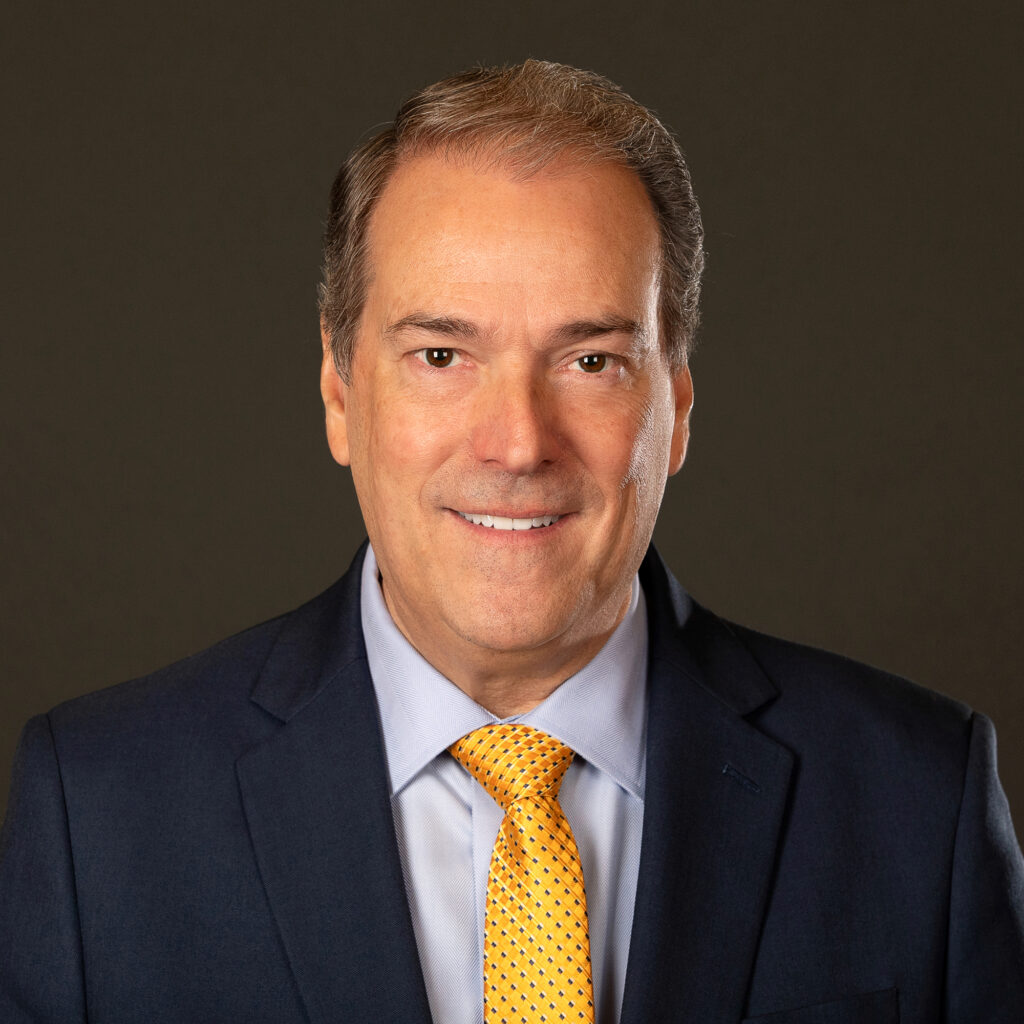

Greg Scott
Greg Scott is Executive Vice President at 1792 Exchange. Greg has been a national leader in legal and policy advocacy for nearly 25 years. Greg served 10 years on active duty in the U.S. Marine Corps, most recently as a public affairs officer and base spokesperson at Marine Corps Air Station Miramar in San Diego. Greg spent 15 years at Alliance Defending Freedom, ultimately as senior vice president of communications. He was director of media and public relations for The Heritage Foundation and public affairs chief at the U.S. Customs and Border Protection. Greg has led successful communications campaigns that have helped change the trajectory of storytelling about our fundamental freedoms protected under the First Amendment and federal and state laws, leveraging this experience to train hundreds of leaders in law, policy, and culture across the country and abroad to effectively and creatively communicate the case for liberty. Greg has been published in Variety, The Washington Times, Journalism & Mass Communication Quarterly, and The Daily Signal, among other publications. He has been quoted by the Associated Press, The New York Times, Los Angeles Times, Washington Post, Foxnews.com, Politico, National Review, and other national and local media outlets. Born in Southern California and raised on Long Island in New York, Greg now resides in Northern Virginia with his family.
Contact Our Team
"*" indicates required fields