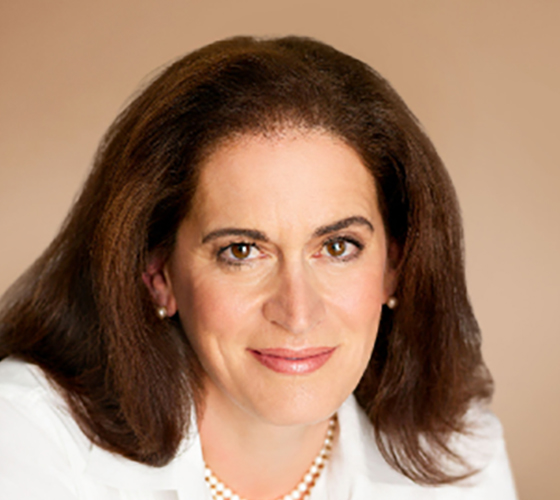
Debora L. Spar

Debora L. Spar

Director, Board Member at Thermo Fisher Scientific
Company Tenure: 4 years
Education:
Georgetown University (B.S.) Harvard University (Ph.D.)
Biography:

Debora L. Spar is currently serving as a Director at Thermo Fisher Scientific, headquartered in Waltham, MA, with a tenure of 4 years. She previously served on the Board of DIrectors at Goldman Sachs and Northern Star Acquisition Corp.

Spar holds a B.S. from Georgetown University and a Ph.D. in Government from Harvard University. She is a Professor at the Harvard Business School and previously served as the President and CEO of the Lincoln Center for the Performing Arts, and served as President of Barnard College. Her recorded political contributions include $0 to the Republican party and $13,474 to the Democrat party.

Profile Details

Total Political Contributions More information

Republican Support
Democratic Support
$0 $13,474

Affiliated Companies

Key Statements

"We think of feminism or fights for transgender rights, similarly as products of social movements, of activists and advocates pushing history and society along some modern and progressive paths."

"And if you go back and you look at early marriage contracts, they look like real estate deals. And you can still hear the echoes of that, particularly in things like the Orthodox Jewish ceremony, which has not changed all that much. The father gives the daughter to a man in exchange for oftentimes there was an actual exchange of goods, but basically on the assurance that he will then take care of her for the rest of her life, and he owns the children. So that's the basic ancient argument."

"And crucially, again, and those of you who've been here before, many of you hear me say this every year, we really are focusing as much as we can on diversity and diversity across all vectors. So what states our students are coming from, what countries they're coming from, what socioeconomic bands they're coming from, what religious backgrounds. And so our class is again, increasingly diverse."

[Q: What is Barnard College's divestment task force focused on?] "This is divestment from fossil fuels. The central argument being, I think correctly, that our generations have destroyed the planet in some fairly fundamental ways and that we as an organization should do our bit to divest, pull any of our endowment funds out of certain kinds of energy producing companies."

"So Black Lives Matter was very active on campus after the unfortunate events of sort of November, December last year. They're not an active group on campus at the moment. I suspect that will change. But more importantly, I have been saying at every possible forem that for me, the biggest priority this year on the campus is focusing on not just diversity, but the phrase I keep using, diversity and inclusion. So if you just look at the numbers, sort of what our campus looks like, we're very diverse. As I mentioned earlier, we're more diverse than we've ever been by any vector you can count. We're not as inclusive as I think most of us would like us to be. So there are still students from various subgroups, socioeconomic subgroups, racial subgroups, religious subgroups, who feel occasionally marginalized, who feel attacked, who feel that they are the recipient of phrases, misstatements that they find offensive."

"But one of the things you see during periods of inequality, rising inequality, is people get put into what Isabel Wilkerson is now calling castes, and you create sort of a story around each caste. So a lot of the men who were working in these horrible jobs in the factories, they were being subjugated by the economic class, which is what Marx was arguing. And the women were being subjugated as a separate gender based caste. And it's sticking around for so long is because it worked or from your perspective, what kept it the flywheel going? Well, because things don't change oftentimes unless there's either social pressures which emerge from time to time but were put down look at the French Revolution or until I would argue, technology is what finally pushes things along."

"So you really get that sort of cult of marriage, late Victorian era. Okay. All right. How will technology help or hurt the issue of inequality? So this is where I'm deeply pessimistic. All of the technologies I talk about in the book make inequality. You know, the robot sex that happens way in the future. The inequalities start happening tomorrow."

"Why do we still get married? Because in economic terms, as the Economist in me still coming out, marriage is an economic relationship. It always has been. And if you go back and you read a marriage ceremony, any of the traditional faiths, it kind of reads like a real estate transaction. The woman is literally given to the man in exchange for something."