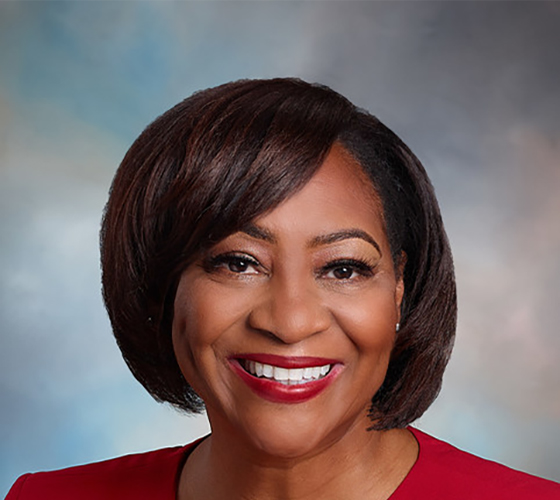
La June Montgomery Tabron

La June Montgomery Tabron

Trustee at TIAA
Company Tenure: 1 year
Education:
University of Michigan (B.S.)
Biography:

La June Montgomery Tabron, a dedicated Trustee at TIAA, has contributed one year of valuable service to the organization from the dynamic city of New York, New York. Tabron’s professional journey includes significant roles at the W.K. Kellogg Foundation and Kellogg Company.

Her board memberships at these institutions, marked by affiliations with the W.K. Kellogg Foundation (1496) and Kellogg Company (1496), highlight her commitment to organizations with a broad impact. In addition, she is associated with Bronson Healthcare Group, Detroit Regional Partnership, and the Upjohn Institute for Employment Research, demonstrating her diverse experiences contributing to her current role as a Trustee at TIAA.

Tabron’s academic background includes a Bachelor of Science (BS) from the University of Michigan and a Master of Business Administration (MBA) from the Kellogg School of Management at Northwestern University.

Profile Details

Affiliated Companies

Key Statements

"So as we've come along on this journey, we call racial equity part of our DNA. It's not a slogan for us. It's a part of who we are, and it's embedded in everything we do. Will Keith left for us that we needed to focus on racial equity, we needed to focus on community engagement, and we needed to focus on leadership."

"We measure our staff, we measure their commitment. As Ramon mentioned, we have gone on a personal learning journey. All of our staff receive significant training in this space. We've had leadership development training. That is coupled with our racial equity training, we have what we call DNA learning sessions, where on a quarterly basis, our entire staff comes together to talk about racial equity and how it shows up in our work. So our commitment to learning is deep. And as Ramon mentioned, our trustees participate in all of this training. This isn't something that we talk about as the work. It is our work."

"But in doing this work over decades, what we've learned is you can either work on the symptoms or you can look at the root causes and what we've learned as we encounter the issues of children and families. Root causes stem from racism. And if we are not going to address those racialized structures that really impact the lives of people and how they are trying to pursue better pathways that we're really just nibbling around the edges of a very systemic problem. And so we wanted to take racial equity on, dead on, to say, we got to talk about the systems that create these outcomes."