
AT&T
Companies who scored 100% on the 2023-2024 Corporate Equality Index.
Companies who scored 100% on the 2025 Corporate Equality Index.
Companies provide a benefit package for employees which covers travel/lodging costs for an abortion.
Companies who signed the Business Roundtable 2019 Stakeholder Capitalism statement
The biggest 1000 U.S. companies by revenue according to form 10-K.
Companies that offer so-called transgender healthcare for their employees and covered dependents.



Rating Overview
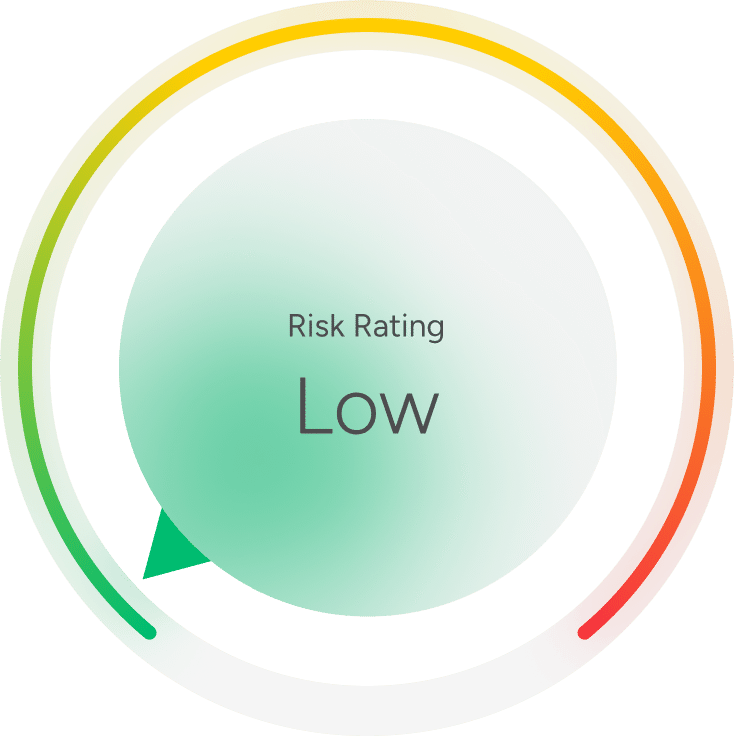
Rating Criteria
Rating Criteria Detail
Corporate Weaponization
Criteria:
Has canceled customers, suppliers, or vendors due to their political views or religious beliefs OR corporately boycotts, divests, or sanctions regions, people groups, or industries.
Risk Level:
LowerRationale:
DirecTV, which is 70% owned by AT&T, dropped conservative news networks One America News Network (OANN) and Newsmax in March 2022 and January 2022 respectively (1)(2)(3). Newsmax alleged censorship, but AT&T and DirecTV have rebutted that the decision was based on failed negotiations over cable fees (4)(5). AT&T and Newsmax eventually reached an agreement, and Newsmax was returned to the air after several months (6). AT&T’s advertising unit formerly blacklisted Breitbart, though the CEO reversed course after pressure from conservatives (7). AT&T, along with other major telecommunications companies, cut off the Trump campaign’s texting service for five days in the 2020 election cycle. Each company claimed it was a third-party anti-spam decision, although the Trump campaign thought the decision might have been politically motivated (8). AT&T is part of the Joint Alliance for Corporate Social Responsibility (JAC), which seeks to “Driv[e] the sustainable transformation of the Information and Communication Technology (ICT) supply chain” through implementing corporate social responsibility while “sharing resources and best practice” with other members. JAC members are encouraged to “take all reasonable endeavours to promote and secure compliance” to its Supply Chain Sustainability Guidelines to their suppliers, subcontractors, and employees. These guidelines ask suppliers to incorporate sexual orientation and gender identity into their nondiscrimination policies, adopt products and services that offer “environmental and social benefits”, and minimize Greenhouse Gas emissions by establishing emissions reduction targets, publicly reporting GHG emissions metrics, and engaging sub-suppliers and their sub-suppliers to drive GHG emission reduction (9)(10).
Criteria:
Charitable giving (including employee matching programs) policies or practices discriminate against charitable organizations based on views or religious beliefs.
Risk Level:
LowerRationale:
AT&T previously used Benevity as its charitable giving platform. Benevity recommends vetting charities according to the Southern Poverty Law Center’s Hate List, which includes mainstream libertarian, conservative, family, and religious advocacy organizations. However, in 2026 the company “asked Benevity to disable this filter, ensuring that legitimate faith-based charities are no longer excluded from its matching-gift program.” (1). AT&T does not discriminate against charitable organizations based on views or beliefs (2)(3)(4). The company’s charitable giving focus areas are, “bridging the Digital Divide” and “Community Support and Safety, Health and Human Services, and Arts and Culture.” (5).
Criteria:
Employment policies fail to protect against viewpoint or other discrimination and/or are ideological in nature.
Risk Level:
MediumRationale:
AT&T had a history of divisive employment policies. However, in March 2025, the company pledged to end DEI quotas in its career development programs, scholarship programs, and supply chain. Furthermore, it pledged to remove pronoun pins from its employee style guide and ensure that Employee Resource Groups are focused on business (1)(2). AT&T does not provide viewpoint protections for its employees (3).
Corporate Governance and Public Policy
Criteria:
Uses corporate reputation to support causes, organizations, or policies hostile to freedom of expression.
Risk Level:
MediumRationale:
AT&T signed an open letter endorsing the Equality Act, a contentious proposal to amend the 1964 Civil Rights Act by adding sexual orientation and so-called gender identity as protected categories. The legislation would, among other implications, grant biological men access to women-only spaces such as sports teams and public restrooms, and compel healthcare providers to deliver sex-denying healthcare (1). AT&T also opposed various state legislature’s efforts to secure their elections with voting integrity bills (2). The company opposed the Florida Parental Rights in Education Act, which would prohibit teaching gender identity and sexual orientation to kids in K-3rd grade (3). Former AT&T CEO Randall Stephenson is a member of the Business Roundtable and signed its 2019 Statement on the Purpose of a Corporation, which promotes stakeholder capitalism over traditional obligations to shareholders (4)(5). AT&T opposed various state and local legislation intended to protect parental rights, girls’ sports, bathroom facilities, and gendered spaces (6)(7). The company opposed legislation in Iowa intended to protect parental rights, girls’ sports, bathroom facilities, and gendered spaces (8). AT&T had a long history of using its reputation to promote divisive causes. However, in March 2025, the company pledged to no longer have a DEI Officer, stop filling out the so-called Corporate Equality Index, focus on growing its small business supplier base, and ensure strategy will focus only on what grows the business (9). The company pledged to invest $250 Billion into Expansion of telecom infrastructure (10)(11).
Criteria:
Uses corporate funds to advance ideological causes, organizations, or policies hostile to freedom of expression.
Risk Level:
MediumRationale:
AT&T provides a benefits package for employees that covers travel/lodging costs for an abortion and transgender medical procedures for covered employees and dependents, including children (1)(2)(3)(4). In March 2025, the company pledged to end its partnership with the Trevor Project. AT&T was a Premier Tier corporate sponsor of The Trevor Project but has withdrawn its membership (5)(6)(7)(8)(9)(10)(11). AT&T was a partner of the HRC’s Foundation (12)(13). The company was a sponsor of the 2022, 2023, and 2024 HRC National Dinners (14)(15)(16). Cricket, a subsidiary of AT&T, sponsored the 2025 Pride “Bigger Than” Texas Festival (17). Cricket is a sponsor of Pride Houston 365 (18). Otherwise, there are no publicly known cases of AT&T using corporate funds to advance ideological causes, organizations, or policies (19).
Criteria:
Uses corporate political actions and/or financial contributions for ideological, non-business purposes.
Risk Level:
LowerRationale:
In 2024, AT&T donated to the LGBT Caucus Leadership Fund (California) (1). The company has not lobbied for ideological purposes (2)(3)(4). The 1792 Exchange commends AT&T’s leadership in corporate political transparency, noting its commitment to decisions grounded in public policy and the company’s best business interests “without regard to political party affiliation.” (5)(6).
Related Resources
Related Companies

Media and Entertainment, Software and Services, Web Browsers

Microsoft

Media and Entertainment
Meta Platforms
Telecommunication Services

Verizon Communications
Telecommunication Services

T-Mobile

Cloud & Data Storage, Media and Entertainment, Software and Services, Web Browsers
Alphabet

Media and Entertainment, Telecommunication Services
Comcast

Media and Entertainment, Telecommunication Services
Charter Communications

Media and Entertainment
Walt Disney
Media and Entertainment
Paramount Skydance Corporation

Media and Entertainment
Netflix