Glass Lewis
These companies are committed to leveraging shareholder or investor assets for net-zero emission goals and climate ambitions for GFANZ, Climate Action 100+, CERES, PCAF, UN PRI, NZLA, FIT, or HSCP.
Rating Overview
Rating Criteria
Rating Criteria Detail
Corporate Weaponization
Criteria:
Has canceled customers, suppliers, or vendors due to their political views or religious beliefs OR corporately boycotts, divests, or sanctions regions, people groups, or industries.
Risk Level:
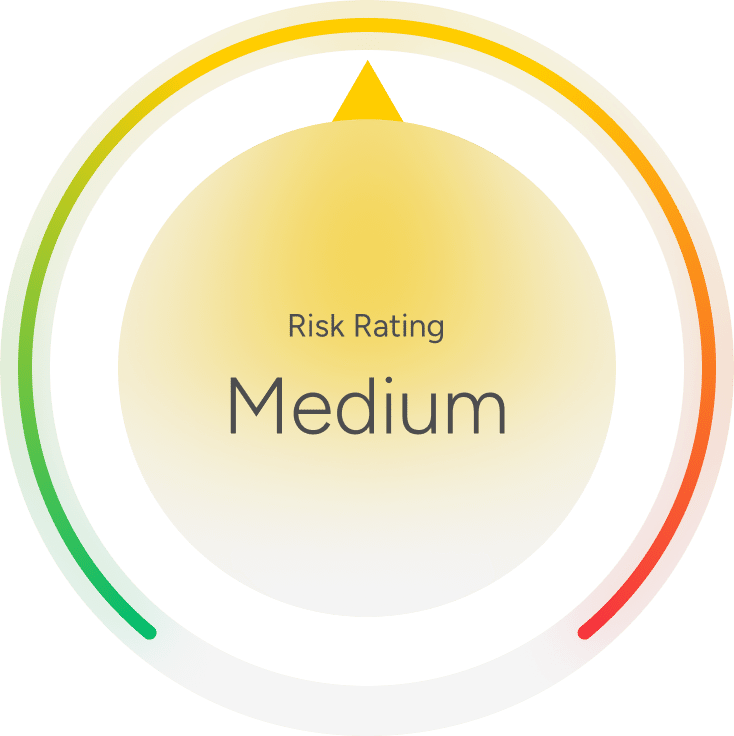
MediumRationale:
In 2023, Attorney General Paxton and Utah Attorney General Sean Reyes sent a letter to Glass Lewis stating it “potentially violated both federal law and their contractual duties”. The company allegedly recommend its shareholders to vote outside their best financial interests and to vote on directors based on DEI standards (1). In November 2025, Florida Attorney General James Uthmeier filed a lawsuit against Glass Lewis for “illegally employ[ing] ESG and DEI practices” over fiduciary duty and violating state antitrust laws with ISS. Glass Lewis denied these claims (2). In 2025, the company sued Texas “to block a first-of-its-kind state law limiting their ability to advise shareholders on diversity, environmental and governance practices” (3). In July 2026, courts ruled in favor of Glass Lewis in suits against Kansas and Indiana, challenging their anti-ESG laws (4)(5)(6). The company’s lawsuit over the constitutionality of a similar anti-ESG law in Kentucky is ongoing (7)(8). Glass Lewis is a signatory of the Principles for Responsible Investment, incorporating ESG issues into investment analysis, decision-making, and other business practices (9)(10). The company integrates ESG into its business practices. From its Sustainability Policy: The company works with vendors “who also strive to reduce environmental impacts” and is “in the process of completing a greenhouse gas (GHG) emissions inventory” for vendors (11). However, in 2025, Glass Lewis joined ADL and JLens (an affiliate of ADL) to recommend its investors to vote against “[anti-Israeli] shareholder proposals” (12).
Criteria:
Charitable giving (including employee matching programs) policies or practices discriminate against charitable organizations based on views or religious beliefs.
Risk Level:
N/ARationale:
Glass Lewis does not publish charitable giving guidelines (1).
Criteria:
Employment policies fail to protect against viewpoint or other discrimination and/or are ideological in nature.
Risk Level:
HighRationale:
Glass Lewis requires its employees to take DEI training (1). The company appears to prioritize diversity over merit in its hiring. From its Sustainability Policy: “We promote diversity and inclusion not only as part of our employee hiring practices but also within the workplace” (2). Glass Lewis is an affirmative action employer: “Glass Lewis management has spearheaded several long-term initiatives to increase diversity, including maintaining a formal Affirmative Action program, tracking diversity trends throughout the company globally, and broadening recruitment for our largest hiring pool, Research Associates (RA)” (3). The company does not publish a nondiscrimination policy (4). Previously, Glass Lewis had a history of only recommending shareholder voters to vote against “the chair of the nominating committee of a board that is not at least 30 percent gender diverse [or maintain a racial diversity]”. However, in March 2025, the company pledged to provide “clients two recommendations – one that applies [racial and gender board diversity], and one that does not consider diversity considerations as part of the recommendation” (5)(6).
Corporate Governance and Public Policy
Criteria:
Uses corporate reputation to support causes, organizations, or policies hostile to freedom of expression.
Risk Level:
HighRationale:
Glass Lewis makes ESG reports on companies who are committed to net zero emissions by 2050 (1). The company supports DEI within its business practices. From its 2023 Sustainability Report: “Workforce Diversity & Engagement is another critical sustainability focus area for Glass Lewis” (2). Glass Lewis supports ESG within its business practices. From its 2023 Sustainability Report: “We strive to incorporate ESG best practices internally throughout our workforce, governance, data security, privacy, professional integrity, and environmental practices” (3). The company supports ESG within its proxy voting recommendations. From its 2025 Benchmark Policy Guidelines: “Glass Lewis believes that shareholders should seek to promote governance structures that protect shareholders, support effective ESG oversight and reporting, and encourage director accountability” (4).
Criteria:
Uses corporate funds to advance ideological causes, organizations, or policies hostile to freedom of expression.
Risk Level:
LowerRationale:
Glass Lewis has not used corporate funds to advance ideological causes, organizations, or policies (1).
Related Companies

Commercial and Professional Services

KBR

Commercial and Professional Services
Accenture

Commercial and Professional Services

Booz Allen Hamilton
Commercial and Professional Services
Deloitte Touche Tohmatsu Limited (DTTL)

Commercial and Professional Services
Leidos

Commercial and Professional Services
Ernst & Young (EY)

Commercial and Professional Services
ManpowerGroup

Accounting Payroll & HR Services, Commercial and Professional Services

Insperity

Commercial and Professional Services
CapinCrouse

Commercial and Professional Services
Jacobs Solutions