
Companies who scored 100% on the 2025 Corporate Equality Index.
Companies that scored a 100 on the 2026 Corporate Equality Index.
Companies that likely use Benevity to vet charitable recipients, thereby discriminating against mainstream advocacy organizations through the SPLC's overly broad "Hate List."
These companies are committed to leveraging shareholder or investor assets for net-zero emission goals and climate ambitions for GFANZ, Climate Action 100+, CERES, PCAF, UN PRI, NZLA, FIT, or HSCP.
Companies that offer so-called transgender healthcare for their employees and covered dependents.
Rating Overview
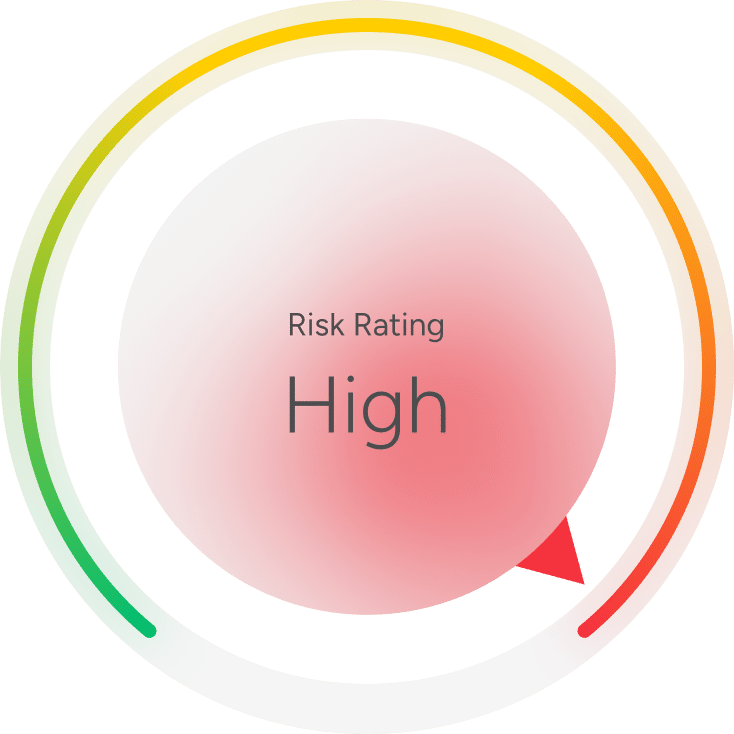
Rating Criteria
Rating Criteria Detail
Corporate Weaponization
Criteria:
Has canceled customers, suppliers, or vendors due to their political views or religious beliefs OR corporately boycotts, divests, or sanctions regions, people groups, or industries.
Risk Level:
MediumRationale:
LinkedIn received a score of 100 on the 2026 Corporate Equality Index (CEI) from the Human Rights Campaign (HRC), a political stakeholder group. The company recruits employees based on sexual identity issues. The company discriminates against vendors that do not promote divisive sex and gender policies, indicating it prioritizes sexual issues over merit (1)(2)(3). The company received a score of 100 on the 2025 Corporate Equality Index (CEI) from the Human Rights Campaign (HRC), a political stakeholder group. The company recruits employees based on sexual identity issues. The company discriminates against vendors that do not promote divisive sex and gender policies, indicating it prioritizes sexual issues over merit (4)(5). LinkedIn was a member of the Global Alliance for Responsible Media, which demonetized and suppressed content that it deemed to spread “hate speech” or “misinformation”, discuss “debated social issues in a negative or partisan context”, or “vilif[y]” individuals based on sexual orientation and gender identity. These arbitrary guidelines were used to censor mainstream perspectives online (6)(7)(8). The company integrates ESG into its business practices. From its Provider Code of Conduct: “Consider the potential environmental impacts of your daily business decision-making processes and seek opportunities to conserve natural resources, reuse, and recycle, reduce resources, reduce greenhouse gas emissions and waste, and control pollution” (9). LinkedIn promotes divisive sex and gender policies. Its Provider Code of Conduct requires international vendors to include sexual orientation and gender identity in their nondiscrimination policy (10). However, the company has not canceled customers, suppliers, or vendors based on political views or religious beliefs (11).
Criteria:
Charitable giving (including employee matching programs) policies or practices discriminate against charitable organizations based on views or religious beliefs.
Risk Level:
HighRationale:
LinkedIn’s HRC 2026 CEI rating indicates the company will not donate to non-religious charities unless they embrace controversial sexual identity policies (1)(2)(3). The company’s HRC 2025 CEI rating indicates the company will not donate to non-religious charities unless they embrace controversial sexual identity policies (4)(5). LinkedIn likely uses Benevity as its charitable giving platform. Benevity vets charities according to the Southern Poverty Law Center’s Hate List, which includes mainstream libertarian, conservative, family, and religious advocacy organizations (6)(7)(8).
Criteria:
Employment policies fail to protect against viewpoint or other discrimination and/or are ideological in nature.
Risk Level:
HighRationale:
LinkedIn’s HRC 2026 CEI rating indicates the company forces employees to attend at least one, controversial training on gender identity, sexual orientation, transgender issues, and divisive racial ideology. The company provides gender transition guidelines for its employees and a specific benefits guide with a comprehensive explanation of transgender services funded by the company (1)(2)(3). The company’s HRC 2025 CEI rating indicates the company forces employees to attend multiple, controversial trainings on gender identity, sexual orientation, transgender issues, and divisive racial ideology. The company provides gender transition guidelines for its employees and a specific benefits guide with a comprehensive explanation of transgender services funded by the company (4)(5). LinkedIn does not provide viewpoint protections for its employees (6)(7).
Corporate Governance and Public Policy
Criteria:
Uses corporate reputation to support causes, organizations, or policies hostile to freedom of expression.
Risk Level:
HighRationale:
LinkedIn’s HRC 2026 CEI rating indicates the company potentially agrees to allow a controversial stakeholder group focused on sexual identity issues to dictate marketing or advertising strategy. By doing so, the company risks dividing employees, alienating customers and harming shareholders (1)(2)(3). The company’s HRC 2025 CEI rating indicates the company agrees to allow a controversial stakeholder group focused on sexual identity issues to dictate marketing or advertising strategy. By doing so, the company risks dividing employees, alienating customers and harming shareholders (4)(5). LinkedIn opposed various state and local legislation intended to protect parental rights, girls’ sports, bathroom facilities, and gendered spaces (6)(7). The company opposed legislation in Iowa intended to protect parental rights, girls’ sports, bathroom facilities, and gendered spaces (8). LinkedIn opposed the Florida Parental Rights in Education Act, which would prohibit teaching gender identity and sexual orientation to kids in K-3rd grade (9). The company signed an amicus brief in opposition to the 2016 North Carolina bathroom bill HB2, which required people to use the bathroom of their biological sex (10). LinkedIn’s Senior Vice President and General Counsel, Blake Lawit, denounced various states’ legislative efforts to protect election integrity and security (11). The company is a Ceres Network Member, committed to carbon neutrality by 2040 (12)(13). LinkedIn is committed to net zero carbon emissions by 2030 (14). The company supports ESG within its business practices. From its Creating a sustainable future for all page: “We share data insights about the growing green economy, partner with environmental nonprofits, provide tools for companies to take climate action, amplify the voices of green thought leaders, and deliver green upskilling and job opportunities through our platform” (15).
Criteria:
Uses corporate funds to advance ideological causes, organizations, or policies hostile to freedom of expression.
Risk Level:
HighRationale:
LinkedIn’s HRC 2026 CEI rating indicates the company covers transgender related costs for its employees and their children, including paid short-term leave, puberty blockers, cross-sex hormones, chest surgeries, genital surgeries, medical visits, lab monitoring, and mental health benefits. The company also covers at least five of the following services: reconstructive hair removal, cosmetic hair removal, tracheal shave or reduction, facial surgeries, voice modification surgery, voice modification therapy, lipoplasty or filling for body masculinization or feminization, and travel and lodging expenses. Additionally, the company has potentially pledged philanthropic support of at least one organization or event that promotes sex and gender ideology. By allowing a political stakeholder group to dictate operations, the company increases health care costs and risks dividing employees, alienating customers and harming shareholders (1)(2)(3)(4). The company’s HRC 2025 CEI rating indicates the company covers transgender related costs for its employees and their children, including paid short-term leave, puberty blockers, cross-sex hormones, chest surgeries, genital surgeries, medical visits and lab monitoring, travel and lodging. Additionally, the company has pledged philanthropic support of at least one organization or event that promotes sex and gender ideology. By allowing a political stakeholder group to dictate operations, the company increases health care costs and risks dividing employees, alienating customers and harming shareholders (5)(6). LinkedIn was a member of the Global Alliance for Responsible Media (7)(8)(9). The company is a partner of Diversity Best Practices (10). LinkedIn is a partner of Culture Shift Labs, a consultation firm that advocates for DEI (11). The company is a partner of Involve the Inclusion People, a consultation firm that advocates for DEI (12). LinkedIn is a partner of Lesbians Who Tech, a nonprofit that provides ideological training (13). The company is a Member Investor of Out Leadership, a global network of LGBT+ business leaders from major companies that seeks to advance LGBTQ+ representation in corporate leadership and integrate LGBTQ+ priorities into workplace strategies. The first LGBTQ+ B-Corporation, Out Leadership accomplishes this through convening leadership summits, directing talent initiatives, and providing advisory solutions that emphasize the positive impact of LGBT+ inclusion for business (14)(15)(16)(17). Otherwise, there are no publicly known cases of LinkedIn using corporate funds to advance ideological causes, organizations, or policies (18).
Criteria:
Uses corporate political actions and/or financial contributions for ideological, non-business purposes.
Risk Level:
HighRationale:
LinkedIn’s HRC 2025 CEI rating indicates the company publicly advocated for controversial sex and gender ideology through local, state or federal legislation or initiatives. By allowing a political stakeholder group to dictate operations, the company risks dividing employees, alienating customers and harming shareholders (1)(2). The company does not operate a PAC or report on its lobbying at this time (3)(4)(5).
Related Companies

Cloud & Data Storage, Retailing, Software and Services

Amazon

Media and Entertainment, Software and Services, Web Browsers
Microsoft
Cloud & Data Storage, Media and Entertainment, Software and Services, Web Browsers
Alphabet

Cloud & Data Storage, Software and Services, Technology Hardware and Equipment

IBM
Cloud & Data Storage, Software and Services
Oracle
CRM & Project Management, Software and Services
Asana
Accounting Payroll & HR Services, Diversified Financials, Software and Services
Intuit

Software and Services
Adobe
Accounting Payroll & HR Services, CRM & Project Management, Software and Services
SAP

Software and Services
DXC Technology