
Lockheed Martin
Companies who scored 100% on the 2023-2024 Corporate Equality Index.
Companies who signed the Business Roundtable 2019 Stakeholder Capitalism statement
These companies are committed to leveraging shareholder or investor assets for net-zero emission goals and climate ambitions for GFANZ, Climate Action 100+, CERES, PCAF, UN PRI, NZLA, FIT, or HSCP.
Companies that offer so-called transgender healthcare for their employees and covered dependents.




Rating Overview
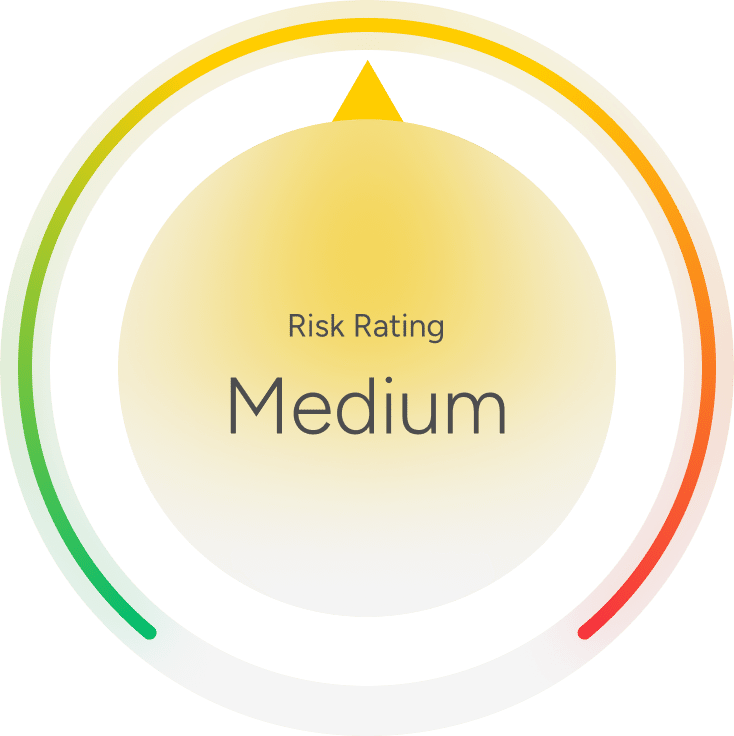
Rating Criteria
Rating Criteria Detail
Corporate Weaponization
Criteria:
Has canceled customers, suppliers, or vendors due to their political views or religious beliefs OR corporately boycotts, divests, or sanctions regions, people groups, or industries.
Risk Level:
MediumRationale:
Lockheed Martin received a score of 100 on the 2025 Corporate Equality Index (CEI) from the Human Rights Campaign (HRC), a political stakeholder group. The company recruits employees based on sexual identity issues. The company discriminates against vendors that do not promote divisive sex and gender policies, indicating it prioritizes sexual issues over merit (1)(2). In April 2025, Lockheed Martin updated its Nondiscrimination and Equal Employment Opportunity policy to clarify that it will not discriminate against employees or applicants on the basis of sexual orientation and gender identity and that this policy extends to recruitment efforts (3)(4). The company had a history of divisive corporate policies and practices. However, in February 2026, the company pledged to shift its policies and practices away from stakeholder capitalism and back toward neutral. Lockheed Martin pledged to no longer participate in the HRC’s so called “Corporate Equality Index” (5). Lockheed Martin promotes divisive sex and gender policies. Its Supplier Code of Conduct requires international vendors to include sexual orientation and gender identity in their nondiscrimination policy (6). However, the company has not publicly canceled customers, suppliers, or vendors based on political views or religious beliefs (7).
Criteria:
Charitable giving (including employee matching programs) policies or practices discriminate against charitable organizations based on views or religious beliefs.
Risk Level:
LowerRationale:
Lockheed Martin’s HRC 2025 CEI rating indicates the company will not donate to non-religious charities unless they embrace controversial sexual identity policies (1)(2). The company does not appear to discriminate against religious organizations based on views or beliefs. However, it will only give to religious organizations that provide non-sectarian services (3)(4). In February 2026, Lockheed Martin confirmed that it does not block matching gifts to religious organizations (5). The company’s charitable giving focus areas are “Future STEM Workforce, Those Who Serve, and Community Resilience” (6).
Criteria:
Employment policies fail to protect against viewpoint or other discrimination and/or are ideological in nature.
Risk Level:
HighRationale:
In late 2022, according to an anonymous whistleblower, Lockheed Martin removed 18 white employees from the list of employees who were to receive bonuses and replaced them with nonwhite employees (1)(2). The company replied by stating that it “is a meritocracy,” and that the “allegations as reported raise concerns that we are taking seriously and are investigating” (3). In June 2025, Lockheed pledged to appropriately compensate affected employees and address any misconduct, emphasizing that merit and fairness are core tenets of company culture (4). The company’s HRC 2025 CEI rating indicates the company forces employees to attend multiple, controversial trainings on gender identity, sexual orientation, transgender issues, and divisive racial ideology. The company provides gender transition guidelines for its employees and a specific benefits guide with a comprehensive explanation of transgender services funded by the company (5)(6). However, in January 2025, Lockheed released a statement claiming that its “training offerings are compliant with Executive Order 13950 on “Combating Race and Sex Stereotyping.” (7). Lockheed Martin is a signatory of the Gender & Diversity KPI Alliance, appearing to prioritize diversity over merit in its business structure through the establishment of gender and racial targets for its leadership composition and its support of DEI in its hiring and promotions (8)(9). The company’s Chairman, President and CEO previously signed Catalyst’s Champions for Change pledge, indicating support for DEI in leadership composition through the establishment of gender and racial targets; however, the company is no longer a signatory to this pledge (10)(11)(12). The company had a history of global diversity and inclusion policies and affirmative action goals. However, in January 2025 the company pledged to align itself with President Trump’s executive order against demographic representation (13)(14)(15). In January 2025, Lockheed Martin pledged to not have “goals or incentives based on demographic representation or Affirmative Action Plans”. The company indicated that its criteria for recruiting, retaining, and promoting employees would be based solely on merit and performance (16)(17). In May 22, 2025, the company pledged to “permanently [closed its] Business Resource Groups and Employee Networks organized around demographics, identities or advocacy” (18). Lockheed followed through on their pledge and phased out its Business Resource Groups for inclusive programs that are open to all team members (19)(20). The company does not provide viewpoint protections for its employees (21).
Corporate Governance and Public Policy
Criteria:
Uses corporate reputation to support causes, organizations, or policies hostile to freedom of expression.
Risk Level:
MediumRationale:
Lockheed Martin’s HRC 2025 CEI rating indicates the company agrees to allow a controversial stakeholder group focused on sexual identity issues to dictate marketing or advertising strategy. By doing so, the company risks dividing employees, alienating customers and harming shareholders (1)(2). The company’s former CEO Marillyn A. Hewson signed the Business Roundtable’s 2019 Statement on the Purpose of a Corporation, which promotes stakeholder capitalism over traditional obligations to shareholders (3). Lockheed Martin’s CEO signed the CEO Action for Diversity & Inclusion pledge, which includes a commitment to promote DEI through bias education training in the workplace (4)(5). The company scored a 100 out of 100 on the 2023-2024 Corporate Equality Index (CEI) from the Human Rights Campaign (HRC), a political stakeholder group (6)(7). Lockheed Martin pledged to invest $1 Billion into Precision Strike Missile Production (8)(9).
Criteria:
Uses corporate funds to advance ideological causes, organizations, or policies hostile to freedom of expression.
Risk Level:
HighRationale:
Lockheed Martin’s HRC 2025 CEI rating indicates the company covers transgender related costs for its employees and their children, including paid short-term leave, puberty blockers, cross-sex hormones, chest surgeries, genital surgeries, medical visits and lab monitoring, travel and lodging. Additionally, the company has pledged philanthropic support of at least one organization or event that promotes sex and gender ideology. By allowing a political stakeholder group to dictate operations, the company increases health care costs and risks dividing employees, alienating customers and harming shareholders (1)(2). The company was a sponsor of the 2022 and 2023 HRC National Dinners (3)(4). The company is a Friend partner of PFLAG, an LGBTQ+ activist group that promotes books for children with sexually explicit and gender fluid content and advocates against laws that inform parents of their child’s gender dysphoria or prevent unapproved transgender medical treatments for minors (5)(6)(7). Lockheed Martin was a silver sponsor of Out & Equal (8). The company is a corporate partner of the National LGBT Chamber of Commerce (9). Lockheed Martin is a sponsor of America250, a bipartisan initiative created to commemorate the 250th anniversary of the United States in 2026 (10). Otherwise, there are no publicly known cases of the company using corporate funds to advance ideological causes, organizations, or policies (11).
Criteria:
Uses corporate political actions and/or financial contributions for ideological, non-business purposes.
Risk Level:
LowerRationale:
Lockheed Martin’s HRC 2025 CEI rating indicates the company publicly advocated for controversial sex and gender ideology through local, state or federal legislation or initiatives. By allowing a political stakeholder group to dictate operations, the company risks dividing employees, alienating customers and harming shareholders (1)(2). The company has not used its PAC donations or lobbying for ideological purposes (3)(4)(5).
Related Companies
Capital Goods

RTX

Capital Goods
Northrop Grumman

Capital Goods
Boeing

Capital Goods, Household and Personal Products

3M

Capital Goods
Honeywell International

Capital Goods
General Dynamics

Capital Goods
L3Harris Technologies

Capital Goods
Huntington Ingalls Industries (HII)
Capital Goods
Fluor Corporation

Capital Goods

Caterpillar