
UnitedHealth Group
Companies who scored 100% on the 2023-2024 Corporate Equality Index.
Companies who scored 100% on the 2025 Corporate Equality Index.
Companies that likely use Benevity to vet charitable recipients, thereby discriminating against mainstream advocacy organizations through the SPLC's overly broad "Hate List."
The biggest 1000 U.S. companies by revenue according to form 10-K.
Companies that offer so-called transgender healthcare for their employees and covered dependents.


Rating Overview
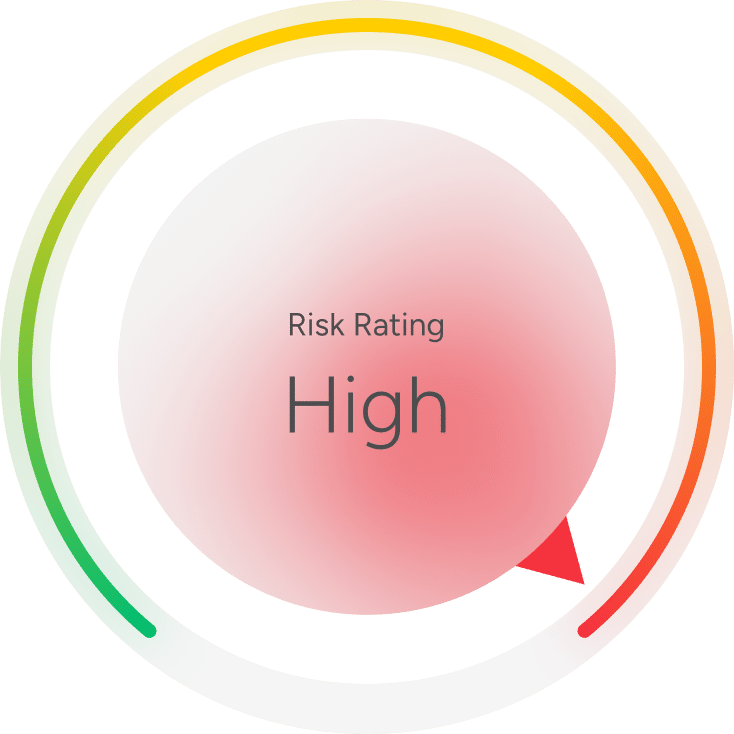
Rating Criteria
Rating Criteria Detail
Corporate Weaponization
Criteria:
Has canceled customers, suppliers, or vendors due to their political views or religious beliefs OR corporately boycotts, divests, or sanctions regions, people groups, or industries.
Risk Level:
MediumRationale:
UnitedHealth Group received a score of 100 on the 2025 Corporate Equality Index (CEI) from the Human Rights Campaign (HRC), a political stakeholder group. The company recruits employees based on sexual identity issues. The company discriminates against vendors that do not promote divisive sex and gender policies, indicating it prioritizes sexual issues over merit (1)(2). The company promotes divisive sex and gender policies. Its Supplier Code of Conduct requires international vendors to include sexual orientation and gender identity in their nondiscrimination policy (3). However, UnitedHealth Group has not canceled customers, suppliers, or vendors based on political views or religious beliefs (4).
Criteria:
Charitable giving (including employee matching programs) policies or practices discriminate against charitable organizations based on views or religious beliefs.
Risk Level:
HighRationale:
UnitedHealth Group’s HRC 2025 CEI rating indicates the company will not donate to non-religious charities unless they embrace controversial sexual identity policies (1)(2). The company will not fund “religious organizations for religious purposes” (3). UnitedHealth Group likely uses Benevity as its charitable giving platform. Benevity vets charities according to the Southern Poverty Law Center’s Hate List, which includes mainstream libertarian, conservative, family, and religious advocacy organizations (4)(5)(6).
Criteria:
Employment policies fail to protect against viewpoint or other discrimination and/or are ideological in nature.
Risk Level:
HighRationale:
UnitedHealth Group’s HRC 2025 CEI rating indicates the company forces employees to attend multiple, controversial trainings on gender identity, sexual orientation, transgender issues, and divisive racial ideology. The company provides gender transition guidelines for its employees and a specific benefits guide with a comprehensive explanation of transgender services funded by the company (1)(2). The company offers unconscious bias training to its employees (3). The company appears to prioritize diversity over merit in its supply chain. From its Supplier Code of Conduct: “We recognize the importance of an inclusive supply chain and are committed to ensuring that diversity and inclusion is an integral part of our strategic sourcing and procurement processes. We support use of diverse suppliers (defined as a supplier who maintains a valid certification as a minority, women, veteran, LGBTQ+, disabled or service-disabled owned business), to the maximum practicable opportunity to participate in any subcontracts or orders in support of our business” (4). The company is an affirmative action employer, “UnitedHealth Group is an Equal Employment Opportunity/Affirmative Action employer” (5). UnitedHealth Group appears to prioritize diversity over merit in its leadership composition. From its 2021 Sustainability Report: “The board’s diversity is considered in the director nomination process and assessed annually when the board evaluates overall effectiveness.” (6). The company has a history of divisive corporate policies using reputation to support divisive practices. However, in July 2025, the company removed DEI quotas from its 2021 Sustainability Report. To date, the company has not publicly addressed these changes, leaving shareholders without clarity regarding the company’s reasoning or future direction (7). The company does not provide viewpoint protections for its employees (8).
Corporate Governance and Public Policy
Criteria:
Uses corporate reputation to support causes, organizations, or policies hostile to freedom of expression.
Risk Level:
HighRationale:
UnitedHealth Group’s HRC 2025 CEI rating indicates the company agrees to allow a controversial stakeholder group focused on sexual identity issues to dictate marketing or advertising strategy. By doing so, the company risks dividing employees, alienating customers and harming shareholders (1)(2). UnitedHealth Group’s CEO Stephen Hemsley is a member of the Business Roundtable, which supports stakeholder capitalism over traditional shareholder obligations (3). The company’s CEO, Andrew Witty, signed the CEO Action for Diversity & Inclusion pledge, which includes a commitment to promote DEI through bias education training in the workplace, strategize on DEI programs/initiatives with other signatories, and engage boards of directors when developing and evaluating DEI strategies (4)(5). UnitedHealth Group is committed to net zero emissions by 2050 (6). The company scored a 100 out of 100 on the 2023-2024 Corporate Equality Index (CEI) from the Human Rights Campaign (HRC), a political stakeholder group (7)(8). UnitedHealth Group supports DEI within its business practices, forming the Global Diversity, Equity, and Inclusion (DEI) Office and an Advancing Diversity, Equity, and Inclusion Board (9). The company supports ESG within its business practices, “encourag[ing] our suppliers to track, report and minimize their greenhouse gas emissions, set science-based reduction targets aligned with limiting global warming to 1.5 C above pre-industrial levels” (10). After mass protests against federal immigration enforcement and fatal shootings in Minnesota, UnitedHealth Group’s CEO Stephen J. Hemsley signed an open letter calling for the immediate de-escalation of violence and for state, local, and federal authorities to work together to restore peace in Minnesota (11). The company has a history of using reputation to support divisive practices. However, in July 2025, the company removed DEI and ESG language from its Sustainability Report. To date, the company has not publicly addressed these changes, leaving shareholders without clarity regarding the company’s reasoning or future direction (12).
Criteria:
Uses corporate funds to advance ideological causes, organizations, or policies hostile to freedom of expression.
Risk Level:
HighRationale:
UnitedHealth Group provides a benefits package for employees that covers travel/lodging costs for an abortion and transgender medical procedures for covered employees and dependents, including children (1)(2). The company’s HRC 2025 CEI rating indicates the company covers transgender related costs for its employees and their children, including paid short-term leave, puberty blockers, cross-sex hormones, chest surgeries, genital surgeries, medical visits and lab monitoring, travel and lodging. Additionally, the company has pledged philanthropic support of at least one organization or event that promotes sex and gender ideology. By allowing a political stakeholder group to dictate operations, the company increases health care costs and risks dividing employees, alienating customers and harming shareholders (3)(4). UnitedHealth Group was a Silver Corporate Partner of the HRC (5)(6)(7). The company was a sponsor of the 2024 and 2025 HRC National Dinners (8)(9). UnitedHealth Group is a partner of OutCare Health, a nonprofit dedicated to advancing controversial LGBTQ health initiatives, with a particular focus on “transgender, gender diverse, and intersex (TGI) communities”. OutCare’s initiatives include the OutList directory of LGBTQ “affirming” healthcare providers, mentorship, health equity training, peer support, consulting services, and community building programs, all aimed at increasing the accessibility of “affirming” healthcare resources and services (10)(11). The company donated $10,000,000 to BLM and related causes (12)(13). UnitedHealth Group is a member of the MCCA, indicating its focus on recruiting, retaining, and promoting employees based on race (14)(15). The company was a silver sponsor of Out & Equal (16). UnitedHealth Group is a corporate partner of the National LGBT Chamber of Commerce (17). UnitedHealth Group sponsored the 2025 Delaware (LGBTQ) Pride Festival (18). The company is a partner of the 2026 ROMBA Conference, an annual LGBTQ+ professional and recruiting conference for students, business professionals, corporations, and business schools. The conference emphasizes identity-based networking and recruiting over merit and professional qualifications, reflecting the influence of DEI activism in corporate and academic settings (19)(20)(21)(22). The company was a sapphire level partner of the 2025 ROMBA Conference, an annual LGBTQ+ professional and recruiting conference for students, business professionals, corporations, and business schools. The conference emphasizes identity-based networking and recruiting over merit and professional qualifications, reflecting the influence of DEI activism in corporate and academic settings (23)(24)(25)(26). UnitedHealth Group is a sponsor of Twin Cities Pride 2026 (27). Otherwise, there are no publicly known cases of the company using corporate funds to advance ideological causes, organizations, or policies (28).
Criteria:
Uses corporate political actions and/or financial contributions for ideological, non-business purposes.
Risk Level:
HighRationale:
UnitedHealth Group’s HRC 2025 CEI rating indicates the company publicly advocated for controversial sex and gender ideology through local, state or federal legislation or initiatives. By allowing a political stakeholder group to dictate operations, the company risks dividing employees, alienating customers and harming shareholders (1)(2). In 2024, the company donated to the Equality PAC and has not used its lobbying for ideological purposes (3)(4)(5).
Related Companies

Health Care Equipment and Services, Insurance

Cigna

Health Care Equipment and Services
Humana

Health Care Equipment and Services
Cencora

Food and Staples Retailing, Health Care Equipment and Services
CVS Health

Food and Staples Retailing, Health Care Equipment and Services
Walgreens Boots Alliance

Health Care Equipment and Services
McKesson

Health Care Equipment and Services

Aetna (Meritain Health)

Health Care Equipment and Services
Cardinal Health

Health Care Equipment and Services
Merck
Energy, Health Care Equipment and Services, Technology Hardware and Equipment
General Electric