Zurich Insurance
Companies who scored 100% on the 2023-2024 Corporate Equality Index.
Companies who scored 100% on the 2025 Corporate Equality Index.
Companies that scored a 100 on the 2026 Corporate Equality Index.
These companies are committed to leveraging shareholder or investor assets for net-zero emission goals and climate ambitions for GFANZ, Climate Action 100+, CERES, PCAF, UN PRI, NZLA, FIT, or HSCP.
Companies that offer so-called transgender healthcare for their employees and covered dependents.

Rating Overview
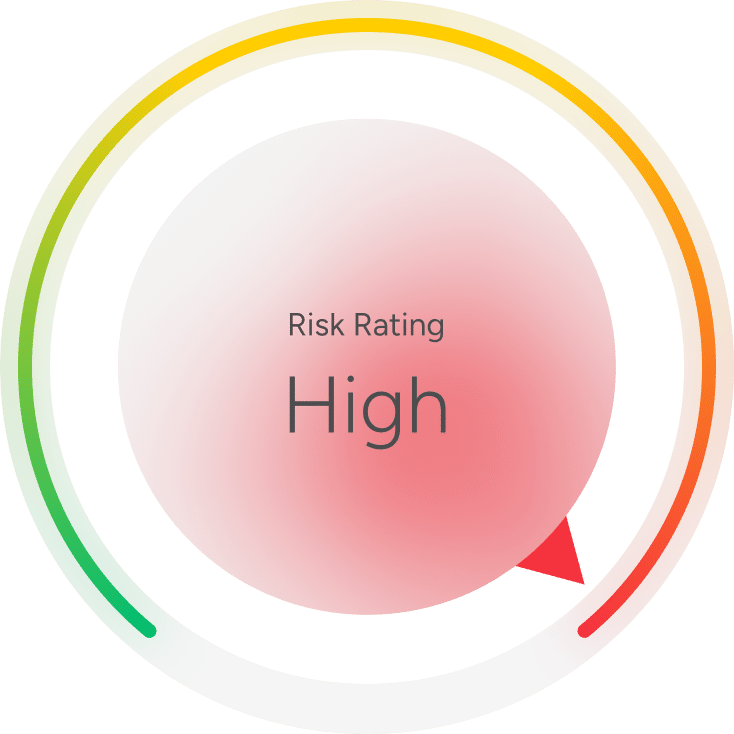
Rating Criteria
Rating Criteria Detail
Corporate Weaponization
Criteria:
Has canceled customers, suppliers, or vendors due to their political views or religious beliefs OR corporately boycotts, divests, or sanctions regions, people groups, or industries.
Risk Level:
HighRationale:
Zurich North America received a score of 100 on the 2026 Corporate Equality Index (CEI) from the Human Rights Campaign (HRC), a political stakeholder group. The company recruits employees based on sexual identity issues. The company discriminates against vendors that do not promote divisive sex and gender policies, indicating it prioritizes sexual issues over merit (1)(2)(3). Zurich North America received a score of 100 on the 2025 Corporate Equality Index (CEI) from the Human Rights Campaign (HRC), a political stakeholder group. The company recruits employees based on sexual identity issues. The company discriminates against vendors that do not promote divisive sex and gender policies, indicating it prioritizes sexual issues over merit (4)(5). In 2020, Zurich Insurance Group ended business with over one third of coal exposed companies who did not adopt “greener practices” and divested from 41% of its clients that fell under its coal policy (6)(7). In 2024, Zurich Insurance announced it would stop coverage of new fossil fuel projects (8). The company integrates ESG into its business practices. from its Supplier Code of Conduct: Suppliers must “take measures to reduce the negative environmental impact arising from their operations (for example with respect to any or all or the following: greenhouse gas (GHG) emissions, energy consumption, travel, water consumption, single use plastics, paper usage and operational waste)” (9).
Criteria:
Charitable giving (including employee matching programs) policies or practices discriminate against charitable organizations based on views or religious beliefs.
Risk Level:
HighRationale:
Zurich North America’s HRC 2026 CEI rating indicates the company will not donate to non-religious charities unless they embrace controversial sexual identity policies (1)(2)(3). Zurich North America’s HRC 2025 CEI rating indicates the company will not donate to non-religious charities unless they embrace controversial sexual identity policies (4)(5). Zurich Insurance does not appear to discriminate against religious organizations based on views or beliefs (6)(7).
Criteria:
Employment policies fail to protect against viewpoint or other discrimination and/or are ideological in nature.
Risk Level:
HighRationale:
Zurich North America’s HRC 2026 CEI rating indicates the company forces employees to attend at least one, controversial training on gender identity, sexual orientation, transgender issues, and divisive racial ideology. The company provides gender transition guidelines for its employees and a specific benefits guide with a comprehensive explanation of transgender services funded by the company (1)(2)(3). Zurich North America’s HRC 2025 CEI rating indicates the company forces employees to attend multiple, controversial trainings on gender identity, sexual orientation, transgender issues, and divisive racial ideology. The company provides gender transition guidelines for its employees and a specific benefits guide with a comprehensive explanation of transgender services funded by the company (4)(5). The company appears to prioritize diversity over merit in its recruitment. From its 2023 Sustainability Report: “we have equitable recruiting practices related to gender (EDGE Move), sexual identity and age (EDGEPlus)” (6). The company appears to prioritize diversity over merit in its supply chain. From its Sustainable Sourcing page: “If you are a diverse or minority small business and would like to make information on your company available to Zurich and the other companies that access Supplier.IO’s database, please determine your eligibility and register as a supplier with Supplier.IO” (7). The company offers unconscious bias training to its employees (8). Zurich Insurance does not provide viewpoint protections for its employees (9).
Corporate Governance and Public Policy
Criteria:
Uses corporate reputation to support causes, organizations, or policies hostile to freedom of expression.
Risk Level:
HighRationale:
Zurich North America’s HRC 2026 CEI rating indicates the company potentially agrees to allow a controversial stakeholder group focused on sexual identity issues to dictate marketing or advertising strategy. By doing so, the company risks dividing employees, alienating customers and harming shareholders (1)(2)(3). Zurich North America’s HRC 2025 CEI rating indicates the company agrees to allow a controversial stakeholder group focused on sexual identity issues to dictate marketing or advertising strategy. By doing so, the company risks dividing employees, alienating customers and harming shareholders (4)(5). The company opposed various state and local legislation intended to protect parental rights, girls’ sports, bathroom facilities, and gendered spaces (6). Zurich Insurance was a member of the Net Zero Insurance Alliance, but the firm has since withdrawn its membership (7)(8). The company supports DEI within its business practices. From its 2023 Sustainability Report: “We strive to integrate diversity, equity, inclusion and belonging (DEIB) into everything we do by taking targeted actions to increase and benefit from diversity within the workforce, to offer equal opportunities and to foster inclusion and belonging” (9). The company supports ESG within its business practices. From its 2023 Sustainability Report: “As a part of our responsible investor approach and our long-standing practice of our ESG integration, we apply a specific security selection process, which takes into account good ESG practices and climate risks in the investment decision process” (10). The company scored a 100 out of 100 on the 2023-2024 Corporate Equality Index (CEI) from the Human Rights Campaign (HRC), a political stakeholder group (11)(12).
Criteria:
Uses corporate funds to advance ideological causes, organizations, or policies hostile to freedom of expression.
Risk Level:
HighRationale:
Zurich North America’s HRC 2026 CEI rating indicates the company covers transgender related costs for its employees and their children, including paid short-term leave, puberty blockers, cross-sex hormones, chest surgeries, genital surgeries, medical visits, lab monitoring, and mental health benefits. The company also covers at least five of the following services: reconstructive hair removal, cosmetic hair removal, tracheal shave or reduction, facial surgeries, voice modification surgery, voice modification therapy, lipoplasty or filling for body masculinization or feminization, and travel and lodging expenses.Additionally, the company has potentially pledged philanthropic support of at least one organization or event that promotes sex and gender ideology. By allowing a political stakeholder group to dictate operations, the company increases health care costs and risks dividing employees, alienating customers and harming shareholders (1)(2)(3)(4). Zurich North America’s HRC 2025 CEI rating indicates the company covers transgender related costs for its employees and their children, including paid short-term leave, puberty blockers, cross-sex hormones, chest surgeries, genital surgeries, medical visits and lab monitoring, travel and lodging. Additionally, the company has pledged philanthropic support of at least one organization or event that promotes sex and gender ideology. By allowing a political stakeholder group to dictate operations, the company increases health care costs and risks dividing employees, alienating customers and harming shareholders (5)(6). Otherwise, there are no publicly known cases of the company using corporate funds to advance ideological causes, organizations, or policies (7).
Criteria:
Uses corporate political actions and/or financial contributions for ideological, non-business purposes.
Risk Level:
HighRationale:
Zurich North America’s HRC 2025 CEI rating indicates the company publicly advocated for controversial sex and gender ideology through local, state or federal legislation or initiatives. By allowing a political stakeholder group to dictate operations, the company risks dividing employees, alienating customers and harming shareholders (1)(2). In 2024, Zurich Insurance donated $10,000 to the Equality PAC (3). In 2022, Zurich Insurance donated $2,500 to the Equality PAC (4). In 2021, Zurich Insurance lobbied for the Environmental Justice Mapping and Data Collection Act, which was about the financial risks associated with climate change and the reporting of carbon emissions (5)(6)(7). The company has not used its lobbying for ideological purposes (8).