New Mexico
5 Companies Headquartered in New Mexico
Array Technologies, IMA Asset Managers LLC, Meow Wolf, Inc., PNM Resources Inc, Sandia National Laboratories
New Mexico Average CBR Summary
Avg. Company Rating
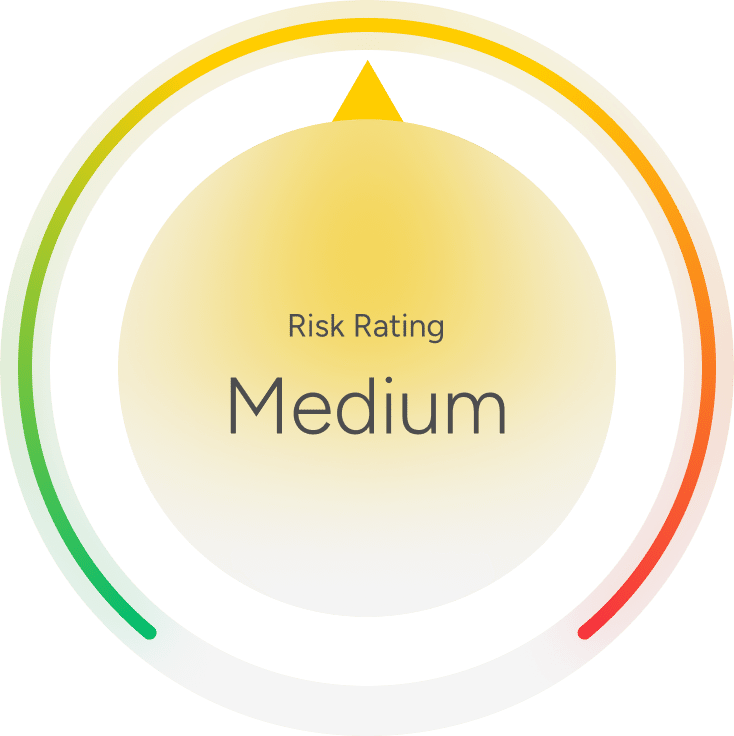
Avg. Rating Criteria
| Criteria | Risk Level |
|---|---|
| Cancellations | Lower Risk |
| Discriminatory Philanthropy | Medium Risk |
| Employment Protection | Medium Risk |
Corporate Weaponization
| Criteria | Risk Level |
|---|---|
| Advocacy Bias | Medium Risk |
| Funding | Medium Risk |
| Political Actions | High Risk |
Corporate Governance and Public Policy
State Leadership
State Pension Fund Summary
New Mexico has two main public pension systems: the Public Employees’ Retirement Association of Mexico (PERA) and the New Mexico Educational Retirement Board (ERB).
- The PERA board represents all eligible public employees; the board consists of 12 members: 2 Ex Officio (Secretary of State, State Treasurer); 4 elected by state members; 4 elected by municipal members; 2 elected by PERA retirees.
- PERA used to disclose its proxy voting records for directly owned equities on this website.
- NMPERA likely uses ISS for its proxy advisory services.
- According to its 2025 Annual Comprehensive Financial Report, the PERA’s general investment consultant is Verus.
- The ERB represents public school teachers and employees and consists of 9 members: 1 Ex Officio (State Treasurer); 2 members appointed by the Governor; 2 members appointed by the National Education Association of New Mexico; 1 member appointed by the Public Education Department; 1 member appointed by the Department of Higher Education; 1 member appointed by the American Association of University Professors; 1 member appointed by the American Federation of Teachers.
- The ERB discloses its proxy voting records for directly owned equities on this website.
- The ERB uses ISS for its proxy advisory services.
- According to a February 2025 document, the NMERB’s general investment consultant is NEPC.
The New Mexico State Investment Council (SIC) oversees New Mexico’s Tobacco Settlement Permanent Fund (TSPF). The New Mexico State Investment Council is comprised of 11 members. They include: the Governor, State Land Commissioner, DFA Secretary, a higher education CFO, 4 public members appointed by the Legislative Council, and 2 public members appointed by the Governor. The New Mexico Treasurer is an Ex Officio member of the SIC. According to the SIC, “since 2008, legislative priorities have resulted in nearly 100-percent of annual payments being appropriated, and minimal new funds going into the TSPF for investment.”
- New Mexico’s sovereign wealth is held in a family of permanent endowment funds managed by the New Mexico State Investment Council (SIC). The two largest are the Land Grant Permanent Fund (LGPF), established through New Mexico’s entry into statehood in 1912 and funded by revenue from leases and royalties produced by non-renewable natural resources (primarily oil and gas), and the Severance Tax Permanent Fund (STPF), created by the New Mexico Legislature in 1973. As of June 30, 2025, the LGPF stood at $35,589 million and the STPF at $11,095 million, with total assets under SIC management of $64.038 billion.
- The 11-member State Investment Council includes five ex officio members — the Governor (Chair), the Commissioner of Public Lands (Vice Chair), the State Treasurer, the Secretary of Finance and Administration, and the chief financial officer of a state institution of higher education — plus six public members appointed by the Legislature and Governor, confirmed by the Senate, serving staggered five-year terms.
- Like the pension funds above, the SIC’s permanent funds hold public equities — US equity and non-US equity each carry a 20% target allocation (40% combined) in the growth portfolio — making the Council’s proxy voting record a relevant indicator of how New Mexico leverages its sovereign wealth in support of or against ESG principles.
- Note: The data below on state voting does not include the votes cast through the public equities of New Mexico’s Sovereign Wealth Fund.
The “By Asset Manager” and “Asset Manager Voting” tables show the proxy voting records of the state’s asset managers who manage the pensions’ stock market portfolio through index, exchange-traded, or mutual funds. Since these are externally managed funds, the asset managers typically retain and exercise proxy voting privileges. This data is used to calculate the state’s pro-ESG and anti-ESG scores to see how the state leverages its externally managed funds in proxy voting.
The “State Voting” table shows the ERB’s proxy voting records for directly owned securities through pension fund portfolios. The 1792 Exchange commends the ERB for publicly disclosing this information online for its pensioners. The 1792 Exchange encourages PERA to publish its proxy voting records instead of keeping its pensioners in the dark about how the state votes on ESG issues with their money.
Both tables are important to show a comprehensive picture of the state’s proxy voting record.