
Hogan Lovells
Legal
United Kingdom
(Along with 82 other companies)
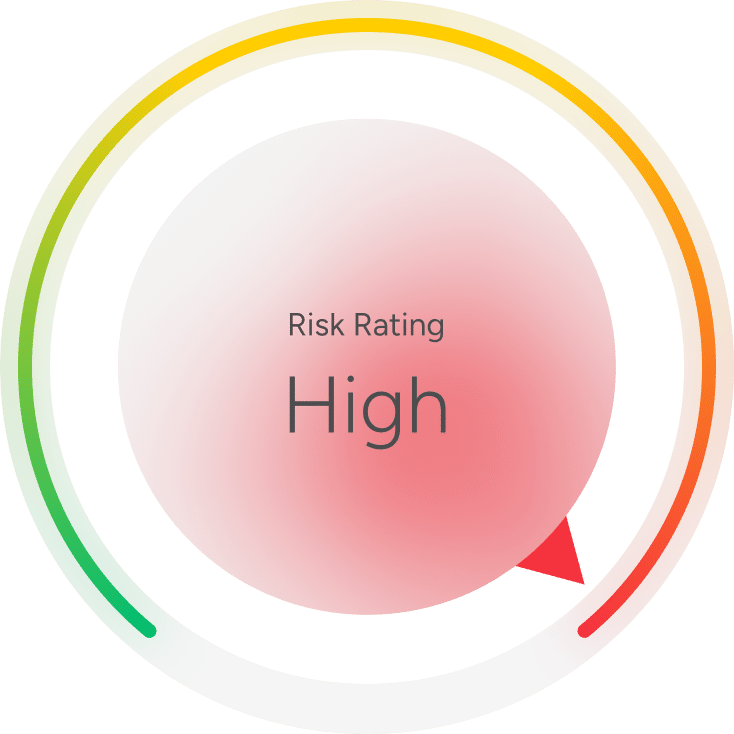
Hogan Lovells is High Risk. The company yields to political activism in shaping corporate governance, potentially alienating consumers, dividing employees, and harming shareholders. The company implements race and identity-based policies that replace merit, excellence, and integrity with preferential treatment and outcomes. Hogan Lovells embraces corporate initiatives that redirect its central focus from business goals to partisan policies and divisive issues. This approach fails to safeguard free exercise, free speech, and free enterprise.
Rating Criteria
| Criteria | Risk Level |
|---|---|
| Cancellations | High Risk |
| Discriminatory Philanthropy | Lower Risk |
| Employment Protection | High Risk |
Corporate Weaponization ⓘ
| Criteria | Risk Level |
|---|---|
| Advocacy Bias | High Risk |
| Funding | High Risk |
| Political Actions | High Risk |
Corporate Governance and Public Policy ⓘ
Latest Content
US civil rights agency targets 20 big law firms with demand for DEI data
March 19, 2025
1792 Exchange Marks One Year of Success in Campaign to End Corporate Reliance on SPLC’s “Hate List”
October 21, 2026
Following a year of research, corporate engagement, coalition building, and public accountability, major corporations have started to abandon SPLC-based charitable gift matching restrictions, charitable-giving processors have changed their practices, and hundreds of companies have faced calls for reform. October 17 marks one year of 1792 Exchange’s campaign to end corporate reliance on the Southern Poverty Law Center’s (SPLC) controversial “Hate List” to determine which nonprofit organizations are eligible for employee charitable giving and corporate matching programs. Working alongside Bowyer Research, Inspire Investing, The Heritage Foundation, Alliance Defending Freedom, and other coalition partners, 1792 Exchange has helped secure meaningful policy changes at major American corporations, raised national awareness of discriminatory charitable-giving practices, and pressed major charitable giving processors and hundreds of companies to review their reliance on the SPLC’s “Hate List” data. The campaign began with original research by 1792 Exchange into Benevity, one of the nation’s largest corporate charitable-giving platforms, which processes billions of dollars in donations annually. The research helped uncover how Benevity uses SPLC designations to exclude mainstream conservative, Christian, pro-family, and other advocacy organizations from corporate charitable gift matching programs, often without employees or corporate leadership understanding the criteria behind those restrictions. 1792 Exchange identified more than 200 Fortune …
Dustin DeVito on Timcast IRL: Benevity, the SPLC and the American Company
Podcast
October 20, 2026
Dustin DeVito, 1792 Exchange’s Director of Research, joined Timcast IRL to discuss his Washington Post piece on the political screen inside corporate gift matching. He explained how Benevity, the platform behind many corporate gift-match programs, relied on the Southern Poverty Law Center’s hate list, what happened to the archived evidence after the piece ran, and how companies are responding. He also covered the origin of the 1792 name and the launch of the American Company. The hate list behind your company’s gift matchDeVito describes how companies exposed in 2024 pledged to stop funding controversial non-business causes. Our Back to Business Tracker followed through on those pledges, and companies like Walmart and Lowe’s shifted to six-figure grants for hurricane relief in North Carolina. The hate list behind your company’s gift match DeVito explains how more than 200 Fortune 1000 companies use Benevity to vet the charities they match. Benevity’s internal vetting document shows its list builds on the SPLC’s hate list, which includes Turning Point USA, Alliance Defending Freedom, Focus on the Family, Do No Harm and Moms for Liberty. The SPLC’s credibility problemDeVito explains that the SPLC, now under federal indictment, is accused of funding the extremist groups it claims to counter. He points to the 2012 shooting at the …
Benevity and Fidelity Foundation Block Donations to the SPLC
Referenced
October 19, 2026
Benevity had paid no mind to the SPLC’s indictment, which connects them to funding the KKK and neo-Nazi organizations, until recently. After Dustin Devito’s article in The Washington Post called on charitable giving platforms like Benevity to discontinue their use of the discredited SPLC’s “hate list”, the company asked the piece to be edited to note that they too no longer allow donations to the SPLC. However, Benevity still uses the “hate list” to block donations to mainstream Christian and conservative organizations. Doug Napier comments on Benevity’s move in The Chronicle of Philanthropy. But the 1792 Exchange, a conservative nonprofit that works to eliminate bias in corporate America and a frequent critic of the SPLC, contends that Benevity is not a neutral platform. While it has blocked donations to the SPLC, it still uses the civil rights nonprofit’s “Hate Map” to disallow donations — sometimes to fringe hate groups but also sometimes to mainstream conservative nonprofits like Turning Point USA and Focus on the Family. “Benevity is putting their thumb on the scale and inappropriately disqualifying organizations,” said Douglas Napier, the 1792 Exchange CEO. That said, Napier doesn’t see a problem with Benevity blocking the SPLC. “If the house is …
Benevity Blocks Donations to the SPLC, but Still Uses Its Hate List
Referenced
October 19, 2026
Tyler O’Neil of the Daily Signal reported that the largest corporate charitable matching platform, Benevity, cut off the SPLC from receiving donations, but has yet to remove the SPLC’s “hate list” as a filter for others, meaning that while the SPLC is no longer eligible, it remains eligible to determine the corporate giving opportunities of hundreds of thousands of employees across the country. Benevity helps nearly 1,000 corporate employers facilitate employee charitable giving by connecting firms with a network of 513,000 nonprofits. For years, the company has offered corporate clients screening based on the SPLC’s “hate” list. Yet a small correction note in a Washington Post op-ed revealed Thursday that Benevity had rendered the SPLC ineligible to receive charitable donations on the platform. “Blocking donations to the SPLC while staying silent on the filter that uses the SPLC’s ‘hate list’ to exclude other charities is an incomplete and unacceptable response,” Greg Scott, executive vice president at 1792 Exchange, told the Daily Signal in a statement Thursday. “No serious platform should screen nonprofits with a disgraced, indicted activist organization. “Benevity should drop that filter entirely and tell its clients and the public it has done so,” Scott added. Benevity did not …