John Deere
Companies that likely use Benevity to vet charitable recipients, thereby discriminating against mainstream advocacy organizations through the SPLC's overly broad "Hate List."
Companies who signed the Business Roundtable 2019 Stakeholder Capitalism statement
The biggest 1000 U.S. companies by revenue according to form 10-K.
Companies that offer so-called transgender healthcare for their employees and covered dependents.


Rating Overview
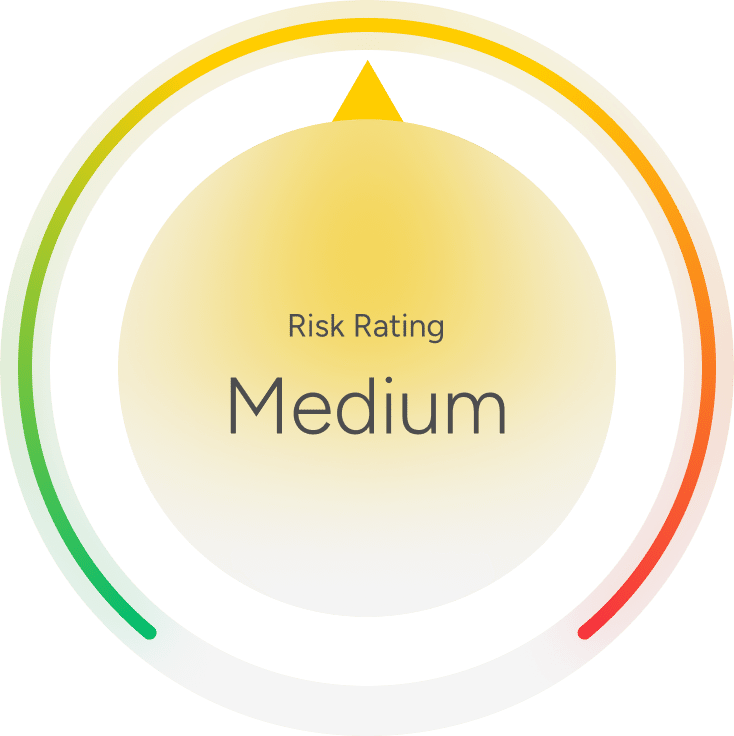
Rating Criteria
Rating Criteria Detail
Corporate Weaponization
Criteria:
Has canceled customers, suppliers, or vendors due to their political views or religious beliefs OR corporately boycotts, divests, or sanctions regions, people groups, or industries.
Risk Level:
MediumRationale:
John Deere received a score of 95 on the 2025 Corporate Equality Index (CEI) from the Human Rights Campaign (HRC), a political stakeholder group. The company recruits employees based on sexual identity issues. The company discriminates against vendors that do not promote divisive sex and gender policies, indicating it prioritizes sexual issues over merit (1)(2). However, the company has not canceled customers, suppliers, or vendors based on political views or religious beliefs (3).
Criteria:
Charitable giving (including employee matching programs) policies or practices discriminate against charitable organizations based on views or religious beliefs.
Risk Level:
HighRationale:
John Deere’s HRC 2025 CEI rating indicates the company will not donate to non-religious charities unless they embrace controversial sexual identity policies (1)(2). John Deere will not provide grants to religious groups that “perform ministry, proselytization, or advocacy for any specific religious worldview” but acknowledges that “faith-motivated organizations may be considered eligible, at the sole discretion of John Deere and the John Deere Foundation, if the organizations serve a secular purpose” (3). John Deere’s gift matching program does permit donations to religious colleges and universities but not to seminaries. Religious groups for “sectarian purposes” are also ineligible for gifts (4). The company likely uses Benevity as its charitable giving platform. Benevity vets charities according to the Southern Poverty Law Center’s Hate List, which includes mainstream libertarian, conservative, family, and religious advocacy organizations (5)(6)(7).
Criteria:
Employment policies fail to protect against viewpoint or other discrimination and/or are ideological in nature.
Risk Level:
MediumRationale:
In the past, John Deere has required employees to attend multiple, controversial trainings on gender identity, sexual orientation, transgender issues, divisive racial ideology, unconscious bias, anti-racism, white privilege, and DEI. However, in July 2024, John Deere pledged to “[audit] all company-mandated training materials and policies to ensure the absence of socially motivated messages” (1)(2). John Deere’s HRC 2025 CEI rating indicates the company forces employees to attend multiple, controversial trainings on gender identity, sexual orientation, transgender issues, and divisive racial ideology. The company provides gender transition guidelines for its employees and a specific benefits guide with a comprehensive explanation of transgender services funded by the company (3)(4). In its July 2024 statement, John Deere claimed that “the existence of diversity quotas… have never been and are not company policy.” However, John Deere has frequently made statements in public reports prioritizing diversity over merit in its supply chain and, according to its statement, is “committed to track and advance” the diversity of the company. According to its 2022 Sustainability Report, from 2022 to 2025, John Deere is seeking to increase its minority-owned sourcing by 40% and its women-owned sourcing by 45%. John Deere also encourages its suppliers “to adopt a supplier diversity sourcing program with goals to source with small and/or disadvantaged business enterprises” (5)(6). In August 2025, following engagement with the NLPC, Deere removed DEI-related requirements from its Corporate Governance Guidelines (7)(8)(9). John Deere is “working on developing sustainable DEI practices through the integration of principles and objectives into company policies, procedures, and the human capital management lifecycle” which includes “talent attraction, engagement, and retention” of employees. John Deere appears to compensate employees based on DEI metrics. DEI is “the only global behavioral performance metric upon which all salaried employees are evaluated” (10). In February 2025, John Deere announced it will no longer require suppliers to report their diversity spending “to allow them to focus on delivering the high-quality products and services that we expect from them” (11). John Deere does not provide viewpoint protections for its employees (12).
Corporate Governance and Public Policy
Criteria:
Uses corporate reputation to support causes, organizations, or policies hostile to freedom of expression.
Risk Level:
MediumRationale:
John Deere’s CEO, John C. May, is a member of the Business Roundtable and former CEO Samuel R. Allen signed its 2019 Statement on the Purpose of a Corporation, which promotes stakeholder capitalism over traditional obligations to shareholders (1)(2). The company HRC 2025 CEI rating indicates the company agrees to allow a controversial stakeholder group focused on sexual identity issues to dictate marketing or advertising strategy. By doing so, the company risks dividing employees, alienating customers and harming shareholders (3)(4). John Deere employs a Global Head of Diversity, Equity, and Inclusion and hosts a DEI Global Advisory Board (5). The company is “taking steps to embed DEI principles into the foundation of how the company does business every day” and “Embedding Diversity, Equity, and Inclusion (DEI) principles into all aspects of how [it runs]” (6)(7). John Deere used to encourage employees to use their “personal pronouns” in “internal and external communications, including email correspondence and email signatures”. However, it claims this was never company policy and reaffirmed it will not do this in its July 2024 statement (8)(9)(10). The company pledged to invest $20 Billion into Electric vehicle production and new factories (11)(12).
Criteria:
Uses corporate funds to advance ideological causes, organizations, or policies hostile to freedom of expression.
Risk Level:
MediumRationale:
John Deere’s HRC 2025 CEI rating indicates the company covers transgender related costs for its employees and their children, including paid short-term leave, puberty blockers, cross-sex hormones, chest surgeries, genital surgeries, medical visits and lab monitoring, travel and lodging. Additionally, the company has pledged philanthropic support of at least one organization or event that promotes sex and gender ideology. By allowing a political stakeholder group to dictate operations, the company increases health care costs and risks dividing employees, alienating customers and harming shareholders (1)(2). The company offers two UnitedHealthcare medical plans, which both cover transgender services (3). John Deere has a history of giving to divisive causes. However, in July 2024, the company pledged to “no longer participate in or support external social or cultural awareness parades, festivals, or events” and to “solely focus on sponsorships supporting the business and brand” (4)(5). The company is a sponsor of America250, a bipartisan initiative created to commemorate the 250th anniversary of the United States in 2026 (6). Otherwise, there are no publicly known cases of John Deere using corporate funds to advance ideological causes, organizations, or policies (7).
Criteria:
Uses corporate political actions and/or financial contributions for ideological, non-business purposes.
Risk Level:
HighRationale:
John Deere’s HRC 2025 CEI rating indicates the company publicly advocated for controversial sex and gender ideology through local, state or federal legislation or initiatives. By allowing a political stakeholder group to dictate operations, the company risks dividing employees, alienating customers and harming shareholders (1)(2). The company has not used its PAC donations or lobbying for ideological purposes (3)(4)(5).
Related Companies

Capital Goods

RTX

Capital Goods

Lockheed Martin
Capital Goods
Northrop Grumman

Capital Goods
Boeing

Capital Goods, Household and Personal Products
3M

Capital Goods
Honeywell International

Capital Goods
BAE Systems
Capital Goods
General Dynamics

Capital Goods
L3Harris Technologies

Capital Goods
Huntington Ingalls Industries (HII)