
Mastercard
Companies who scored 100% on the 2023-2024 Corporate Equality Index.
Companies who scored 100% on the 2025 Corporate Equality Index.
Companies provide a benefit package for employees which covers travel/lodging costs for an abortion.
Company is a corporate partner of Ashoka, a global network of entrepreneurs focused on widespread, systemic social and environmental change
Companies who signed the Business Roundtable 2019 Stakeholder Capitalism statement
The biggest 1000 U.S. companies by revenue according to form 10-K.
Companies who were members of the Global Alliance for Responsible Media, which subjectively demonetized advertisements and suppressed content to stifle mainstream perspectives online
Companies that offer so-called transgender healthcare for their employees and covered dependents.


Rating Overview
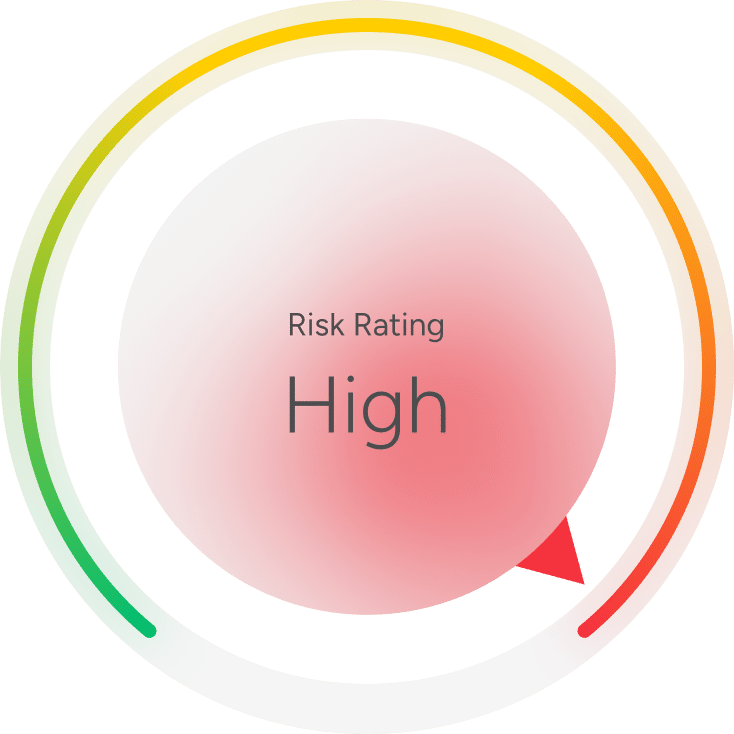
Rating Criteria
Rating Criteria Detail
Corporate Weaponization
Criteria:
Has canceled customers, suppliers, or vendors due to their political views or religious beliefs OR corporately boycotts, divests, or sanctions regions, people groups, or industries.
Risk Level:
HighRationale:
Mastercard received a score of 100 on the 2025 Corporate Equality Index (CEI) from the Human Rights Campaign (HRC), a political stakeholder group. The company recruits employees based on sexual identity issues. The company discriminates against vendors that do not promote divisive sex and gender policies, indicating it prioritizes sexual issues over merit (1)(2). The company publicly terminated business relationships due to political views with The David Horowitz Freedom Center after the Southern Poverty Law Center (SPLC) accused them of being a hate group (3)(4). The company was a member of the Global Alliance for Responsible Media, which demonetized and suppressed content that it deemed to spread “hate speech” or “misinformation”, discuss “debated social issues in a negative or partisan context”, or “vilif[y]” individuals based on sexual orientation and gender identity. These arbitrary guidelines were used to censor mainstream perspectives online (5)(6)(7). Mastercard had a history of tying executive compensation to ESG metrics. However, in April 2025, the company pledged that “the environmental, social and governance modifier will no longer be included in our annual incentive compensation plans; priorities that are critical to Mastercard’s long-term success will continue to be evaluated as part of the company’s overall strategic performance” (8)(9).
Criteria:
Charitable giving (including employee matching programs) policies or practices discriminate against charitable organizations based on views or religious beliefs.
Risk Level:
HighRationale:
Mastercard’s HRC 2025 CEI rating indicates the company will not donate to non-religious charities unless they embrace controversial sexual identity policies (1)(2). The company maintains a Benevity portal; however, the company has publicly confirmed that it does not use the overly broad SPLC “Hate List” to vet charitable recipients (3)(4)(5)(6).
Criteria:
Employment policies fail to protect against viewpoint or other discrimination and/or are ideological in nature.
Risk Level:
HighRationale:
Mastercard’s HRC 2025 CEI rating indicates the company forces employees to attend multiple, controversial trainings on gender identity, sexual orientation, transgender issues, and divisive racial ideology. The company provides gender transition guidelines for its employees and a specific benefits guide with a comprehensive explanation of transgender services funded by the company (1)(2). The company implements an inclusion training program and a Conscious Inclusion Learning Experience (3). Mastercard appears to prioritize diversity over merit in its business structure through the establishment of racial targets for its leadership composition. The company is seeking to “grow U.S. Black leadership at the vice president level and above at Mastercard by 50% by 2025, from 2020” (4). The company “committed to increase our procurement with Black-owned businesses to $100 million annually by 2025” (5). The company does not provide viewpoint protections for its employees (6).
Corporate Governance and Public Policy
Criteria:
Uses corporate reputation to support causes, organizations, or policies hostile to freedom of expression.
Risk Level:
HighRationale:
Mastercard’s HRC 2025 CEI rating indicates the company agrees to allow a controversial stakeholder group focused on sexual identity issues to dictate marketing or advertising strategy. By doing so, the company risks dividing employees, alienating customers and harming shareholders (1)(2). Its PGLE membership reflects its commitment to “operationalize” company coverage of transgender surgery and treatment, the vetting of business partners based on LGBTQ+ policies, and the financial support of LGBTQ organizations on a global level (3)(4). The company signed an open letter endorsing the Equality Act, a contentious proposal to amend the 1964 Civil Rights Act by adding sexual orientation and so-called gender identity as protected categories. The legislation would, among other implications, grant biological men access to women-only spaces such as sports teams and public restrooms, and compel healthcare providers to deliver sex-denying healthcare and opposed the Georgia voting reform law (5)(6). The company utilizes a new product code for legal firearms, allowing for the potential tracking of legal gun purchases (7). CEO Michael Miebach is a member of the Business Roundtable and Former CEO Ajay Banga signed its 2019 Statement on the Purpose of a Corporation, which promotes stakeholder capitalism over traditional obligations to shareholders (8)(9). The company opposed various state and local legislation intended to protect parental rights, girls’ sports, bathroom facilities, and gendered spaces (10). Its CEO signed the CEO Action for Diversity & Inclusion pledge, which includes a commitment to promote DEI through bias education training in the workplace (11)(12). The company was a contributing member of GARM’s Action Guide to Reduce Media Greenhouse Gas Emissions and The Global Media Sustainability Framework which provides an action plan for media companies to transition to net zero greenhouse gas emissions (13)(14). Mastercard scored a 100 out of 100 on the 2023-2024 Corporate Equality Index (CEI) from the Human Rights Campaign (HRC), a political stakeholder group (15)(16). The company announced that it will contribute donations to Trump Accounts for the children of its employees (17)(18).
Criteria:
Uses corporate funds to advance ideological causes, organizations, or policies hostile to freedom of expression.
Risk Level:
HighRationale:
Mastercard provides a benefits package for employees that covers travel/lodging costs for an abortion and transgender medical procedures for covered employees and dependents, including children (1)(2)(3)(4)(5). The company indirectly donates to Planned Parenthood through its employee gift matching (6)(7). The company’s HRC 2025 CEI rating indicates the company covers transgender related costs for its employees and their children, including paid short-term leave, puberty blockers, cross-sex hormones, chest surgeries, genital surgeries, medical visits and lab monitoring, travel and lodging. Additionally, the company has pledged philanthropic support of at least one organization or event that promotes sex and gender ideology. By allowing a political stakeholder group to dictate operations, the company increases health care costs and risks dividing employees, alienating customers and harming shareholders (8)(9). The company is a Silver Corporate Partner of the HRC (10)(11)(12)(13)(14). The company is a founding member of the PGLE (15). It was a member of the Global Alliance for Responsible Media (16)(17)(18). The company pledged over $5 million to the Black Lives Matter movement and related causes, including the National Urban League (19)(20). The company is a corporate partner of the NGLCC (21). The company is a member of the MCCA, indicating its focus on recruiting, retaining, and promoting employees based on race (22)(23). Mastercard and Mastercard Foundation are a corporate partner of Ashoka, a global network of entrepreneurs focused on widespread, systemic social and environmental change (24)(25). The company is a Legacy Member of Out Leadership, a global network of LGBT+ business leaders from major companies that seeks to advance LGBTQ+ representation in corporate leadership and integrate LGBTQ+ priorities into workplace strategies. The first LGBTQ+ B-Corporation, Out Leadership accomplishes this through convening leadership summits, directing talent initiatives, and providing advisory solutions that emphasize the positive impact of LGBT+ inclusion for business (26)(27)(28)(29). Otherwise, there are no publicly known cases of Mastercard using corporate funds to advance ideological causes, organizations, or policies (30).
Criteria:
Uses corporate political actions and/or financial contributions for ideological, non-business purposes.
Risk Level:
HighRationale:
Mastercard’s HRC 2025 CEI rating indicates the company publicly advocated for controversial sex and gender ideology through local, state or federal legislation or initiatives. By allowing a political stakeholder group to dictate operations, the company risks dividing employees, alienating customers and harming shareholders (1)(2). In 2020, 2022, 2024, the company donated to Equality PAC (3)(4)(5)(6). Mastercard has not lobbied for ideological purposes (7).
Related Resources
Related Companies
Banks, Diversified Financials

JPMorgan Chase

Banks, Diversified Financials
BMO Harris
Banks, Diversified Financials

Bank of America

Banks, Diversified Financials
Wells Fargo

Diversified Financials

Berkshire Hathaway

Banks, Diversified Financials
Capital One Financial

Diversified Financials
American Express

Banks, Diversified Financials
Morgan Stanley

Diversified Financials
Visa

Diversified Financials
Discover Financial Services