
Morgan Stanley
Companies who scored 100% on the 2023-2024 Corporate Equality Index.
Companies who scored 100% on the 2025 Corporate Equality Index.
Companies provide a benefit package for employees which covers travel/lodging costs for an abortion.
Companies that likely use Benevity to vet charitable recipients, thereby discriminating against mainstream advocacy organizations through the SPLC's overly broad "Hate List."
Companies who signed the Business Roundtable 2019 Stakeholder Capitalism statement
These companies are committed to leveraging shareholder or investor assets for net-zero emission goals and climate ambitions for GFANZ, Climate Action 100+, CERES, PCAF, UN PRI, NZLA, FIT, or HSCP.
The biggest 1000 U.S. companies by revenue according to form 10-K.
Companies that offer so-called transgender healthcare for their employees and covered dependents.



Rating Overview
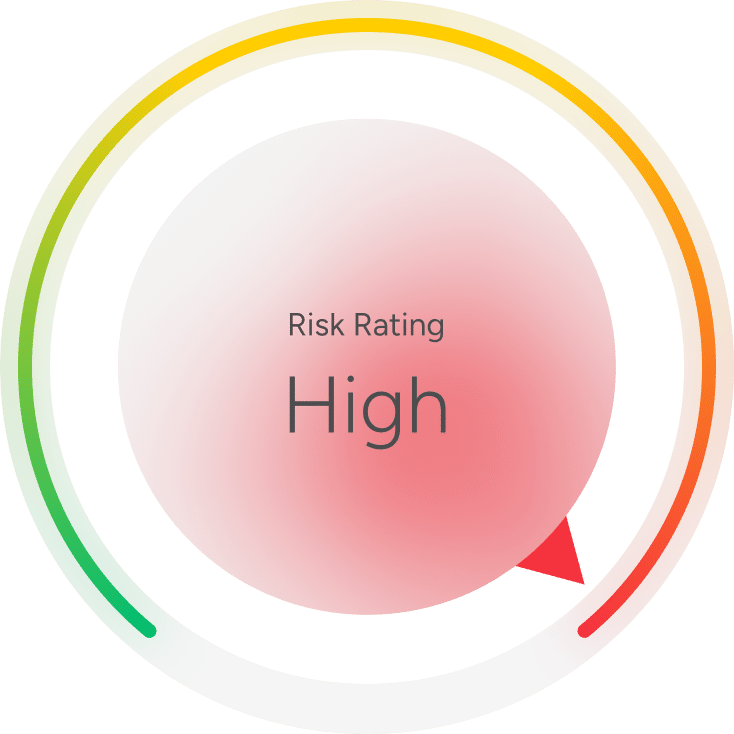
Rating Criteria
Rating Criteria Detail
Corporate Weaponization
Criteria:
Has canceled customers, suppliers, or vendors due to their political views or religious beliefs OR corporately boycotts, divests, or sanctions regions, people groups, or industries.
Risk Level:
HighRationale:
In July 2022, West Virginia placed Morgan Stanley on its Restricted Financial Institutions List for its “boycott of energy companies” according to its ESG policies and publicly available statements. The West Virginia State Treasurer will remove Morgan Stanley from the list “if the institution demonstrates that it has ceased all activity that boycotts energy companies according to West Virginia Code §§12-1C-1” In West Virginia’s view, Morgan Stanley did not cease its boycott and therefore remained on its 2025 list (1)(2)(3). The company will also not fund certain legal guns and ammunition dealers (4). In 2020, Morgan Stanley announced that it would not directly finance new oil and gas exploration and development in the Arctic region, including the Arctic National Wildlife Refuge, according to its internal policies and publicly available statements. This commitment reflects increasing integration of environmental and social risk considerations into financing decisions related to Arctic oil and gas development (5)(6). Morgan Stanley received a score of 100 on the 2025 Corporate Equality Index (CEI) from the Human Rights Campaign (HRC), a political stakeholder group. The company recruits employees based on sexual identity issues. The company discriminates against vendors that do not promote divisive sex and gender policies, indicating it prioritizes sexual issues over merit (7)(8). The company is a signatory of the Principles for Responsible Investment, incorporating ESG issues into investment analysis, decision-making, and other business practices (9)(10). Morgan Stanley received a letter from over two dozen states warning it to “to take five concrete actions to demonstrate their ‘commitment to a fiduciary model grounded in financial integrity, not political advocacy’” (11).
Criteria:
Charitable giving (including employee matching programs) policies or practices discriminate against charitable organizations based on views or religious beliefs.
Risk Level:
HighRationale:
Morgan Stanley’s HRC 2025 CEI rating indicates the company will not donate to non-religious charities unless they embrace controversial sexual identity policies (1)(2). The company likely uses Benevity as its charitable giving platform. Benevity vets charities according to the Southern Poverty Law Center’s Hate List, which includes mainstream libertarian, conservative, family, and religious advocacy organizations (3)(4)(5). Morgan Stanley used to refuse to fund “religious organizations” (6). However, in 2026, after Bowyer Research engaged with the company, Morgan Stanley opened up its charitable giving to all 501(c)3 organizations, including religious ones (7)(8)(9).
Criteria:
Employment policies fail to protect against viewpoint or other discrimination and/or are ideological in nature.
Risk Level:
HighRationale:
Morgan Stanley’s HRC 2025 CEI rating indicates the company forces employees to attend multiple, controversial trainings on gender identity, sexual orientation, transgender issues, and divisive racial ideology. The company provides gender transition guidelines for its employees and a specific benefits guide with a comprehensive explanation of transgender services funded by the company (1)(2). In June 2022, America First Legal filed a letter with the EEOC requesting a civil rights investigation into Morgan Stanley over discriminatory practices in intern recruitment (3)(4). Morgan Stanley’s CEO James P. Gorman signed Catalyst’s Champions for Change pledge, indicating its support of DEI in its leadership composition through the establishment of gender and racial targets (5)(6). The company is a signatory of the Gender & Diversity KPI Alliance, appearing to prioritize diversity over merit in its business structure through the establishment of gender and racial targets for its leadership composition and its support of DEI in its hiring and promotions (7)(8). The company implements inclusive leadership training for its employees (9). 11 Attorneys General wrote a letter to Morgan Stanley regarding its DEI policies, arguing that business and investment decisions based on race/sex could violate the company’s fiduciary duty to maximize shareholder value (10)(11). The company does not provide viewpoint protections for its employees (12).
Corporate Governance and Public Policy
Criteria:
Uses corporate reputation to support causes, organizations, or policies hostile to freedom of expression.
Risk Level:
HighRationale:
Morgan Stanley’s HRC 2025 CEI rating indicates the company agrees to allow a controversial stakeholder group focused on sexual identity issues to dictate marketing or advertising strategy. By doing so, the company risks dividing employees, alienating customers and harming shareholders (1)(2). Morgan Stanley and E*TRADE signed an open letter endorsing the Equality Act, a contentious proposal to amend the 1964 Civil Rights Act by adding sexual orientation and so-called gender identity as protected categories. The legislation would, among other implications, grant biological men access to women-only spaces such as sports teams and public restrooms, and compel healthcare providers to deliver sex-denying healthcare (3). The company has a history of LGBTQ advocacy, supporting amicus briefs overturning the Defense of Marriage Act (2013 and 2015) and supporting expanding Civil Rights Protections for sexual orientation (4). The company is a PCAF member, committed to net zero carbon emissions by 2050 (5)(6). CEO James Gorman is a member of the Business Roundtable and signed its 2019 Statement on the Purpose of a Corporation, which promotes stakeholder capitalism over traditional obligations to shareholders (7)(8). Subsidiary Parametric is a member of the Climate Action 100+ and Ceres Network, which aim to proliferate climate action and ESG practices in the finance industry, respectively (9)(10). In the wake of backlash against DEI, Morgan Stanley dropped its diverse representation section its annual 10-K filing (11). The company is a signatory to the CFA Institute’s Diversity, Equity, and Inclusion Code, indicating its support of DEI in its recruitment, hiring, onboarding, and promotions. Furthermore, the company pledges to integrate DEI into its policies, promote DEI in the investment industry, and provide regular reporting on its DEI metrics to the CFA Institute (12)(13)(14). The company signed an amicus brief in opposition to the 2016 North Carolina bathroom bill HB2, which required people to use the bathroom of their biological sex (15). Eaton Vance CEO, Thomas E. Faust Jr., signed the CEO Action for Diversity & Inclusion pledge, which includes a commitment to promote DEI through bias education training in the workplace (16)(17). Morgan Stanley’s CEO signed the CEO Action for Diversity & Inclusion pledge, which includes a commitment to promote DEI through bias education training in the workplace (18)(19). It was a part of the Net Zero Banking Alliance, committed to carbon neutrality by 2050. However, it withdrew its membership in December 2024 likely over growing concerns of potential antitrust violations (20)(21). In 2019, Morgan Stanley announced that it would be financing efforts to reduce plastic waste (22). However, in September 2024, the company “quietly shelved” the efforts due to not getting “the quality of data needed to meet our disclosure standards” (23)(24). Morgan Stanley announced that it will match $1,000 of government contributions to Trump Accounts for the children of its employees (25)(26).
Criteria:
Uses corporate funds to advance ideological causes, organizations, or policies hostile to freedom of expression.
Risk Level:
HighRationale:
Morgan Stanley’s HRC 2025 CEI rating indicates the company covers transgender related costs for its employees and their children, including paid short-term leave, puberty blockers, cross-sex hormones, chest surgeries, genital surgeries, medical visits and lab monitoring, travel and lodging. Additionally, the company has pledged philanthropic support of at least one organization or event that promotes sex and gender ideology. By allowing a political stakeholder group to dictate operations, the company increases health care costs and risks dividing employees, alienating customers and harming shareholders (1)(2). The company is a Platinum Corporate Partner of the HRC (3)(4)(5)(6)(7). The company was a jade level partner of the 2025 ROMBA Conference, an annual LGBTQ+ professional and recruiting conference for students, business professionals, corporations, and business schools. The conference emphasizes identity-based networking and recruiting over merit and professional qualifications, reflecting the influence of DEI activism in corporate and academic settings (8)(9)(10)(11). The company is a partner of the 2026 ROMBA Conference, an annual LGBTQ+ professional and recruiting conference for students, business professionals, corporations, and business schools. The conference emphasizes identity-based networking and recruiting over merit and professional qualifications, reflecting the influence of DEI activism in corporate and academic settings (12)(13)(14)(15). Morgan Stanley Global Impact Funding Trust donated $50,000 to Compassion & Choices (C&C), a nonprofit organization that advocates for the expansion of physician-assisted suicide and related practices including medical aid in dying (MAID), voluntarily stopping eating and drinking (VSED), palliative sedation that “advances the time of death,” and dementia directives that allow patients to refuse food and fluids. C&C also advances legislation, litigation, and federal policy to prevent healthcare providers and institutions from limiting patients’ access to life-ending practices on ethical, religious, or conscience-based grounds (16)(17)(18)(19)(20)(21). Morgan Stanley is an Amethyst Sponsor of Utah Pride 2026 (22).
Criteria:
Uses corporate political actions and/or financial contributions for ideological, non-business purposes.
Risk Level:
HighRationale:
Morgan Stanley’s HRC 2025 CEI rating indicates the company publicly advocated for controversial sex and gender ideology through local, state or federal legislation or initiatives. By allowing a political stakeholder group to dictate operations, the company risks dividing employees, alienating customers and harming shareholders (1)(2). The company donated to the Equality PAC but has not lobbied for ideological purposes (3)(4)(5).
Related Resources
Related Companies
Banks, Diversified Financials

JPMorgan Chase

Banks, Diversified Financials
BMO Harris
Banks, Diversified Financials

Bank of America

Banks
PNC Financial Services Group

Banks, Diversified Financials
Wells Fargo

Banks
Fifth Third Bank (5/3 Bank)

Banks
U.S. Bancorp

Diversified Financials

Berkshire Hathaway

Banks
Truist Financial

Banks, Diversified Financials
Capital One Financial