
Pfizer
Companies who scored 100% on the 2023-2024 Corporate Equality Index.
Companies who scored 100% on the 2025 Corporate Equality Index.
Companies that scored a 100 on the 2026 Corporate Equality Index.
Companies that likely use Benevity to vet charitable recipients, thereby discriminating against mainstream advocacy organizations through the SPLC's overly broad "Hate List."
Companies who signed the Business Roundtable 2019 Stakeholder Capitalism statement
These companies are committed to leveraging shareholder or investor assets for net-zero emission goals and climate ambitions for GFANZ, Climate Action 100+, CERES, PCAF, UN PRI, NZLA, FIT, or HSCP.
The biggest 1000 U.S. companies by revenue according to form 10-K.
Companies who have given money to the SPLC through corporate gifts or employee matching, supporting a controversial organization that claims to combat extremism while funding extremist groups and labeling mainstream political and religious views as “hateful"
Companies that offer so-called transgender healthcare for their employees and covered dependents.



Rating Overview
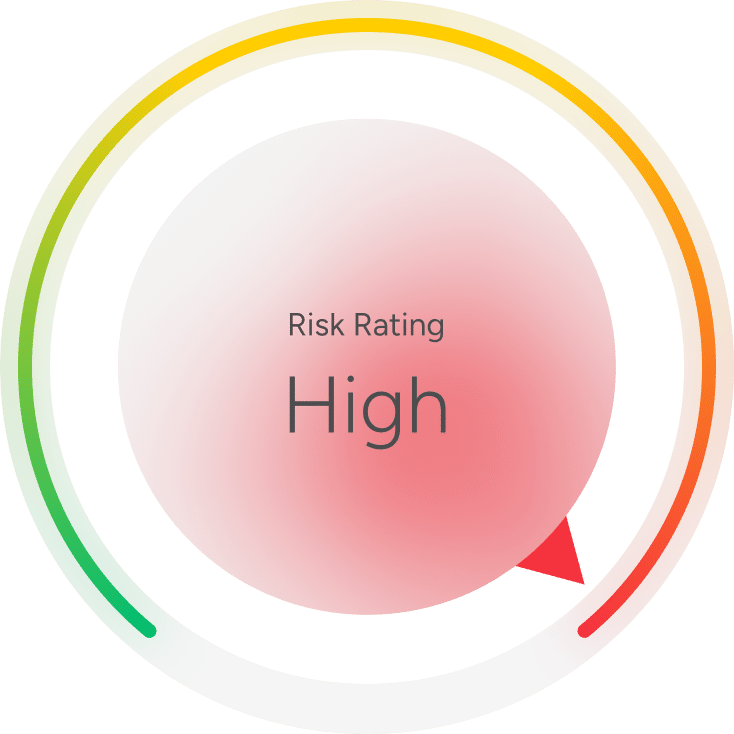
Rating Criteria
Rating Criteria Detail
Corporate Weaponization
Criteria:
Has canceled customers, suppliers, or vendors due to their political views or religious beliefs OR corporately boycotts, divests, or sanctions regions, people groups, or industries.
Risk Level:
MediumRationale:
Pfizer received a score of 100 on the 2026 Corporate Equality Index (CEI) from the Human Rights Campaign (HRC), a political stakeholder group. The company recruits employees based on sexual identity issues. The company discriminates against vendors that do not promote divisive sex and gender policies, indicating it prioritizes sexual issues over merit (1)(2)(3). The company received a score of 100 on the 2025 Corporate Equality Index (CEI) from the Human Rights Campaign (HRC), a political stakeholder group. The company recruits employees based on sexual identity issues. The company discriminates against vendors that do not promote divisive sex and gender policies, indicating it prioritizes sexual issues over merit (4)(5). Pfizer integrates ESG into its business practices. From its Blue Book report: “We recognize the importance of Environmental, Social and Governance (ESG) issues as part of our overall business strategy and work to integrate ESG perspectives into our decision-making and governance processes” (6). However, the company has not publicly canceled customers, suppliers, or vendors based on political views or religious beliefs (7).
Criteria:
Charitable giving (including employee matching programs) policies or practices discriminate against charitable organizations based on views or religious beliefs.
Risk Level:
HighRationale:
Pfizer’s HRC 2026 CEI rating indicates the company will not donate to non-religious charities unless they embrace controversial sexual identity policies (1)(2)(3). Pfizer’s HRC 2025 CEI rating indicates the company will not donate to non-religious charities unless they embrace controversial sexual identity policies (4)(5). The company likely uses Benevity as its charitable giving platform. Benevity vets charities according to the Southern Poverty Law Center’s Hate List, which includes mainstream libertarian, conservative, family, and religious advocacy organizations (6)(7)(8).
Criteria:
Employment policies fail to protect against viewpoint or other discrimination and/or are ideological in nature.
Risk Level:
HighRationale:
Pfizer’s HRC 2026 CEI rating indicates the company forces employees to attend at least one, controversial training on gender identity, sexual orientation, transgender issues, and divisive racial ideology. The company provides gender transition guidelines for its employees and a specific benefits guide with a comprehensive explanation of transgender services funded by the company (1)(2)(3). Pfizer’s HRC 2025 CEI rating indicates the company forces employees to attend multiple, controversial trainings on gender identity, sexual orientation, transgender issues, and divisive racial ideology. The company provides gender transition guidelines for its employees and a specific benefits guide with a comprehensive explanation of transgender services funded by the company (4)(5). The company’s Chairman and CEO Albert Bourla signed Catalyst’s Champions for Change pledge, indicating its support of DEI in its leadership composition through the establishment of gender and racial targets (6)(7). Pfizer was a signatory of the Gender & Diversity KPI Alliance, appearing to prioritize diversity over merit in its business structure through the establishment of gender and racial targets for its leadership composition and its support of DEI in its hiring and promotions (8)(9). The company requires its employees to take conscious inclusion, unconscious bias, and allyship training and requires its managers to participate in Conscious Inclusion workshops (10). Pfizer does not provide viewpoint protections for its employees (11).
Corporate Governance and Public Policy
Criteria:
Uses corporate reputation to support causes, organizations, or policies hostile to freedom of expression.
Risk Level:
HighRationale:
Pfizer’s HRC 2026 CEI rating indicates the company potentially agrees to allow a controversial stakeholder group focused on sexual identity issues to dictate marketing or advertising strategy. By doing so, the company risks dividing employees, alienating customers and harming shareholders (1)(2)(3). The company’s HRC 2025 CEI rating indicates the company agrees to allow a controversial stakeholder group focused on sexual identity issues to dictate marketing or advertising strategy. By doing so, the company risks dividing employees, alienating customers and harming shareholders (4)(5). Pfizer signed an open letter endorsing the Equality Act, a contentious proposal to amend the 1964 Civil Rights Act by adding sexual orientation and so-called gender identity as protected categories. The legislation would, among other implications, grant biological men access to women-only spaces such as sports teams and public restrooms, and compel healthcare providers to deliver sex-denying healthcare (6). The company and its subsidiary, Global Blood Therapeutics, opposed various state and local legislation intended to protect parental rights, girls’ sports, bathroom facilities, and gendered spaces (7)(8)(9). Pfizer opposed legislation in Iowa intended to protect parental rights, girls’ sports, bathroom facilities, and gendered spaces (10). The company’s CEO Albert Bourla initially condemned Georgia’s voting integrity law but later appeared to retract his position (11). Pfizer’s CEO Albert Bourla is a member of the Business Roundtable and signed the Business Roundtable’s 2019 Statement on the Purpose of a Corporation, which promotes stakeholder capitalism over traditional obligations to shareholders (12)(13). The company opposed the Florida Parental Rights in Education Act, which would prohibit teaching gender identity and sexual orientation to kids in K-3rd grade (14). Pfizer is committed to net zero emissions by 2040 (15). The company was a signatory of the Health Sector Climate Pledge, committing itself to achieve net zero emissions by 2050. Signatories were expected to develop and release a climate resilience plan and appoint a corporate executive to oversee its implementation (16). Pfizer’s CEO Albert Bourla signed the CEO Action for Diversity & Inclusion pledge, which includes a commitment to promote DEI through bias education training in the workplace, strategize on DEI programs/initiatives with other signatories, and engage boards of directors when developing and evaluating DEI strategies (17)(18). The company’s CEO Albert Bourla signed MassBio’s Open Letter 2.0, committing the company to implement DEI across various facets of corporate governance including its recruitment, hiring, supply chain, executive compensation, external partnerships, and company programming. Furthermore, signatories are expected to use their influence to promote DEI throughout the company, encourage employees to “self-educate on racism and to contribute to the race dialogue”, and ensure transparency and accuracy of reporting on instances of microaggressions in the workplace while holding leaders accountable for their responses (19)(20). Pfizer pledged to invest $70 billion into research, development and capital projects (21)(22).
Criteria:
Uses corporate funds to advance ideological causes, organizations, or policies hostile to freedom of expression.
Risk Level:
HighRationale:
Pfizer offers an employee matching gift program to Planned Parenthood (1). Pfizer’s HRC 2026 CEI rating indicates the company covers transgender related costs for its employees and their children, including paid short-term leave, puberty blockers, cross-sex hormones, chest surgeries, genital surgeries, medical visits, lab monitoring, and mental health benefits. The company also covers at least five of the following services: reconstructive hair removal, cosmetic hair removal, tracheal shave or reduction, facial surgeries, voice modification surgery, voice modification therapy, lipoplasty or filling for body masculinization or feminization, and travel and lodging expenses. Additionally, the company has potentially pledged philanthropic support of at least one organization or event that promotes sex and gender ideology. By allowing a political stakeholder group to dictate operations, the company increases health care costs and risks dividing employees, alienating customers and harming shareholders (2)(3)(4)(5). The company’s HRC 2025 CEI rating indicates the company covers transgender related costs for its employees and their children, including paid short-term leave, puberty blockers, cross-sex hormones, chest surgeries, genital surgeries, medical visits and lab monitoring, travel and lodging. Additionally, the company has pledged philanthropic support of at least one organization or event that promotes sex and gender ideology. By allowing a political stakeholder group to dictate operations, the company increases health care costs and risks dividing employees, alienating customers and harming shareholders (6)(7). Pfizer is a Platinum Corporate Partner of the HRC (8)(9)(10)(11)(12). The company was a partner of the HRC’s Foundation (13)(14)(15)(16). The company donated $7,200,000 to the BLM movement and/or related causes (17)(18)(19). Pfizer funds the HRC’s Healthcare Equality Index, which ranks healthcare providers for their LGBTQ-related care, including gender hormone therapy for children under 18 (20). The company is a member of the MCCA, indicating its focus on recruiting, retaining, and promoting employees based on race (21)(22). Pfizer is a corporate partner of the National LGBT Chamber of Commerce (23). Pfizer donated $29,955 to the SPLC, a controversial organization that claims to combat extremism while labeling mainstream political and religious views as “hateful.” The SPLC has faced a number of controversies over the years, including its April 2026 indictment by a federal grand jury for wire fraud, making false statements to a federally insured bank, and money laundering connected to its alleged funneling of more than $3 million to individuals associated with various violent extremist groups (24)(25)(26)(27)(28)(29)(30). The company was a garnet level partner of the 2025 ROMBA Conference, an annual LGBTQ+ professional and recruiting conference for students, business professionals, corporations, and business schools. The conference emphasizes identity-based networking and recruiting over merit and professional qualifications, reflecting the influence of DEI activism in corporate and academic settings (31)(32)(33)(34). Pfizer is a partner of the 2026 ROMBA Conference, an annual LGBTQ+ professional and recruiting conference for students, business professionals, corporations, and business schools. The conference emphasizes identity-based networking and recruiting over merit and professional qualifications, reflecting the influence of DEI activism in corporate and academic settings (35)(36)(37)(38). The company is a Diamond Sponsor of Kalamazoo Pride 2026 (39). Otherwise, there are no publicly known cases of Pfizer using corporate funds to advance ideological causes, organizations, or policies (40).
Criteria:
Uses corporate political actions and/or financial contributions for ideological, non-business purposes.
Risk Level:
HighRationale:
Pfizer’s HRC 2025 CEI rating indicates the company publicly advocated for controversial sex and gender ideology through local, state or federal legislation or initiatives. By allowing a political stakeholder group to dictate operations, the company risks dividing employees, alienating customers and harming shareholders (1)(2). The company weaponized its PAC by cutting off donations to the GOP (3)(4)(5). Pfizer donated to the Equality PAC but has not lobbied for ideological purposes (6)(7)(8).
Related Companies

Pharmaceuticals Biotechnology and Life Sciences

Johnson & Johnson

Pharmaceuticals Biotechnology and Life Sciences
AbbVie

Pharmaceuticals Biotechnology and Life Sciences
Bristol-Myers Squibb

Pharmaceuticals Biotechnology and Life Sciences
Thermo Fisher Scientific

Pharmaceuticals Biotechnology and Life Sciences
Abbott Laboratories
Pharmaceuticals Biotechnology and Life Sciences
Gilead Sciences

Pharmaceuticals Biotechnology and Life Sciences
Eli Lilly

Pharmaceuticals Biotechnology and Life Sciences
Amgen

Pharmaceuticals Biotechnology and Life Sciences

Danaher

Pharmaceuticals Biotechnology and Life Sciences
Biogen