
YouTube
Companies who were members of the Global Alliance for Responsible Media, which subjectively demonetized advertisements and suppressed content to stifle mainstream perspectives online
Companies who are/were a corporate partner of the The Trevor Project, an organization that advocates for controversial sex and gender ideology, including for children.
Rating Overview
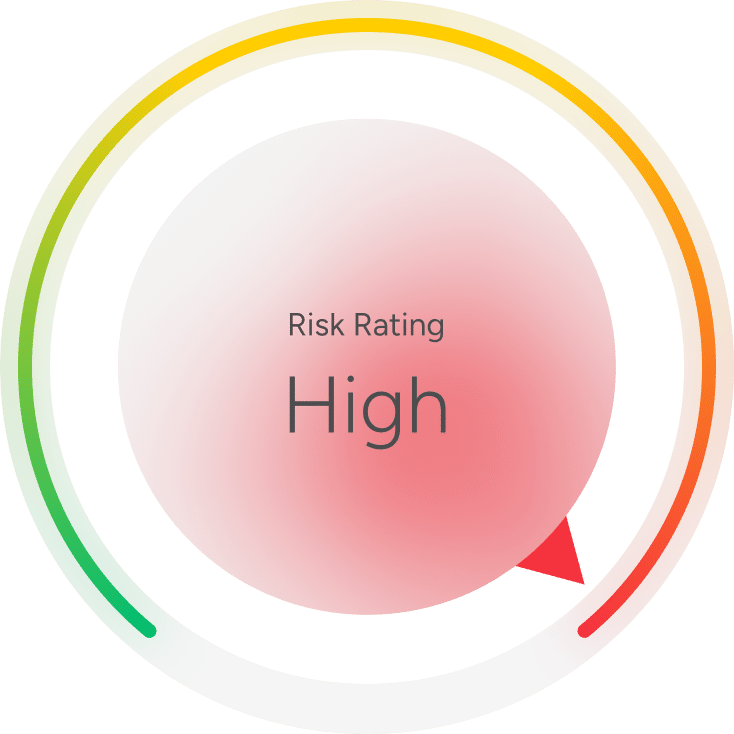
Rating Criteria
Rating Criteria Detail
Corporate Weaponization
Criteria:
Has canceled customers, suppliers, or vendors due to their political views or religious beliefs OR corporately boycotts, divests, or sanctions regions, people groups, or industries.
Risk Level:
HighRationale:
YouTube has regularly demonstrated that the company’s moderators have explicitly political reasons for choosing which videos to flag and remove. For example, it removed conservative rapper Bryson Gray’s anti-Biden “Let’s Go Brandon” song due to the lyrics regarding the COVID-19 pandemic (1). The company also suspended the Right Side Broadcasting Network and indefinitely disabled comments on the channel’s videos due to “concerns about violence” (2). The company removed the comedy troupe Nelk Boys’ podcast featuring former President Donald Trump without reason (3). The company also removed a roundtable discussion hosted by Gov. Ron DeSantis that featured reputable doctors and scientists from Stanford, Harvard, and Oxford that called into question the validity of data regarding the efficacy of mask-wearing in reducing the spread of COVID-19 to children (4). The company permanently banned conservative commentator and former NYPD officer Dan Bongino from its platform (5). The company has also permanently demonetized many firearm-focused channels, including ones that make primarily educational and hobby-focused videos, despite the existence of no clear rule in the site’s guidelines prohibiting such content (6). It was a member of the Global Alliance for Responsible Media, which demonetized and suppressed content that it deemed to spread “hate speech” or “misinformation”, discuss “debated social issues in a negative or partisan context”, or “vilif[y]” individuals based on sexual orientation and gender identity. These arbitrary guidelines were used to censor mainstream perspectives online (7)(8)(9).
Criteria:
Charitable giving (including employee matching programs) policies or practices discriminate against charitable organizations based on views or religious beliefs.
Risk Level:
HighRationale:
In order for a nonprofit to be eligible for the YouTube Giving fundraising program, the organization must “follow YouTube’s monetization policies both on and off YouTube” (1). Although YouTube does not specifically discriminate against any type of organization via this policy, the site’s Community Guidelines are vague and often selectively enforced. Thus, especially with YouTube’s history of censorship, conservative or faith-based organizations could be easily disqualified from this program (2). Parent company Google does not disqualify religious organizations from receiving grants, provided that the organization engages in community work under a separate 501(c)(3) status (3). However, Google does require that all potential grant recipients have non-discrimination policies regarding sexual identity (4).
Corporate Governance and Public Policy
Criteria:
Uses corporate reputation to support causes, organizations, or policies hostile to freedom of expression.
Risk Level:
HighRationale:
YouTube CEO Susan Wojcicki has publicly taken political sides and urged large YouTube creators to use the platform to do the same (1)(2). The company has partnered with the Gay and Lesbian Alliance Against Defamation (GLAAD) (3). Its parent company Google has also taken numerous advocacy positions regarding LGBTQ policy, voting legislation, and the BLM movement (4)(5)(6).
Criteria:
Uses corporate funds to advance ideological causes, organizations, or policies hostile to freedom of expression.
Risk Level:
HighRationale:
YouTube was a member of the Global Alliance for Responsible Media (1)(2)(3). In 2020, the company donated $1 million to the Center for Policing Equity, a research organization that publicly advocates on behalf of ideologically influenced police reform policies (4)(5)(6). YouTube was a Platinum Tier corporate sponsor of the Trevor Project, an organization that advocates for controversial sex and gender ideology, including “gender transition” drugs and surgeries for minors, through legislation, litigation, advertising, and PR campaigns. The organization also hosts online chatrooms that allow adults to communicate with minors as young as 13 about sexually explicit topics. Adults in these chatrooms have encouraged minors to adopt transgender identities and withhold this information from their parents (7)(8)(9)(10)(11). Otherwise, there are no publicly known cases of the company using corporate funds to advance ideological causes, organizations, or policies (12).
Related Companies

Media and Entertainment, Software and Services, Web Browsers

Microsoft

Media and Entertainment
Meta Platforms

Media and Entertainment, Telecommunication Services
AT&T

Cloud & Data Storage, Media and Entertainment, Software and Services, Web Browsers
Alphabet

Media and Entertainment, Telecommunication Services
Comcast

Media and Entertainment, Telecommunication Services
Charter Communications

Media and Entertainment
Walt Disney
Media and Entertainment
Paramount Skydance Corporation

Media and Entertainment

Netflix

Media and Entertainment
DISH Network