L’Oreal
Companies who scored 100% on the 2025 Corporate Equality Index.
Companies that scored a 100 on the 2026 Corporate Equality Index.
Companies provide a benefit package for employees which covers travel/lodging costs for an abortion.
Company is a corporate partner of Ashoka, a global network of entrepreneurs focused on widespread, systemic social and environmental change
Companies who were members of the Global Alliance for Responsible Media, which subjectively demonetized advertisements and suppressed content to stifle mainstream perspectives online
Companies who are/were a corporate partner of the The Trevor Project, an organization that advocates for controversial sex and gender ideology, including for children.
Companies that offer so-called transgender healthcare for their employees and covered dependents.

Rating Overview
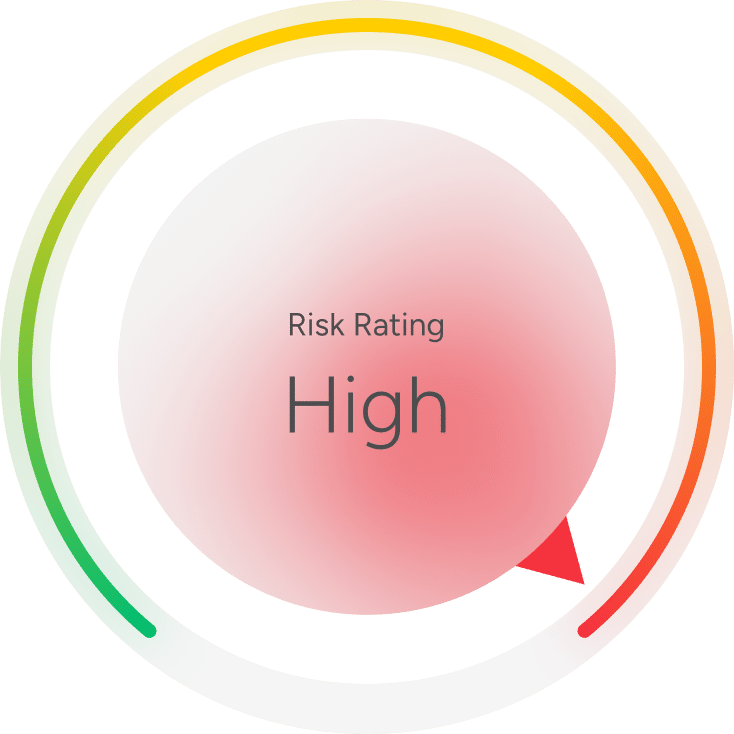
Rating Criteria
Rating Criteria Detail
Corporate Weaponization
Criteria:
Has canceled customers, suppliers, or vendors due to their political views or religious beliefs OR corporately boycotts, divests, or sanctions regions, people groups, or industries.
Risk Level:
MediumRationale:
L’Oreal received a score of 100 on the 2026 Corporate Equality Index (CEI) from the Human Rights Campaign (HRC), a political stakeholder group. The company recruits employees based on sexual identity issues. The company discriminates against vendors that do not promote divisive sex and gender policies, indicating it prioritizes sexual issues over merit (1)(2)(3). The company received a score of 100 on the 2025 Corporate Equality Index (CEI) from the Human Rights Campaign (HRC), a political stakeholder group. The company recruits employees based on sexual identity issues. The company discriminates against vendors that do not promote divisive sex and gender policies, indicating it prioritizes sexual issues over merit (4)(5). L’Oreal was a member of the Global Alliance for Responsible Media, which demonetized and suppressed content that it deemed to spread “hate speech” or “misinformation”, discuss “debated social issues in a negative or partisan context”, or “vilif[y]” individuals based on sexual orientation and gender identity. These arbitrary guidelines were used to censor mainstream perspectives online (6)(7)(8). The company integrates ESG into its business practices. From its A Sustainable Purchasing Strategy page: “In 2007, L’Oréal joined the Supply Chain Program of the CDP to encourage our suppliers to measure and manage their CO2 emissions” (9). L’Oreal promotes divisive sex and gender policies. Its Mutual Ethical Commitment Letter requires international vendors to include sexual orientation and gender identity in their nondiscrimination policy (10). In the 1990s, the company was charged with complying with the Arab boycott of Israel. On August 30, 1995, the company agreed to pay $1.4 million to settle the investigation, but denied breaking American laws against complying with the Arab boycott of Israel (11)(12). However, L’Oreal has not publicly canceled customers, suppliers, or vendors based on political views or religious beliefs (13).
Criteria:
Charitable giving (including employee matching programs) policies or practices discriminate against charitable organizations based on views or religious beliefs.
Risk Level:
HighRationale:
L’Oreal’s HRC 2026 CEI rating indicates the company will not donate to non-religious charities unless they embrace controversial sexual identity policies (1)(2)(3). The company’s HRC 2025 CEI rating indicates the company will not donate to non-religious charities unless they embrace controversial sexual identity policies (4)(5). L’Oreal’s Ethical and Responsible Philanthropy Policy will not support “organisations whose primary aim is to promote religious exclusivism” (6).
Criteria:
Employment policies fail to protect against viewpoint or other discrimination and/or are ideological in nature.
Risk Level:
HighRationale:
L’Oreal’s HRC 2026 CEI rating indicates the company forces employees to attend at least one, controversial training on gender identity, sexual orientation, transgender issues, and divisive racial ideology. The company provides gender transition guidelines for its employees and a specific benefits guide with a comprehensive explanation of transgender services funded by the company (1)(2)(3). The company’s HRC 2025 CEI rating indicates the company forces employees to attend multiple, controversial trainings on gender identity, sexual orientation, transgender issues, and divisive racial ideology. The company provides gender transition guidelines for its employees and a specific benefits guide with a comprehensive explanation of transgender services funded by the company (4)(5). L’Oreal offers unconscious bias and micro-inequities, “along with 13 other e -learning courses on a selection of topics” (6). The company appears to prioritize diversity over merit in its recruitment. From its 2024 Diversity, Equity & Inclusion Report: “A diverse recruitment pool is central to achieving our commitment to a more diverse workforce.” The company appears to prioritize diversity over merit in its supply chain: “Fully integrated within the Group’s sustainable sourcing policy, the Inclusive Sourcing programme enables L’Oréal to promote its commitments under the four pillars of the Group’s diversity, equity and inclusion policy within our supplier network” (7). L’Oreal appears to prioritize diversity over merit in its business structure through the establishment of gender targets for its recruitment, hiring, promotions, and leadership composition. The company is seeking “to maintain, every year, a proportion of men or women employees that may not be less than 40% in strategic positions (around 300 positions, including Executive Committee)” (8). The company protects its employees against viewpoint discrimination (9).
Corporate Governance and Public Policy
Criteria:
Uses corporate reputation to support causes, organizations, or policies hostile to freedom of expression.
Risk Level:
HighRationale:
L’Oreal’s HRC 2026 CEI rating indicates the company potentially agrees to allow a controversial stakeholder group focused on sexual identity issues to dictate marketing or advertising strategy. By doing so, the company risks dividing employees, alienating customers and harming shareholders (1)(2)(3). The company’s HRC 2025 CEI rating indicates the company agrees to allow a controversial stakeholder group focused on sexual identity issues to dictate marketing or advertising strategy. By doing so, the company risks dividing employees, alienating customers and harming shareholders (4)(5). There have been reports that L’Oreal and its subsidiaries use child labor in their supply chains (6)(7)(8). The company signed an open letter endorsing the Equality Act, a contentious proposal to amend the 1964 Civil Rights Act by adding sexual orientation and so-called gender identity as protected categories. The legislation would, among other implications, grant biological men access to women-only spaces such as sports teams and public restrooms, and compel healthcare providers to deliver sex-denying healthcare (9). L’Oreal is a member of the Civic Alliance, which advocates against state-level election security bills (10). The company opposed various state and local legislation intended to protect parental rights, girls’ sports, bathroom facilities, and gendered spaces (11). L’Oreal’s former CEO, Frederic Roze, signed the CEO Action for Diversity & Inclusion pledge, which includes a commitment to promote DEI through bias education training in the workplace (12)(13)(14). The company was a contributing member of GARM’s Action Guide to Reduce Media Greenhouse Gas Emissions and The Global Media Sustainability Framework which provides an action plan for media companies to transition to net zero greenhouse gas emissions (15)(16). L’Oreal is committed to net zero carbon emissions by 2050 (17). The company supports DEI within its business practices, hosting a Global Diversity, Equity & Inclusion Advisory Board (18). L’Oreal supports DEI within its business practices. From its Gender Equity at L’Oreal: “L’Oréal is committed to achieve gender equity at all levels and functions of the company; contribute to the establishment of more inclusive environments in favour of LGBTQIA+ communities everywhere in the world; engage against any type of harassment or violence, particularly sexual harassment, and gender-based violence” (19). The company supports ESG within its business practices. From its ESG Performance page: “Indeed, we have implemented policies that prioritize ESG considerations in areas such as Human Rights, environmental protection, sustainable sourcing, responsible marketing, and diversity, equity & inclusion” (20). In 2018, L’Oreal hired Amena Khan as a model, and it was later pointed out that in 2014 she had called Israel “an illegal and sinister state” and a “child murderer”. She apologized and stepped down from her role at L’Oreal (21). The company has a long history of alleged anti-semitism and pro-Nazi leanings dating back to the company’s creation, leading to concerns that the company still has these sentiments (22)(23)(24)(25)(26)(27)(28)(29)(30). In 2014, Garnier Israel donated products to the female troops in the IDF, and after backlash on social media, Garnier USA stated that it “disapproves of this initiative managed strictly at local level and is very sorry to have offended some of its fans” (31)(32)(33). The company scored an 85 out of 100 on the 2023-2024 Corporate Equality Index (CEI) from the Human Rights Campaign (HRC), a political stakeholder group (34)(35). In 2023, Maybelline has been given conservative backlash “for posting a makeup ad featuring a bearded model and LGBTQ influencer using lipstick, but the company has used men and LGBTQ models in promotional materials [since 2017]” (36). Maybelline has partnered with multiple LGBTQ social media influencers, including Dylan Mulvaney (37)(38). In 2024, Garnier Thailand showed “its support for gender equality at the Bangkok Pride (LGBTQ) Festival 2024 by launching a campaign under the tagline “Remove your make up, never your pride” to encourage people to have the courage to challenge societal norms and standards that discriminate against diversity” (39). Garnier collaborated with LGBTQIA+ graphic designer, Antoine Giessner, to design a “limited-edition Pride (LGBTQ) bottle of SkinActive Micellar Cleansing Water” (40). In 2019, Essie partnered with Jonathan Van Ness, a cast member of “Queer Eye” on Netflix, to “show the brand aligns with modern customer values, like inclusivity and diversity” (41). Maybelline partnered with multiple LGBTQ+ advocates, including Dylan Mulvaney, Ryan Vita, drag star Trixie Mattel, and trans makeup artist Nikkie de Jager (42)(43)(44)(45). Niely supports DEI and ESG within its business practices. From its website: “Over the past few years, the brand has invested in research with the Nina, Provokers, and Think Ethnus institutes to understand local consumer behavior and monitor its changes. The study mapped different profiles and contributed to the brand’s evolution, ranging from the creation of a new narrative to greater intentionality in DE&I, especially from a racial perspective. The results reinforce the Group’s commitment to beauty, care, and ESG throughout its business chain” (46). L’Oreal re-hired a trans activist employee who was originally fired for accusing “ALL white people” of “racial violence” and claiming that all white success was because of racism (47). L’Oreal has engaged in multiple initiatives to increase diversity in its company (48)(49).
Criteria:
Uses corporate funds to advance ideological causes, organizations, or policies hostile to freedom of expression.
Risk Level:
HighRationale:
In 2022, L’Oreal was reported to “cover or reimburse U.S. employees who need to travel to receive medical care, including abortion, if access where workers live is restricted” in light of Roe V. Wade being overturned (1). The company provides a benefits package for employees that covers travel/lodging costs for an abortion and transgender medical procedures for covered employees and dependents, including children (2)(3)(4)(5)(6). L’Oreal’s HRC 2026 CEI rating indicates the company covers transgender related costs for its employees and their children, including paid short-term leave, puberty blockers, cross-sex hormones, chest surgeries, genital surgeries, medical visits, lab monitoring, and mental health benefits. The company also covers at least five of the following services: reconstructive hair removal, cosmetic hair removal, tracheal shave or reduction, facial surgeries, voice modification surgery, voice modification therapy, lipoplasty or filling for body masculinization or feminization, and travel and lodging expenses. Additionally, the company has potentially pledged philanthropic support of at least one organization or event that promotes sex and gender ideology. By allowing a political stakeholder group to dictate operations, the company increases health care costs and risks dividing employees, alienating customers and harming shareholders (7)(8)(9)(10). The company’s HRC 2025 CEI rating indicates the company covers transgender related costs for its employees and their children, including paid short-term leave, puberty blockers, cross-sex hormones, chest surgeries, genital surgeries, medical visits and lab monitoring, travel and lodging. Additionally, the company has pledged philanthropic support of at least one organization or event that promotes sex and gender ideology. By allowing a political stakeholder group to dictate operations, the company increases health care costs and risks dividing employees, alienating customers and harming shareholders (11)(12). L’Oreal was a member of the Global Alliance for Responsible Media (13)(14)(15). The company was a Platinum-level sponsor of NYC Pride. L’Oreal indirectly donates to LGBTQ advocacy groups such as GLAAD and GLSEN (16). L’Oreal’s subsidiary CeraVe has a partnership with popular transgender influencer Dylan Mulvaney, who has advocated for the provision of gender transition treatments to children under the age of 18 (17)(18)(19). The company is a corporate partner of the National LGBT Chamber of Commerce (20). L’Oreal is partnered with Economic Dividends for Gender Equality (EDGE), a non-profit that, “engage[s] organizations across the world in fostering equal career opportunities for women and men across their different gender identities, race/ethnicities, sexual orientations, nationalities, age groups, and working with a disability status” (21). The company is partnered with UN Global LGBTI Standards, which “guide[s] the business community in fighting discrimination against lesbian, gay, bi, trans and intersex (LGBTI) people” (22). L’Oreal is partnered with Open For Business, which “is a coalition of global businesses that aims to advance LGBTQIA+ rights globally and to create a global consensus that LGBTQIA+ inclusion is an economic and business issue” (23). The company is partnered with Global Parity Alliance, which “aims to drive better and faster DE&I outcomes and elevate the effectiveness of DE&I actions” (24). L’Oreal is a corporate partner of Ashoka, a global network of entrepreneurs focused on widespread, systemic social and environmental change (25). PECA has reported L’Oreal to have spent $850,300 dollars towards Pride (LGBTQ) events and partnerships from 2018-2024 (26). L’Oreal Groupe is a Platinum sponsor of NYC Pride (LGBTQ), a New York City’s (NYC) based foundation that organizes and produces NYC’s Pride parades and events (27). Maybelline partnered with Q.Digital, an LGBTQ digital promotion company, to promote a “three part video series featuring LGBTQ Influencers demonstrating how they use Maybelline’s Fit Me line” (28). Garnier is a partner of the Out Foundation, an LGBTQ fitness, health, and wellness foundation. In 2021, Garnier committed a combined $100,000 in monetary, product, and media exposure (29)(30). In 2023, Garnier donated £50,000 to Just Like Us, a nonprofit LGBTQ foundation that presents allyship at schools in the UK (31)(32). Garnier partnered with Minus18, an Australian based LGBTQ foundation support LGBTQ youth through affirmation events (33). Garnier partnered with Heritage of Pride (LGBTQ), a New York City’s (NYC) based foundation that organizes and produces NYC’s Pride parades and events (34). CeraVe partnered with SAGE for a skin cancer screening event at an LGBTQ+ elder center in NYC (35). CeraVe sponsored Queens of Kings, a tv series on the lives of Brooklyn’s underground drag queen community (36). La Roche-Posay partnered with OutCare, a non-profit LGBTQ affirming healthcare resource (37)(38). Urban Decay partnered with Stonewall Community Foundation, a non-profit foundation that strengthens and invests in LGBTQ businesses and markets, on various initiatives (39)(40)(41)(42)(43)(44). Maybelline is a Gold Tier corporate sponsor and Kiehl’s was a Gold Tier corporate sponsor of the Trevor Project, an organization that advocates for controversial sex and gender ideology, including “gender transition” drugs and surgeries for minors, through legislation, litigation, advertising, and PR campaigns. The organization also hosts online chatrooms that allow adults to communicate with minors as young as 13 about sexually explicit topics. Adults in these chatrooms have encouraged minors to adopt transgender identities and withhold this information from their parents. Kiehl’s was a Gold Tier corporate sponsor of the Trevor Project (45)(46)(47)(48)(49)(50)(51). CeraVe supports LGBTQ Pride programs and was a sponsor of Drag Latina (52)(53). Dark & Lovely partnered with the NAACP to launch an initiative called the “Building Beautiful Futures” initiative, which is a scholarship exclusively for black women (54)(55)(56)(57). “Dark & Lovely has joined forces with The Sims franchise to raise awareness of the lack of diversity in the gaming industry and to create new tools for Black gamers to express themselves in virtual worlds” (58)(59)(60). In June 2025, La Roche-Posay hosted its “4th-annual Pride in Dermatology event benefiting Homeward NYC and OutCare Health” (61). La Roche-Posay “partner[ed] with the Women’s Dermatologic Society (WDS) to sponsor a Fellowship in the Department of Dermatology at Howard University’s College of Medicine for [Underrepresented in Medicine] medical students” (62). NYX sponsored PrideMix in 2025, a collection of “queer” musicians. Further, “NYX’s commitment to the LGBTQ+ community consists of donating over $500,000 to LGBTQ+ charities worldwide through their Proud Allies for All initiative with the Los Angeles LGBT Center” (63). NYX also donated to BLM: “We stand with our black community and will be donating to the Minnesota Freedom Funs (sic) and Black Lives Matter” (64). L’Oreal is a Platinum Sponsor of NYC Pride, and Kiehl’s is a Bronze Sponsor (65). L’Oreal sponsored the Cincinnati Pride in 2025 (66). Otherwise, there are no publicly known cases of the company using corporate funds to advance ideological causes, organizations, or policies (67).
Criteria:
Uses corporate political actions and/or financial contributions for ideological, non-business purposes.
Risk Level:
HighRationale:
L’Oreal’s HRC 2025 CEI rating indicates the company publicly advocated for controversial sex and gender ideology through local, state or federal legislation or initiatives. By allowing a political stakeholder group to dictate operations, the company risks dividing employees, alienating customers and harming shareholders (1)(2). The company does not operate a PAC or report on its lobbying at this time (3)(4)(5).
Related Companies
Household and Personal Products

Procter & Gamble

Household and Personal Products
Northwestern Mutual
Capital Goods, Household and Personal Products

3M
Household and Personal Products
Kimberly-Clark
Household and Personal Products
Colgate-Palmolive
Household and Personal Products

Stanley Black & Decker
Household and Personal Products
Unilever
Household and Personal Products
Estee Lauder
Household and Personal Products
Harry’s
Household and Personal Products
Sephora