North Dakota
9 Companies Headquartered in North Dakota
Alerus Financial Corporation, Border States, Everus Construction Group, Knife River, MDU Resources, NI Holdings, Inc., Scheels, Swanson Health Products, Titan Machinery Inc.
North Dakota Average CBR Summary
Avg. Company Rating
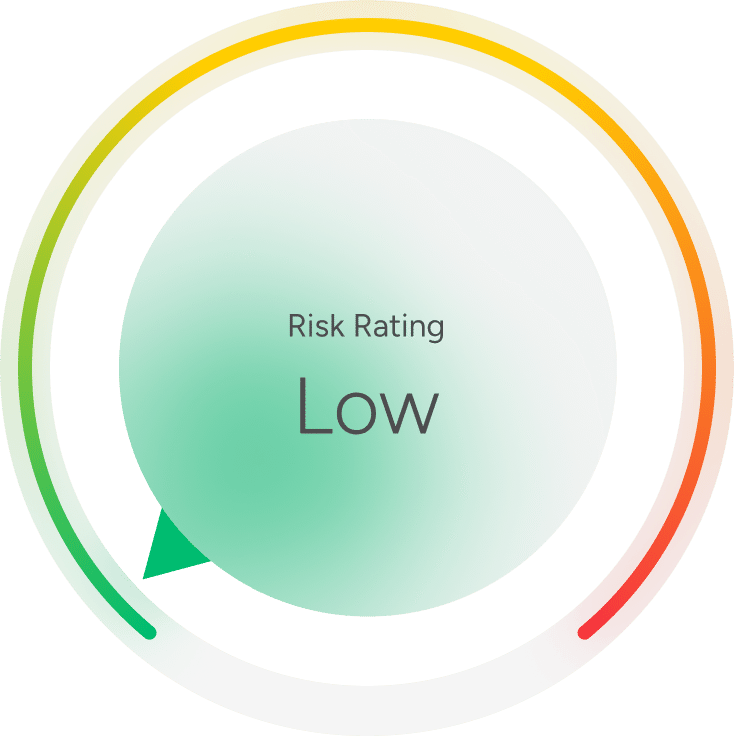
Avg. Rating Criteria
| Criteria | Risk Level |
|---|---|
| Cancellations | Lower Risk |
| Discriminatory Philanthropy | Lower Risk |
| Employment Protection | High Risk |
Corporate Weaponization
| Criteria | Risk Level |
|---|---|
| Advocacy Bias | Lower Risk |
| Funding | Lower Risk |
| Political Actions | Lower Risk |
Corporate Governance and Public Policy
State Leadership
State Pension Fund Summary
North Dakota has two main public pension systems: the North Dakota Public Employees Retirement System (NDPERS) and the Teachers’ Fund for Retirement (TFFR). The North Dakota Retirement and Investment Office (NDRIO) works with the North Dakota State Investment Board (SIB) to oversee these retirement systems.
- The State Investment Board consists of 13 members : 5 Ex Officio (Governor, State Treasurer, Commissioner of University and School Lands, Director of Workforce Safety and Insurance, Director of the Office of Management and Budget); 2 representatives of TFFR; 2 representatives of PERS; 2 institutional investment experts appointed by the Governor; 2 legislative representatives from the Legacy and Budget Stabilization Fund Advisory Board.
- According to a news report, the NDRIO’s general investment consultant is NEPC.
- North Dakota also operates the North Dakota Legacy Fund, the state’s oil-and-gas sovereign wealth fund, created by a constitutional amendment that was initiated by the state legislature and approved by voters in November 2010, applying to oil and gas produced after June 30, 2011; thirty percent of the taxes on petroleum produced and extracted in North Dakota are transferred to the Legacy Fund monthly under Article X, Section 26 of the state constitution. The State Investment Board (SIB), established under NDCC § 21-10, invests the fund, administered by the North Dakota Retirement and Investment Office (RIO). As of May 31, 2026, the Legacy Fund’s value stood at $15,040,152,030 (approximately $15.0 billion).
- Like the pension funds above, the Legacy Fund holds public equities — its investment policy statement sets a 46.5% public equity target within a 53.5% global equity allocation — making its proxy voting record a relevant indicator of how North Dakota leverages its sovereign wealth in support of or against ESG principles.
- Note: The data below on state voting does not include the votes cast through the public equities of North Dakota’s Sovereign Wealth Fund.
The “By Asset Manager” and “Asset Manager Voting” tables show the proxy voting records of the state’s asset managers who manage the pensions’ stock market portfolio through index, exchange-traded, or mutual funds. Since these are externally managed funds, the asset managers typically retain and exercise proxy voting privileges. This data is used to calculate the state’s pro-ESG and anti-ESG scores to see how the state leverages its externally managed funds in proxy voting.
The “State Voting” table shows NDPERS proxy voting records for directly owned securities through pension fund portfolios. This data was obtained by a Freedom of Information Act (FOIA) request since North Dakota does not publicly disclose this information to its pensioners. The 1792 Exchange encourages North Dakota to publish its proxy voting records instead of keeping its pensioners in the dark about how the state votes on ESG issues with their money.
Both tables are important to show a comprehensive picture of the state’s proxy voting record.