
Sony
Consumer Durables and Apparel, Media and Entertainment
Sony Electronics, Sony Interactive Entertainment, Sony Music Entertainment, Sony Pictures Entertainment, Alamo Drafthouse Cinema
Japan
(Along with 43 other companies)
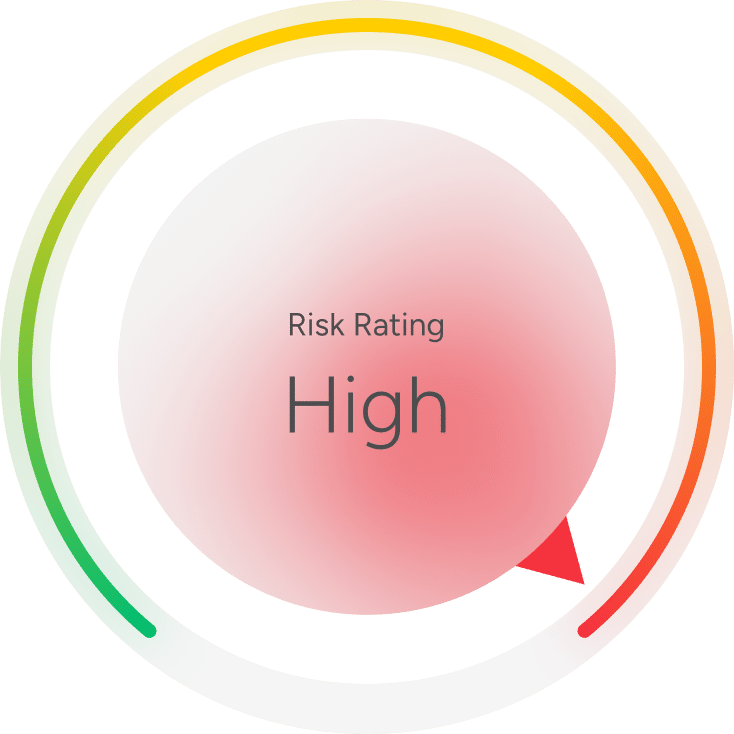
Sony Corporation of America (Sony) is High Risk. The company yields to political activism in shaping corporate governance, potentially alienating consumers, dividing employees, and harming shareholders. Sony embraces corporate initiatives that redirect its central focus from business goals to partisan policies and divisive issues. This approach fails to safeguard free exercise, free speech, and free enterprise.
Rating Criteria
| Criteria | Risk Level |
|---|---|
| Cancellations | Medium Risk |
| Discriminatory Philanthropy | High Risk |
| Employment Protection | High Risk |
Corporate Weaponization ⓘ
| Criteria | Risk Level |
|---|---|
| Advocacy Bias | High Risk |
| Funding | High Risk |
| Political Actions | High Risk |
Corporate Governance and Public Policy ⓘ
Latest Content
Woke Video Games Flopping As A Non-Woke One Booms
April 1, 2025
More companies are rejecting radical DEI, but the battle is far from over
February 15, 2024
Final NIH Report on Multi-Million Dollar Olson-Kennedy Study Shows Puberty Blockers Don’t Help Kids
August 28, 2026
WASHINGTON, D.C. — The final report for the National Institutes of Health (NIH)-funded “Trans Youth Care” study led by Dr. Johanna Olson-Kennedy of Children’s Hospital Los Angeles was finally made public this month, after the government watchdog organization Oversight Project was forced to sue the agency for its release. The multi-year, multi-million-dollar observational study examining physiological and psychological effects of puberty blockers and sex-denying hormones on youth with gender dysphoria has concluded, and the final report was submitted January 6, 2026. This taxpayer-funded research was intended to evaluate longer-term impacts of these interventions. Its conclusions reinforce a growing body of evidence that puberty blockers lack reliable proof of benefit for children and carry long-known risks to bone density, fertility, sexual function, and development. “The mass medical experiments on children need to stop,” said Doug Napier, Executive Chairman and CEO of 1792 Exchange. “These findings align with the emerging consensus that there is no benefit, but significant risks of harm to children, including impacts on bone density, fertility, sexual function, and cognitive development.” “The Cass Review in the United Kingdom, the Finland study, and the U.S. Department of Health and Human Services’ own 2025 peer-reviewed report on pediatric gender dysphoria all underscore the serious concerns about the impacts of these experiments. And this study is yet another nail in the coffin for transgender ideology,” Napier continued. The data on puberty blockers for children continue to show no significant positive mental or emotional health gains. Earlier peer-reviewed and preprint analyses from the same “Trans Youth Care” cohort—tracking depression symptoms, emotional health, …
The Cost of “Choice”: Corporate Funding Behind Assisted-Suicide Advocacy
August 28, 2026
Six Fortune 500 companies, through their affiliated charitable vehicles, have facilitated significant donations to Compassion & Choices, a U.S. nonprofit advocating for expanded access to physician-assisted suicide and other end-of-life practices. Compassion & Choices promotes medical aid in dying (MAID) through voluntarily stopping eating and drinking (VSED), palliative sedation that “advances the time of death,” and dementia directives that allow patients to refuse food and fluids. Companies may consider support for “choice,” “autonomy,” and “death with dignity” consistent with socially progressive philanthropic programs. However, physician-assisted suicide is a violation of the patient-doctor trust and a red line that is being crossed by providers. This represents yet another example of corporations using company resources to support and fund social causes that bear no connection to their core business operations or fiduciary interests. The American Medical Association’s Code of Medical Ethics states that physician-assisted suicide is “fundamentally incompatible with the physician’s role as healer” and warns that it could pose serious societal risks. Corporate involvement raises another uncomfortable question: What happens when death becomes the least expensive healthcare option? Healthcare systems respond to financial incentives. This is particularly relevant to large corporations operating self-funded employee health plans. Unlike employers purchasing traditional insurance, self-insured employers generally pay covered medical expenses directly as claims occur. The Department of Labor confirms that these employers therefore bear the financial cost of covered healthcare themselves. For a terminally ill patient, …
Benevity’s Open Use of the SPLC’s “Hate List”
Brief
August 28, 2026
Benevity uses the Southern Poverty Law Center’s (SPLC) discredited “Hate List” and “Hate Map” as a filter to determine which nonprofits are eligible for employee donations and corporate matching funds. This effectively blacklists mainstream conservative, religious, pro-family, and parental-rights organizations while allowing partisan groups like the SPLC itself to remain eligible. Below are two publications released by Benevity pointing to their reliance on the SPLC for vetting nonprofits. Presentation from Benevity’s CEO Kelly Schmitt: Benevity Global Cause Vetting Document: