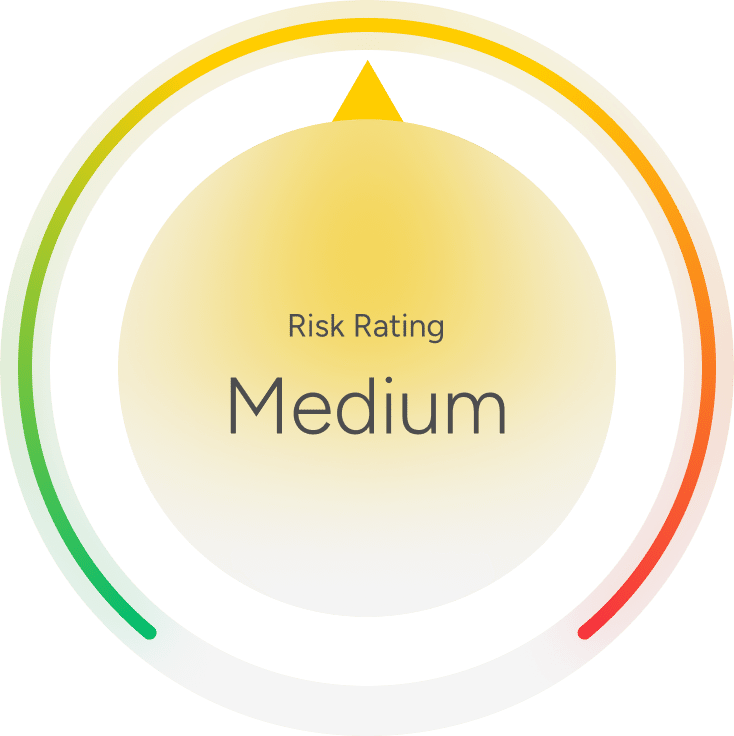
Dunkin’ Brands is Medium Risk. The company often yields to political activism in shaping corporate governance, potentially alienating consumers, dividing employees, and harming shareholders. The company elevates merit, excellence, and integrity ahead of race and identity-based policies. The company occasionally embraces corporate initiatives that redirect its central focus from business goals to partisan policies and divisive issues at times. This approach fails to safeguard free exercise, free speech, and free enterprise.

Rating Criteria
| Criteria | Risk Level |
|---|---|
| Cancellations | Lower Risk |
| Discriminatory Philanthropy | Medium Risk |
| Employment Protection | Medium Risk |
Corporate Weaponization ⓘ
| Criteria | Risk Level |
|---|---|
| Advocacy Bias | Medium Risk |
| Funding | High Risk |
| Political Actions | Lower Risk |
Corporate Governance and Public Policy ⓘ
Latest Content
Berkeley Study Finds No Financial Upside to Maintaining DEI
September 21, 2026
A new Berkeley study, Markets Do Not Punish Firms for Maintaining DEI, examines whether S&P 500 companies that maintained diversity, equity, and inclusion programs after the Trump administration’s January 2025 DEI executive order suffered financially compared with companies that rolled them back. The authors conclude that companies maintaining DEI performed “just as well” in stock-market returns and revenue, arguing that businesses can resist federal pressure on DEI without suffering significant financial consequences. But the inverse is equally important for corporate leaders: companies that rolled back DEI also performed just as well. The study found no statistically significant stock-market or revenue advantage from maintaining DEI across its various measures of corporate commitment. That finding is notable given longstanding claims that DEI improves financial performance. If particular DEI practices create shareholder value, companies should be able to identify which DEI practices increase shareholder value and at what point benefits begin to diminish. The study also captures only part of the risk environment. Its revenue analysis extends through July 2025, before several major federal enforcement actions involving allegedly discriminatory employment practices. IBM, Deloitte, and Accenture have since agreed to settlements totaling more than $63 million, while Nike has faced separate EEOC scrutiny. The Berkeley …
Mount Sinai Backs Down. Will Corporate America?
September 21, 2026
The writing is on the wall for gender ideology and corporate America should respond. Its authorities are discredited, its sciences unfounded, and its public support dwindling — not to mention the very providers who push sex-denying procedures on minors are now being held accountable for the experiment they’ve been running. Mount Sinai Health System is the latest example of this as they reach an agreement with the Department of Justice to stop providing sex-denying procedures on minors and provide free health care to those experiencing adverse side-effects of their experimentation. DOJ began its investigation on the premise that the nonprofit hospital may have violated federal law regarding its sex-denying procedures on children. The nationwide probe follows the landmark HHS report that exposed WPATH perverse influences on providers, along with an insurance scheme that let hospitals to charge insurance, private and federally subsidized, for sex-denying procedures on minors that would typically not be covered. Additionally, Mount Sinai agreed to dedicate $2 million to treating the adverse effects of sex-denying interventions, free of charge, to those who received them as minors. Keep in mind, sex-denying interventions are largely irreversible and carry side effects into adulthood, even for those who detransition. Detranstitioner Chloe …
HRC’s Bias in Political Endorsements
List
September 21, 2026
The table below catalogs every candidate endorsement issued by the Human Rights Campaign (HRC) and Human Rights Campaign PAC found in HRC’s online press release archive, covering 1,386 individual endorsement announcements and 980 unique candidates from 2010 through August 27, 2026. Not one identifies a Republican nominee or officeholder. For companies and foundations that direct charitable giving, sponsorships, or workplace-program funding to HRC under the banner of LGBTQ+ inclusion, this pattern bears directly on partisan alignment risk: HRC’s electoral arm functions, in practice, as a wing of one political party’s candidate infrastructure. Regardless of intent, partnering with an organization with progressive values may be viewed as partisan if support is not balanced by comparable partnerships with organizations aligned with conservative or traditional values. Search the full record or view methodology below. All partiesDemocratRepublican All years2026 (61)2025 (4)2024 (19)2023 (55)2022 (777)2021 (26)2020 (241)2019 (2)2018 (158)2017 (16)2016 (10)2015 (1)2014 (7)2013 (4)2012 (1)2011 (3)2010 (1) Sort: Date, newest firstSort: Date, oldest firstSort: Candidate, A to ZSort: Candidate, Z to A 0 shown of 0 matching · 1386 total endorsements Candidate Party Date Source Neil Abercrombie Democrat Jul 22, 2010 HRC release ↗ Tammy Baldwin Democrat Sep 6, 2011 HRC release ↗ Mark Pocan Democrat …
Starbucks and the Rising Cost of DEI
September 19, 2026
Starbucks becomes the latest example of the legal and financial liability of DEI governance policies after settling its civil rights lawsuit with the state of Florida. The settlement came with the agreement to pay the state $1 million and commit to complying with the state’s civil rights laws. The suit claimed that the company paid certain employees more than employees of other races with equal experience, and that until March 2024 the company tied executive bonuses to diversity goals. This adds to the growing list of companies spending millions of dollars to settle allegations of discriminatory hiring practices, with Accenture, Deloitte, and IBM all paying multi-million-dollar settlements to the DOJ over the last few months. The coffee giant has a long, recorded history of DEI priorities, but as part of the settlement, it has also agreed to not participate in organizations that require increased racial diversity on its board of directors. This is a clear walk-back of the company’s 2020 commitment to BIPOC representation of “at least 30% at all corporate levels and 40% at all retail and manufacturing roles by 2025,” which was tied to the Board Diversity Action Alliance. Companies like Starbucks are a cautionary tale for others …
Shareholders Challenge Nike over support for transgender surgeries on minors
Referenced
September 17, 2026
At Nike’s annual shareholder meeting this month, Christian and conservative investors put the company’s relationship with the Human Rights Campaign (HRC) directly on the record. The HRC’s Corporate Equality Index is a voluntary survey that companies can participate in to have their gender-ideology workplace policies scored. To earn the CEI 100 designation, companies must cover sex-denying procedures for minor dependents under their employee health plans. Nike has scored 100 three years running. Inspire says Walmart told the group its plan doesn’t cover transgender surgeries for children. Walmart’s 2026 benefits book says gender reassignment surgery “is not considered medically necessary for individuals under the age of 18.” Inspire also says Charles Schwab told the group that it no longer covers such surgeries for children. Another conservative group, 1792 Exchange, wrote to 568 companies in June asking them to exclude transgender drugs and surgeries for children from employee health plans. Some companies have also decoupled from HRC. The full article can be found in Heartlander News.