
Rio Tinto
Materials
Kennecott Utah Copper LLC, Resolution Copper Mining, U.S. Borax Inc, IS&T Americas, Rio Tinto USA
Illinois
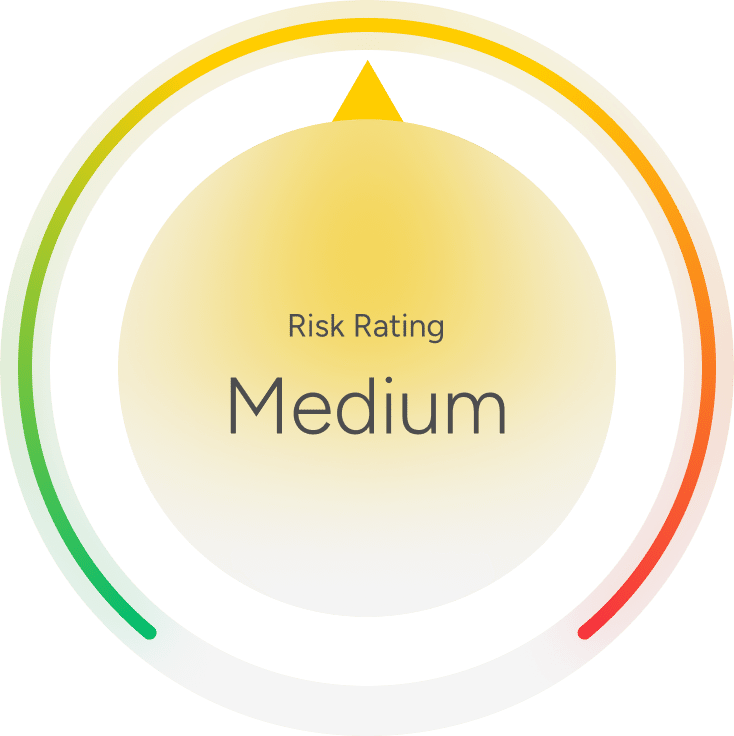
Rio Tinto is Medium Risk. The company often yields to political activism in shaping corporate governance, potentially alienating consumers, dividing employees, and harming shareholders. The company implements race and identity-based policies that replace merit, excellence, and integrity with preferential treatment and outcomes. The company occasionally embraces corporate initiatives that redirect its central focus from business goals to partisan policies and divisive issues at times. This approach fails to safeguard free exercise, free speech, and free enterprise.
Rating Criteria
| Criteria | Risk Level |
|---|---|
| Cancellations | Medium Risk |
| Discriminatory Philanthropy | High Risk |
| Employment Protection | High Risk |
Corporate Weaponization ⓘ
| Criteria | Risk Level |
|---|---|
| Advocacy Bias | High Risk |
| Funding | High Risk |
| Political Actions | Lower Risk |
Corporate Governance and Public Policy ⓘ
Latest Content
Corporate Consistency Across Markets: New Arabic Ratings
Letter
September 14, 2026
This is a joint letter from 1792 Exchange and the Observatoire du Wokisme. 1792 Exchange is a nonprofit organization dedicated to advancing corporate neutrality and free enterprise. We examine the publicly available records of companies’ policies and practices and publish those findings. The Observatoire du Wokisme publishes the Index du Wokisme en Entreprise in association with 1792 Exchange. We write because your company appears with a RED / High Risk rating in our U.S. Corporate Bias Ratings database which is also now available in both French and Arabic. 1792 Exchange’s Corporate Bias Ratings database currently features more than 4,500 company profiles. As a company’s reach grows far beyond their U.S. headquarters, we have translated their profile into languages reflecting their presence in foreign markets: first in French through the Index du Wokisme en Entreprise, and now in Arabic. The Arabic site, https://ar.1792exchange.com, launching this month, highlights more than 300 companies, including yours. Using a proprietary ratings system, companies are categorized by the degree to which their publicly documented policies, practices, and affiliations indicate support for politicized initiatives and radical ideological commitments. When a company receives a RED rating in the database, it indicates that the company almost certainly engages in …
Faith-based investors should act like owners
Op-Ed
September 8, 2026
Earlier this summer, the rating service Morningstar released its second-ever report on faith-based investing, a market that has grown to roughly $169 billion in assets. The report analyzes hundreds of faith-based funds, comparing their screening methodologies and how those screens affect portfolio construction and performance. The report offers valuable insight into a complex and rapidly growing segment of the investment industry, but it overlooks several important aspects of the broader faith-based investing landscape. For starters, the universe of investors making decisions based on values is much broader than the funds formally labeled “faith-based” because no investment strategy is truly values-neutral. Every fund makes choices about which companies and industries to include, which to exclude, and how heavily to weight them. Even a broad-market index reflects a set of rules determining what qualifies for inclusion and how much representation each company receives within the portfolio. Every investor has some worldview or set of values that informs how he or she lives. Faith-based investing simply makes the connection between those values and investment decisions more explicit and, hopefully, more consistent. Investors who fall outside the Islamic, Catholic, and Christian categories examined by Morningstar may still make investment decisions based on deeply held beliefs about …
Two DEI Settlements, One Clear Warning for Federal Contractors
Op-Ed
September 3, 2026
As the saying goes, “To be forewarned is to be forearmed.” American companies doing business with the federal government have once again been forewarned about the risks of engaging in DEI practices. To ignore these warnings can be very costly for the company, its shareholders, and employees. Just four months ago, IBM paid more than $17 million to resolve allegations that it maintained illegal diversity, equity, and inclusion practices while performing federal contract work. That settlement was the first resolution under the Justice Department’s Civil Rights Fraud Initiative. It was also a clear warning. Last week, President Donald Trump’s DOJ announced that another top federal contractor has agreed to pay $21.5 million to settle similar allegations. The Justice Department alleged that Deloitte violated the False Claims Act by certifying compliance with federal nondiscrimination rules while applying race and sex preferences in hiring, promotions, and staffing. Business units tracked “demographic goals” with color-coded scorecards, and roughly 150 of the firm’s most senior leaders were evaluated, and in some cases compensated, based in part on progress toward those targets. The government further alleged that promotion classes for partners were assigned racial and sex targets, that staffing for federal contracts was managed with a priority toward demographic parity …
The DOJ Is Suing Over Secret “Gender Transitions” in Schools. The HRCF and Its Corporate Backers Helped Pave the Way
September 2, 2026
The Human Rights Campaign Foundation (HRCF) has spent years pushing gender ideology into our nation’s K-12 schools through its Welcoming Schools initiative. Marketed under the guise of “bullying prevention,” this HRCF flagship program supplies LGBTQ+ resources and trainings to educators and school boards. According to the HRCF’s 2026 Annual Report, more than 30,000 educators participated in Welcoming Schools training last year. Given the program’s unparalleled reach, it should come as little surprise that HRCF’s influence can be seen in the policies now at the center of the Justice Department’s lawsuit against Kansas City, Kansas Public Schools (KCKPS). On September 1, 2026, the Justice Department’s Civil Rights Division and U.S. Attorney for the District of Kansas sued KCKPS “to stop the district from facilitating secret ‘gender transition’ for children at school without their parents’ knowledge or consent.” The department’s complaint points to KCKPS’s transgender guidelines, which chart a course for staff to help students “transition” without the parents’ involvement. The HRCF has historically supported such guidance. Its Welcoming Schools resources are riddled with suggestive language hinting at exceptions to informing parents about their child’s sexuality. The organization uses a student’s “right to privacy” as justification. As evidence of this stance, the HRC has condemned school districts on the basis of “student privacy,” including the Carson City School District, which recently enacted new policies requiring school faculty to inform parents …
Delayed Study From Pro-Gender Ideology Researcher Finds Puberty Blockers Don’t Help Kids
Op-Ed
September 2, 2026
A major taxpayer-funded study initiated in 2015 to observe the effects of puberty blockers and opposite-sex hormone therapies was finally released. The results are anything but shocking. While the authors were hoping to demonstrate that these unsupported therapies would prove beneficial, the study confirmed what every other credible study has shown: These drugs do not deliver the promised positive health outcomes for minors. The long-delayed findings from the NIH-funded Trans Youth Care study led by Dr. Johanna Olson-Kennedy have now been reported. It is notable that the final report was released only after the Oversight Project sued. Without these efforts, this data might still be buried. The study followed roughly 95 youth ages 8 to 16 on puberty blockers and tracked depression symptoms, emotional functioning, and parent-reported behavioral measures over a 24-month period. The results showed no significant improvement. Nada. Mental health metrics remained essentially “stable,” which was a kinder way of saying that the serious mental health conditions of the patients before receiving these controversial treatments remained serious afterward. There was no evidence of the positive clinical gains that had been repeatedly asserted to justify these interventions on developing children. These children not only had to continue suffering from their unfortunate mental health issues; now these …