

Corporate Bias Rating
Expand Summary
Risk Level:
Summary:
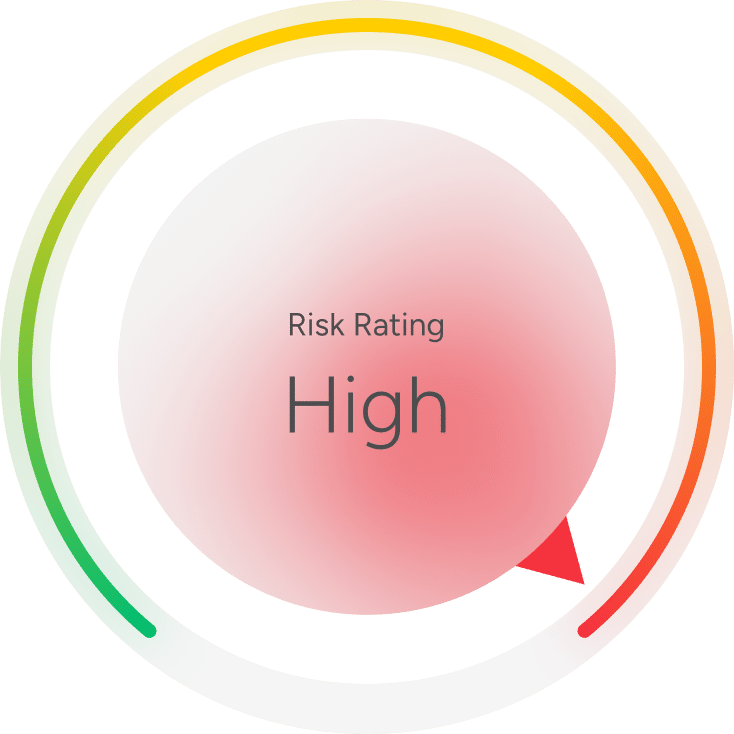
Sodexo is High Risk. The company yields to political activism in shaping corporate governance, potentially alienating consumers, dividing employees, and harming shareholders. The company implements race and identity-based policies that replace merit, excellence, and integrity with preferential treatment and outcomes. Sodexo embraces corporate initiatives that redirect its central focus from business goals to partisan policies and divisive issues. This approach fails to safeguard free exercise, free speech, and free enterprise.
View Full Corporate Bias Ratings ReportHas canceled customers, suppliers, or vendors due to their political views or religious beliefs OR corporately boycotts, divests, or sanctions regions, people groups, or industries.
Sodexo received a score of 100 on the 2026 Corporate Equality Index (CEI) from the Human Rights Campaign (HRC), a political stakeholder group. The company recruits employees based on sexual identity issues. The company discriminates against vendors that do not promote divisive sex and gender policies, indicating it prioritizes sexual issues over merit (1)(2)(3). Sodexo received a score of 100 on the 2025 Corporate Equality Index (CEI) from the Human Rights Campaign (HRC), a political stakeholder group. The company recruits employees based on sexual identity issues. The company discriminates against vendors that do not promote divisive sex and gender policies, indicating it prioritizes sexual issues over merit (4)(5). The company integrates ESG into its business practices. From its 2024 Supplier Code of Conduct: “Suppliers shall measure, manage and publicly report the energy and greenhouse gas (GHG) emissions associated with their operations globally and related to the products and/or services provided to us” (6). The company promotes divisive sex and gender policies. Its Supplier Code of Conduct requires international vendors to include sexual orientation and gender identity in their nondiscrimination policy (7). However, the company has not publicly canceled customers, suppliers, or vendors based on political views or religious beliefs (8).
Charitable giving (including employee matching programs) policies or practices discriminate against charitable organizations based on views or religious beliefs.
Sodexo’s HRC 2026 CEI rating indicates the company will not donate to non-religious charities unless they embrace controversial sexual identity policies (1)(2)(3). Sodexo’s HRC 2025 CEI rating indicates the company will not donate to non-religious charities unless they embrace controversial sexual identity policies (4)(5). The company will not give to “any political, religious, environmental or [racially biased applications]” (6).
Employment policies fail to protect against viewpoint or other discrimination and/or are ideological in nature.
Sodexo’s HRC 2026 CEI rating indicates the company forces employees to attend at least one, controversial training on gender identity, sexual orientation, transgender issues, and divisive racial ideology. The company provides gender transition guidelines for its employees and a specific benefits guide with a comprehensive explanation of transgender services funded by the company (1)(2)(3). Sodexo’s HRC 2025 CEI rating indicates the company forces employees to attend multiple, controversial trainings on gender identity, sexual orientation, transgender issues, and divisive racial ideology. The company provides gender transition guidelines for its employees and a specific benefits guide with a comprehensive explanation of transgender services funded by the company (4)(5). The company provides a diversity and inclusion program for its employees and allows employees to take a day to “gain a deeper understanding of unconscious biases” (6). The company appears to prioritize diversity over merit in its leadership composition. From its 2024 CSR Report: “One measure of our commitment to gender equity is our goal for gender balanced leadership teams” (7). The company appears to prioritize diversity over merit in its business structure through the establishment of gender targets for its leadership composition. The company is seeking “a 40% to 60% female to male ratio” (8). The company’s Chairwoman and CEO Sophie Bellon signed Catalyst’s Champions for Change pledge, indicating its support of DEI in its leadership composition through the establishment of gender and racial targets (9)(10). The company is a signatory of the Gender & Diversity KPI Alliance, appearing to prioritize diversity over merit in its business structure through the establishment of gender and racial targets for its leadership composition and its support of DEI in its hiring and promotions (11)(12). The company operates a supplier diversity program, “Our supplier diversity program tracks 15 metrics of our small businesses and diverse suppliers to give us an overall picture of the value we bring to communities, our company and our clients” (13). However, the company does not provide viewpoint protections for its employees (14).
Uses corporate reputation to support causes, organizations, or policies hostile to freedom of expression.
Sodexo’s HRC 2026 CEI rating indicates the company potentially agrees to allow a controversial stakeholder group focused on sexual identity issues to dictate marketing or advertising strategy. By doing so, the company risks dividing employees, alienating customers and harming shareholders (1)(2)(3). Sodexo’s HRC 2025 CEI rating indicates the company agrees to allow a controversial stakeholder group focused on sexual identity issues to dictate marketing or advertising strategy. By doing so, the company risks dividing employees, alienating customers and harming shareholders (4)(5). The company has signed onto the Civic Alliance movement, which opposes state-level election security legislation, and Chief Administrative Officer Mia Mends publicly criticized a specific bill in Texas (6)(7). The company signed an open letter endorsing the Equality Act, a contentious proposal to amend the 1964 Civil Rights Act by adding sexual orientation and so-called gender identity as protected categories. The legislation would, among other implications, grant biological men access to women-only spaces such as sports teams and public restrooms, and compel healthcare providers to deliver sex-denying healthcare (8). Sodexo Healthcare & Senior Living was a signatory of the Health Sector Pledge, committing itself to achieve net zero emissions by 2050. Signatories were expected to develop and release a climate resilience plan and appoint a corporate executive to oversee its implementation (9). The company’s CEO, Sariah D. Mistry, signed the CEO Action for Diversity & Inclusion pledge, which includes a commitment to promote DEI through bias education training in the workplace, strategize on DEI programs/initiatives with other signatories, and engage boards of directors when developing and evaluating DEI strategies (10)(11). The company is committed to net zero carbon emissions by 2040 (12). The company supports DEI within its business practices. From its 2024 Business and Sustainability Report: “We are also advancing our efforts in terms of Diversity, Equity and Inclusion, an area in which Sodexo has long excelled and continues to challenge itself to make further progress” (13). The company scored a 100 out of 100 on the 2023-2024 Corporate Equality Index (CEI) from the Human Rights Campaign (HRC), a political stakeholder group (14)(15). The company has “presented” a GLSEN awards ceremony (16). The company’s USA Twitter page congratulated its employees for participating in a Black Lives Matter protest in Los Angeles (17).
Uses corporate funds to advance ideological causes, organizations, or policies hostile to freedom of expression.
Sodexo’s HRC 2026 CEI rating indicates the company covers transgender related costs for its employees and their children, including paid short-term leave, puberty blockers, cross-sex hormones, chest surgeries, genital surgeries, medical visits, lab monitoring, and mental health benefits. The company also covers at least five of the following services: reconstructive hair removal, cosmetic hair removal, tracheal shave or reduction, facial surgeries, voice modification surgery, voice modification therapy, lipoplasty or filling for body masculinization or feminization, and travel and lodging expenses. Additionally, the company has potentially pledged philanthropic support of at least one organization or event that promotes sex and gender ideology. By allowing a political stakeholder group to dictate operations, the company increases health care costs and risks dividing employees, alienating customers and harming shareholders (1)(2)(3)(4). Sodexo’s HRC 2025 CEI rating indicates the company covers transgender related costs for its employees and their children, including paid short-term leave, puberty blockers, cross-sex hormones, chest surgeries, genital surgeries, medical visits and lab monitoring, travel and lodging. Additionally, the company has pledged philanthropic support of at least one organization or event that promotes sex and gender ideology. By allowing a political stakeholder group to dictate operations, the company increases health care costs and risks dividing employees, alienating customers and harming shareholders (5)(6). The company’s 2020 Corporate Social Responsibility report states that the company’s employee business resource groups “collaborated… to support Black Lives Matter actions” (7). The company is a partner of the National Urban League (8). The company is a Bronze sponsor of Out and Equal and a corporate partner of the National LGBT Chamber of Commerce (9)(10). Sodexo sponsored WorldPride 2025 (11). Otherwise, there are no publicly known cases of the company using corporate funds to advance ideological causes, organizations, or policies (12).
Uses corporate political actions and/or financial contributions for ideological, non-business purposes.
Sodexo’s HRC 2025 CEI rating indicates the company publicly advocated for controversial sex and gender ideology through local, state or federal legislation or initiatives. By allowing a political stakeholder group to dictate operations, the company risks dividing employees, alienating customers and harming shareholders (1)(2). The company has not used its PAC donations for ideological purposes and does not report on its lobbying at this time (3)(4)(5).
Board Bias
Expand Summary
1792 Exchange has not yet compiled data about the board of directors or political contributions of leadership for this company.