
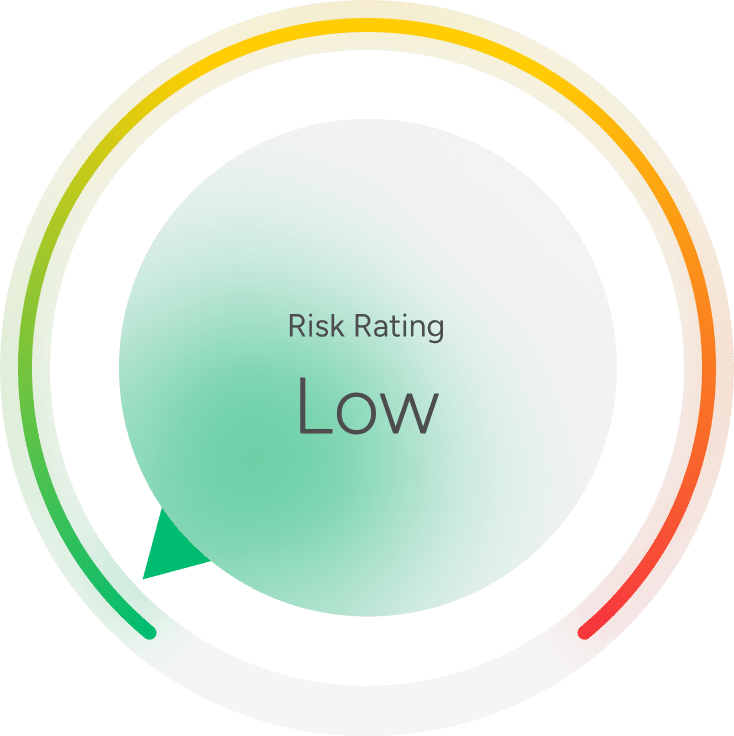
Web.com is Lower Risk. The company does not yield to political activism in shaping corporate governance, preventing initiatives that potentially alienate consumers, divide employees, and harm shareholders. The company elevates merit, excellence, and integrity ahead of race and identity-based policies. Web.com does not embrace corporate initiatives that redirect its central focus from business goals to partisan policies and divisive issues. This approach protects free exercise, free speech, and free enterprise.
Rating Criteria
| Criteria | Risk Level |
|---|---|
| Cancellations | Medium Risk |
| Discriminatory Philanthropy | No Data |
| Employment Protection | Medium Risk |
Corporate Weaponization ⓘ
| Criteria | Risk Level |
|---|---|
| Advocacy Bias | Lower Risk |
| Funding | Lower Risk |
| Political Actions | No Data |
Corporate Governance and Public Policy ⓘ
Latest Content
Benevity and Fidelity Foundation Block Donations to the SPLC
Referenced
October 19, 2026
Benevity had paid no mind to the SPLC’s indictment, which connects them to funding the KKK and neo-Nazi organizations, until recently. After Dustin Devito’s article in The Washington Post called on charitable giving platforms like Benevity to discontinue their use of the discredited SPLC’s “hate list”, the company asked the piece to be edited to note that they too no longer allow donations to the SPLC. However, Benevity still uses the “hate list” to block donations to mainstream Christian and conservative organizations. Doug Napier comments on Benevity’s move in The Chronicle of Philanthropy. But the 1792 Exchange, a conservative nonprofit that works to eliminate bias in corporate America and a frequent critic of the SPLC, contends that Benevity is not a neutral platform. While it has blocked donations to the SPLC, it still uses the civil rights nonprofit’s “Hate Map” to disallow donations — sometimes to fringe hate groups but also sometimes to mainstream conservative nonprofits like Turning Point USA and Focus on the Family. “Benevity is putting their thumb on the scale and inappropriately disqualifying organizations,” said Douglas Napier, the 1792 Exchange CEO. That said, Napier doesn’t see a problem with Benevity blocking the SPLC. “If the house is …
Benevity Blocks Donations to the SPLC, but Still Uses Its Hate List
Referenced
October 19, 2026
Tyler O’Neil of the Daily Signal reported that the largest corporate charitable matching platform, Benevity, cut off the SPLC from receiving donations, but has yet to remove the SPLC’s “hate list” as a filter for others, meaning that while the SPLC is no longer eligible, it remains eligible to determine the corporate giving opportunities of hundreds of thousands of employees across the country. Benevity helps nearly 1,000 corporate employers facilitate employee charitable giving by connecting firms with a network of 513,000 nonprofits. For years, the company has offered corporate clients screening based on the SPLC’s “hate” list. Yet a small correction note in a Washington Post op-ed revealed Thursday that Benevity had rendered the SPLC ineligible to receive charitable donations on the platform. “Blocking donations to the SPLC while staying silent on the filter that uses the SPLC’s ‘hate list’ to exclude other charities is an incomplete and unacceptable response,” Greg Scott, executive vice president at 1792 Exchange, told the Daily Signal in a statement Thursday. “No serious platform should screen nonprofits with a disgraced, indicted activist organization. “Benevity should drop that filter entirely and tell its clients and the public it has done so,” Scott added. Benevity did not …
Corporate Support for A4TE: Ideological Activism and Reputational Risk
October 19, 2026
Advocates for Trans Equality (A4TE) is a transgender-rights advocacy organization dedicated to advancing the legal and political rights of transgender individuals in the United States. Formed in 2024 through the merger of the National Center for Transgender Equality (NCTE) and the Transgender Legal Defense and Education Fund (TLDEF), A4TE engages in public policy advocacy, impact litigation, political activity, research and data collection, and community organizing to advance its objectives. A4TE has actively opposed federal and state legislation seeking to restrict transition-related medical interventions for minors. Including, organizing a coalition of more than 160 national and grassroots organizations that urged Congress to reject H.R. 3492, legislation which sought to establish federal criminal penalties for providing certain transition-related procedures to minors. A4TE characterized the targeted treatments as “safe and evidence-based” health care and argued that restrictions would interfere with medical decision-making. A4TE references WPATH’s Standards of Care in support of transition-related medical care, despite the guidelines facing federal legal scrutiny. In June 2026, the FTC and four states sued WPATH, alleging misleading claims about the safety, effectiveness, and medical necessity of certain pediatric interventions. Major corporations, including Apple, Amazon, Google, and Disney, have been identified as corporate partners of A4TE. Through these partnerships, …
Corporate stewardship, the cost of ideological activism, and the trust that built America.
Podcast
October 13, 2026
In this episode of The WallBuilders Show, Doug Napier, Executive Chairman and CEO of 1792 Exchange, joined host Rick Green to discuss The American Company, 1792 Exchange’s new effort to define and celebrate companies that act American. The conversation explores what separates a patriotic company from one that only waves the flag, and how Americans can help recognize the companies doing it right. Key Topics Discussed:
Accenture said it ditched DEI. The DOJ just caught them running secret race scorecards
Op-Ed
October 9, 2026
Color-coded monthly dashboards. Separate promotion conversations for candidates who moved demographic numbers in the “right” direction. Leadership programs with the door closed to the “wrong” race or sex. These are just a few of the flashing indicators that companies who should have known better had nonetheless embraced illegal employment practices. The avoidable result was the payment of huge fines. IBM paid $17 million. Deloitte paid $21.5 million. Now Accenture agreed to pay $25 million to resolve Justice Department allegations that it did the same things, while certifying it did not in order to continue its collection of big bucks from taxpayers. Three of the largest consulting firms — companies selling “expert” advice to government and Fortune 500 clients on workplace “transformation” — have written checks totaling $63.5 million in a single year under the Civil Rights Fraud Initiative. That’s a pattern. And a problem. The DOJ alleged that since 2017, Accenture Federal Services treated race and sex as factors in hiring and promotions to hit “stealth” workforce composition goals. Business-unit leaders received monthly summaries of the exact percentage of each race and sex in their units, highlighted to show if they were on target. Those scorecards drove improper hiring decisions, …