Bank of America
Companies who scored 100% on the 2023-2024 Corporate Equality Index.
Companies who scored 100% on the 2025 Corporate Equality Index.
Companies provide a benefit package for employees which covers travel/lodging costs for an abortion.
Companies who signed the Business Roundtable 2019 Stakeholder Capitalism statement
These companies are committed to leveraging shareholder or investor assets for net-zero emission goals and climate ambitions for GFANZ, Climate Action 100+, CERES, PCAF, UN PRI, NZLA, FIT, or HSCP.
The biggest 1000 U.S. companies by revenue according to form 10-K.
Companies who are members of the OneTen Coalition, appearing to prioritize diversity over merit in their business practices
Companies who have given money to the SPLC through corporate gifts or employee matching, supporting a controversial organization that claims to combat extremism while funding extremist groups and labeling mainstream political and religious views as “hateful"
Companies who are/were a corporate partner of the The Trevor Project, an organization that advocates for controversial sex and gender ideology, including for children.
Companies that offer so-called transgender healthcare for their employees and covered dependents.




Rating Overview
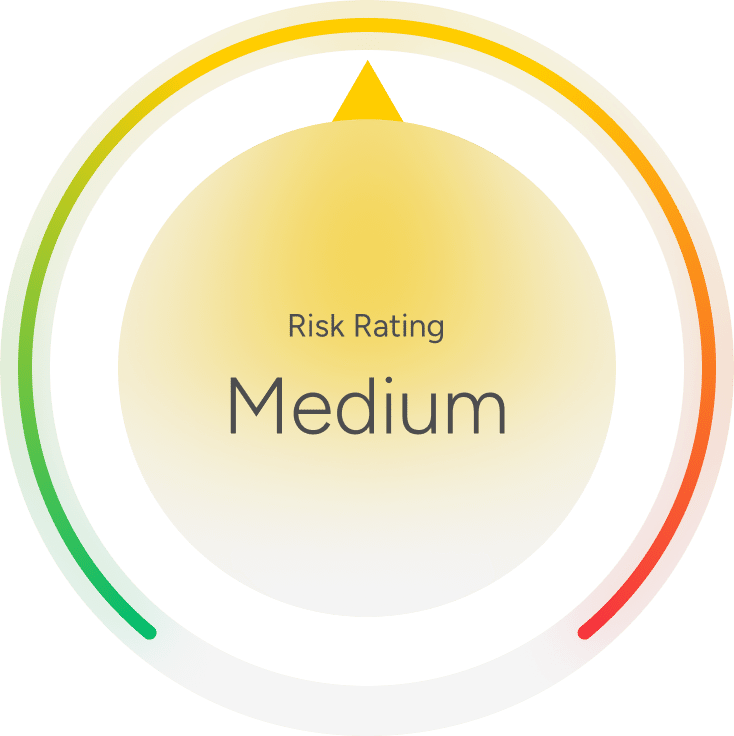
Rating Criteria
Rating Criteria Detail
Corporate Weaponization
Criteria:
Has canceled customers, suppliers, or vendors due to their political views or religious beliefs OR corporately boycotts, divests, or sanctions regions, people groups, or industries.
Risk Level:
MediumRationale:
Bank of America did not participate in the 2026 Corporate Equality Index (CEI) from the Human Rights Campaign (HRC), a political stakeholder group. Its official score of 100 on the 2025 CEI implies a history of LGBTQ+ recruitment initiatives and requiring its vendors to include sexual orientation and gender identity in their nondiscrimination policies. It is unclear if these policies remain in place (1)(2)(3). In February 2025, Bank of America announced updates to its hiring policies, including the removal of diverse hiring goals and candidate pool requirements. A company spokesperson reported, “We evaluate and adjust our programs in light of new laws, court decisions and, more recently, executive orders from the new administration” (4). In 2025, Bank of America updated its Supplier Code of Conduct, removing a provision that required its suppliers to “measure, disclose and mitigate” environmental impacts associated with their operations, including greenhouse gas emissions (5)(6). In 2023, the company revised its approach to coal production and energy projects in the Arctic Circle, moving from a blanket restriction adopted in 2021 to a framework that permits consideration of such activities subject to “enhanced due diligence.” According to a 2023 study conducted by Reclaim Finance, Bank of America was the second largest contributor in combined lending and underwriting to oil, gas, and coal firms from 2021-2022 at almost $23 billion (7)(8)(9)(10)(11)(12). Bank of America currently subjects relationships involving private prisons, immigrant detention facilities, and certain firearm manufacturers to “enhanced due diligence” rather than categorical exclusion. The company’s environmental and social risk policy framework is “reviewed and approved at least every two years or more frequently” and “is currently being updated.” In 2025, Bank of America reinstated CoreCivic, the second-largest operator of prisons and detention centers in the United States, as a client. This approach reflects a 2023 revision to a 2019 policy that had ended lending to private prisons and immigrant detention facilities and ceased business with certain firearm manufacturers. According to The New York Times, the bank declined to elaborate on its risk review process (13)(14)(15)(16)(17)(18)(19). The office of Senator Ted Cruz investigated Intuit Quickbooks for its policy prohibiting gun manufacturers from using its services, and Intuit claimed that Bank of America “required it to prohibit gun manufacturers from using QuickBooks payroll services.” However, Bank of America denied giving Intuit any instructions relating to firearm manufacturers or sellers. Intuit eventually ended these policies (20). In August 2025, Bank of America amended its Code of Conduct to expressly prohibit discrimination based on religious viewpoint or political affiliation, strengthening safeguards against viewpoint-based discrimination that could lead to account closures or service denials (21)(22). In March 2025, BofA supported legislation from Senator Tim Scott to end regulations that could cause politicized debanking. Spokesman Bill Halldin told the Daily Signal that the bank is “focused on being a bank that serves everyone, regardless of political viewpoints” and that it is “required to follow extensive government regulations that sometimes result in requirements to exit relationships.” Halldin added that Bank of America doesn’t “close accounts for political reasons” and doesn’t “have a political litmus test” (23). In April 2024, 15 state attorneys general wrote a letter to Bank of America claiming that the bank was discriminating against customers based on their religious or political views. Bank of America spokesman Bill Halldin denied the claims of debanking stating, “Religious beliefs are not a factor in any account-closing decision” and that Bank of America is “proud to provide banking services to non-profit organizations affiliated with diverse faith communities throughout the United States.” The attorneys general requested additional information regarding the bank’s account-closure policies and urged it to adopt explicit protections for religious and political viewpoint diversity. In August 2025, Bank of America amended its Code of Conduct to expressly prohibit discrimination based on religious viewpoint or political affiliation (24)(25)(26)(27). In April 2023, Bank of America closed accounts associated with Indigenous Advance (IA), a US-based charity supporting work in Uganda, after identifying ties to the Indigenous Advance Customer Center (IACC), which was providing debt collection services that its small-business division does not support. IA initially believed the closures may have been related to religious affiliation because BofA’s closure letters claimed IA was “operating in a business type” it had “chosen not to service.” However, BofA later clarified that the closures were unrelated to religion, emphasizing that “religious beliefs are not a factor in any account-closing decision.” BofA did not publicly provide additional documentation identifying which policy bars servicing debt collection agencies to the Daily Mail, but its current Corporate Application Requirements limit applicants to U.S.-based businesses and its business banking materials indicate that service eligibility varies by location. IA claimed the IACC operated as a separate for-profit call center aligned with its humanitarian work in Africa. However, IA described IACC as a partner entity, appeared on Indigenous Advance’s website, and used an Indigenous Advance email domain. BofA’s explanation indicates it likely viewed IACC’s collections work as connected enough to the broader banking relationship to raise risk concerns. This may help explain why BofA sent closure letters to multiple IA-related entities, including IACC and the University House of Prayer (UHOP) (28)(29)(30)(31)(32)(33)(34)(35). In May 2023, Bank of America was placed on Oklahoma’s Restricted Financial Companies List for allegedly boycotting energy companies, as defined in 74 O.S. §12002(A)(l). After being placed on this list, the company had 90 days to “cease engaging in the energy company boycott to avoid qualifying for divestment by the state governmental entity.” In Oklahoma’s view, BofA did not cease its boycott and therefore remained on its 2024 list. However, in September 2024, following a legal challenge by a state retiree, an Oklahoma County district judge issued a permanent injunction prohibiting enforcement of the Oklahoma Energy Discrimination Act of 2022, the law that granted the State Treasurer authority to create and maintain the Restricted Financial Companies List. The court found that the Act contained “conflicting and vague provisions as to the exemptions/exceptions governmental entities may claim and conflicts to the required evidentiary standards.” The plaintiff argued that blacklisting firms that refuse to invest in oil and gas companies due to ESG policies harmed Oklahoma’s public pension funds. The defense, representing Treasurer Todd Russ, contended that continuing to do business with such firms undermined the state’s energy economy. In December 2024, the Oklahoma Attorney General Gentner Drummond appealed the injunction to the Oklahoma Supreme Court. The case remains pending (36)(37)(38)(39). In June 2026, the U.S. Justice Department sent a subpoena to Bank of America “requesting information about whether they ‘debanked’ clients, or improperly closed customer accounts for political reasons” (40).
Criteria:
Charitable giving (including employee matching programs) policies or practices discriminate against charitable organizations based on views or religious beliefs.
Risk Level:
MediumRationale:
In March 2026, Bank of America announced its intention to adjust its charitable giving policy to match employee gifts to any 501(c)(3) nonprofit. Its policy formerly excluded “general funding to any organization whose purpose is to promote or to discourage the observance or influence of religious beliefs” but did “support such organization’s funding of homeless shelters, soup kitchens or other social service needs.” However, the company’s charitable giving guidelines still require that organizations abide by its nondiscrimination policy, including on the basis of sexual orientation and gender identity, thereby excluding some religious charities (1)(2). Bank of America’s corporate grant requirements do not discriminate against religious organizations. The company’s charitable giving focus areas are basic needs, income creation, stable housing, and community empowerment (3)(4). Bank of America did not participate in the 2026 CEI. However, its HRC 2025 CEI rating and its charitable giving guidelines indicate the company will not donate to non-religious charities unless they include sexual orientation and gender identity in their non-discrimination policy. It is unclear if this policy remains in place (5)(6)(7)(8).
Criteria:
Employment policies fail to protect against viewpoint or other discrimination and/or are ideological in nature.
Risk Level:
MediumRationale:
Bank of America protects its employees against viewpoint discrimination (1). In January 2025, 11 Attorneys General wrote a letter to Bank of America regarding its DEI policies, arguing that business decisions based on race/sex could violate the company’s fiduciary duties. BofA subsequently took several steps to address DEI-related policies and ensure its policies were focused on merit (2)(3). In February 2025, the bank pledged to no longer discriminate based on race/sex in hiring, ended a rule requiring a “diverse slate” in reviewing candidates and in interview panels, and pledged to no longer seek “workplace representation targets” and goals (4)(5). These changes were confirmed by its March 2025 proxy statement (6)(7). Bank of America also addressed concerns about prioritizing diversity over merit in its supply chain by omitting DEI-related policies from its 2025 Supplier Code of Conduct that had appeared in its 2024 Supplier Code of Conduct (8)(9). Bank of America did not participate in the 2026 CEI. However, its 2025 CEI rating indicates the company forces employees to attend multiple, controversial trainings on gender identity, sexual orientation, transgender issues, and divisive racial ideology. It also indicates the company provides gender transition guidelines for its employees and a specific benefits guide with a comprehensive explanation of transgender services funded by the company. It is unclear if these policies remain in place (10)(11). In 2021, the United Way of Greater Charlotte (UWGC) launched a 21-day racial equity challenge to help participants “develop more effective social justice habits around issues of race, power, privilege and leadership.” UWGC announced BofA as an “equity champion” and a “presenting sponsor”, which entailed a commitment to “sharing the Racial Equity 21-Day Challenge activity with… employees to encourage participation.” Charles Bowman, then Bank of America’s North Carolina president, publicly discussed the bank’s employee engagement related to the Challenge. Subsequent reporting by the New York Post, however, incorrectly suggested that Bank of America developed and implemented the challenge for its employees. In response to a request for comment, Bank of America spokesman Bill Halldin told FOX Business that the bank did not develop this program or training materials. Furthermore, he clarified that the bank does not endorse these ideas or run its own employee training along these lines, and that the UWGC “ran this program independent of Bank of America” (12)(13)(14)(15)(16)(17). Bank of America is a member of myGwork, a professional job and networking platform that connects employers with LGBTQ+ professionals and advances workplace diversity and inclusion initiatives. Corporate membership benefits vary by level and include LGBTQ+-focused services in areas such as talent recruitment, job postings, employer branding, employee engagement, DEI programming and training, and media exposure (18)(19)(20).
Corporate Governance and Public Policy
Criteria:
Uses corporate reputation to support causes, organizations, or policies hostile to freedom of expression.
Risk Level:
HighRationale:
In April 2021, Bank of America updated its Public Policy Engagement approach, stating that employees engaging in political activities are expected to “make it clear that they are acting as an individual and not as a representative of the company.” The update followed a period in which CEO Brian Moynihan had spoken publicly on several controversial issues (1)(2)(3)(4)(5)(6). Bank of America is no longer a signatory to the Equator Principles, an industry benchmark for assessing environmental and social risks in project-related finance. A spokesperson for the company said Bank of America would continue to be informed by the Equator Principles (7). BofA withdrew its Net Zero Banking Alliance membership in December 2024 likely over growing concerns of potential antitrust violations. This alliance indicated commitment to carbon neutrality by 2050 (8). Bank of America did not participate in the 2026 CEI. However, its 2025 CEI rating indicates the company allowed a controversial stakeholder group focused on sexual identity issues to influence its marketing or advertising strategy. It is unclear if this approach remains in place (9)(10). Moynihan is the Chairman of the International Business Council of the World Economic Forum, which works to develop “Stakeholder Capitalism Metrics” for ESG goals (11)(12). The company embraces ESG frameworks for investing and operating, including the Stakeholder Capitalism Metrics constructed by the International Business Council (13). Bank of America’s CEO Brian Moynihan is the co-chair of the Steering Committee of the Council for Inclusive Capitalism, which promotes stakeholder capitalism over traditional shareholder obligations (14)(15). The company’s CEO, Brian Moynihan, is a member of the Business Roundtable and signed its 2019 Statement on the Purpose of a Corporation, which promotes stakeholder capitalism over traditional obligations to shareholders (16)(17). Bank of America is a member of Carbon Measures, a global coalition of businesses across industries organized around establishing a more accurate carbon accounting framework and driving value chain emission reductions. Member firms utilize the coalition’s carbon accounting framework to inform its internal operations and supply chain policies. Carbon Measures advocates for establishing product-level carbon intensity standards to create a market that rewards businesses investing in lower-carbon production (18)(19). The company is committed to net zero carbon emissions “before 2050” (20). Bank of America is a Ceres Network Member and a PCAF Member, committed to carbon neutrality by 2040 (21)(22)(23)(24)(25)(26). The company supports ESG within its business practices. From its Environment, Social and Governance Reports page: “We make these disclosures because we believe it is important that stakeholders — including our clients, teammates, communities and shareholders — understand how we manage ESG issues and have better insight into how we are living our values and delivering on our purpose to drive responsible growth” (27). The company‘s CEO, Brian Moynihan, signed the CEO Action for Diversity & Inclusion pledge, which includes a commitment to promote DEI through bias education training in the workplace, strategize on DEI programs/initiatives with other signatories, and engage boards of directors when developing and evaluating DEI strategies. It is unclear if BofA remains a part of CEO Action because the list of signatories is no longer public. BofA has made a number of changes to remove DEI from its business practices (28)(29). Bank of America announced that it will match the government’s $1,000 contributions to Trump Accounts for the children of its employees (30)(31). The company pledged to invest $250 Billion into Critical infrastructure financing (32)(33).
Criteria:
Uses corporate funds to advance ideological causes, organizations, or policies hostile to freedom of expression.
Risk Level:
HighRationale:
Bank of America provides a benefits package for employees that covers travel/lodging costs for an abortion and transgender medical procedures for covered employees and dependents, including children. The bank stated, “We have expanded the list of medical treatments that are eligible for travel expense reimbursement. This list will now include cancer treatment, organ transplants at centers of excellence, reproductive health care including abortion, and hospital admissions for mental health conditions” (1)(2)(3)(4)(5)(6). The company did not participate in the 2026 CEI. However, its 2025 CEI rating indicates the company covers transgender related costs for its employees and their children, including paid short-term leave, puberty blockers, cross-sex hormones, chest surgeries, genital surgeries, medical visits and lab monitoring, travel and lodging. Additionally, the company has pledged philanthropic support of at least one organization or event that promotes sex and gender ideology (7)(8). Bank of America is a Silver Corporate Partner of the HRC (9). The company is a partner of the HRC’s Foundation (10)(11)(12)(13). From 2021-2024, Bank of America donated $218,000 to the HRC (14)(15)(16)(17)(18). The company gave $40,584, likely through matching employee donations, to the SPLC, a controversial organization that claims to combat extremism but has faced criticism for labeling mainstream political and religious views as “hateful.” Many companies have matched donations or provided grants to the SPLC without full awareness of the organization’s long history of controversy. In April 2026, the SPLC was indicted by a federal grand jury on charges of wire fraud, making false statements to a federally insured bank, and money laundering in connection with allegations that it funneled more than $3 million to individuals associated with various violent extremist groups (19)(20)(21)(22)(23)(24)(25). Bank of America was a Silver Tier corporate sponsor of the Trevor Project, an organization that advocates for controversial sex and gender ideology, including “gender transition” drugs and surgeries for minors, through legislation, litigation, advertising, and PR campaigns. The organization also hosts online chatrooms that allow adults to communicate with minors as young as 13 about sexually explicit topics. Adults in these chatrooms have encouraged minors to adopt transgender identities and withhold this information from their parents (26)(27)(28)(29)(30). The company is a Superhero partner of PFLAG, an LGBTQ+ activist group that promotes books for children with sexually explicit and gender fluid content and advocates against laws that inform parents of their child’s gender dysphoria or prevent unapproved transgender medical treatments for minors (31)(32)(33). Following the death of George Floyd, Bank of America pledged $1 billion dollars to “address economic and racial inequality.” BofA also issued a $2 billion Equality Progress Sustainability Bond “designed to advance racial equality, economic opportunity and environmental sustainability.” In a Lou Dobbs Tonight Fox Business segment in July 2020, it was incorrectly reported that BofA donated $1 billion to Black Lives Matter. Lou Dobbs later corrected the record (34)(35)(36)(37)(38). The company was a Titanium sponsor of Out & Equal (39). Bank of America is a corporate partner of the National LGBT Chamber of Commerce (40). The company is a Corporate Member of the Mid-America LGBT Chamber of Commerce (41)(42). Bank of America is potentially a coalition member of OneTen, appearing to prioritize diversity over merit in its hiring (43)(44)(45). The company was a Garnet Level partner of the 2025 ROMBA Conference, an annual LGBTQ+ professional and recruiting conference for students, business professionals, corporations, and business schools. The conference emphasizes identity-based networking and recruiting over merit and professional qualifications, reflecting the influence of DEI activism in corporate and academic settings (46)(47)(48)(49). Bank of America is a partner of the 2026 ROMBA Conference, an annual LGBTQ+ professional and recruiting conference for students, business professionals, corporations, and business schools. The conference emphasizes identity-based networking and recruiting over merit and professional qualifications, reflecting the influence of DEI activism in corporate and academic settings (50)(51)(52)(53). The company is a Member of Out Leadership, a global network of LGBT+ business leaders from major companies that seeks to advance LGBTQ+ representation in corporate leadership and integrate LGBTQ+ priorities into workplace strategies. The first LGBTQ+ B-Corporation, Out Leadership accomplishes this through convening leadership summits, directing talent initiatives, and providing advisory solutions that emphasize the positive impact of LGBT+ inclusion for business (54)(55)(56)(57). Bank of America is a sponsor of Out in Tech, an LGBTQ-focused nonprofit that advances DEI-style inclusion initiatives that aim to increase LGBTQ+ representation in the technology industry through recruiting, workforce development and networking initiatives. The organization partners with corporations to advance LGBTQ+ inclusion initiatives and integrate LGBTQ+ representation goals into talent development and employee engagement strategies (58)(59)(60)(61). Bank of America Charitable Gift Fund has donated between $100,000 and $249,999 to Compassion & Choices (C&C), a nonprofit organization that advocates for the expansion of physician-assisted suicide and related practices including medical aid in dying (MAID), voluntarily stopping eating and drinking (VSED), palliative sedation that “advances the time of death,” and dementia directives that allow patients to refuse food and fluids. C&C also advances legislation, litigation, and federal policy to prevent healthcare providers and institutions from limiting patients’ access to life-ending practices on ethical, religious, or conscience-based grounds (62)(63)(64)(65)(66).
The company is a sponsor of the 2024 Carolina Conference on Queer Youth (67). Bank of America sponsored the Motor City Pride in 2025 (68). The company sponsored the following Pride events in 2026: Silver Pride, Motor City Pride and Phoenix Pride (69)(70)(71). Otherwise, there are no publicly known cases of Bank of America using corporate funds to advance ideological causes, organizations, or policies (72).
Criteria:
Uses corporate political actions and/or financial contributions for ideological, non-business purposes.
Risk Level:
LowerRationale:
Bank of America’s PAC is a voluntary, employee-funded program that supports candidates from “both political parties.” The company does not contribute corporate funds to candidates, political parties, PACs, or independent political expenditures, and its PAC contributions are made to advance company interests “without regard to the private political preferences of the company’s Executive Management Team or any other company executive.” BofA does not “directly communicate with the general public advocating that it take action with respect to specific legislation” and expects employees engaging in political activities to “make it clear that they are acting as an individual and not as a representative of the Company” (1). The company has not used its PAC for ideological purposes (2)(3).
Related Resources
Related Companies
Banks, Diversified Financials

JPMorgan Chase

Banks, Diversified Financials
BMO Harris

Banks
PNC Financial Services Group

Banks, Diversified Financials
Wells Fargo

Banks
Fifth Third Bank (5/3 Bank)

Banks
U.S. Bancorp

Diversified Financials

Berkshire Hathaway

Banks
Truist Financial
Banks, Diversified Financials
Capital One Financial
Diversified Financials
American Express