JPMorgan Chase
Companies who scored 100% on the 2023-2024 Corporate Equality Index.
Companies who scored 100% on the 2025 Corporate Equality Index.
Companies provide a benefit package for employees which covers travel/lodging costs for an abortion.
Company is a corporate partner of Ashoka, a global network of entrepreneurs focused on widespread, systemic social and environmental change
Companies who signed the Business Roundtable 2019 Stakeholder Capitalism statement
These companies are committed to leveraging shareholder or investor assets for net-zero emission goals and climate ambitions for GFANZ, Climate Action 100+, CERES, PCAF, UN PRI, NZLA, FIT, or HSCP.
The biggest 1000 U.S. companies by revenue according to form 10-K.
Companies who are members of the OneTen Coalition, appearing to prioritize diversity over merit in their business practices
Companies who have given money to the SPLC through corporate gifts or employee matching, supporting a controversial organization that claims to combat extremism while funding extremist groups and labeling mainstream political and religious views as “hateful"
Companies that offer so-called transgender healthcare for their employees and covered dependents.




Rating Overview
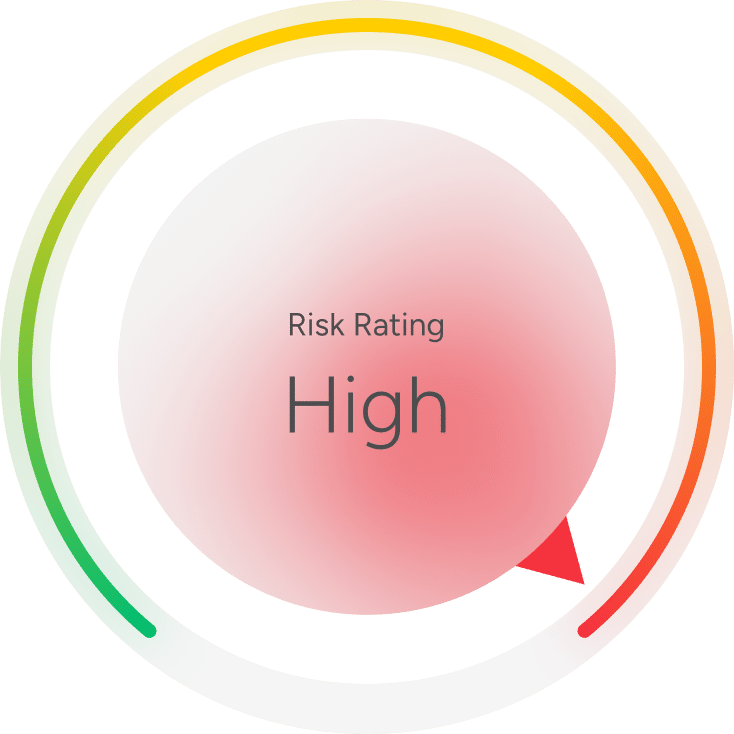
Rating Criteria
Rating Criteria Detail
Corporate Weaponization
Criteria:
Has canceled customers, suppliers, or vendors due to their political views or religious beliefs OR corporately boycotts, divests, or sanctions regions, people groups, or industries.
Risk Level:
HighRationale:
In July 2022, West Virginia placed JPMorgan Chase on its Restricted Financial Institutions List for its “boycott of energy companies” according to its ESG policies and publicly available statements. The West Virginia State Treasurer will remove JPMorgan Chase from the list “if the institution demonstrates that it has ceased all activity that boycotts energy companies according to West Virginia Code §§12-1C-1”. In West Virginia’s view, JPMorgan Chase did not cease its boycott and therefore remained on its 2025 list (1)(2)(3). On May 3, 2023, the company was placed on Oklahoma’s Restricted Financial Companies List for allegedly boycotting energy companies, as defined in 74 O.S. §12002(A)(l). After being placed on this list, the company had 90 days to “cease engaging in the energy company boycott to avoid qualifying for divestment by the state governmental entity.” In Oklahoma’s view, JPMorgan Chase did not cease its boycott and therefore remained on the 2024 list. In September 2024, however, following a legal challenge by a state retiree, an Oklahoma County district judge issued a permanent injunction prohibiting enforcement of the Oklahoma Energy Discrimination Act of 2022, the law that granted the State Treasurer authority to create and maintain the Restricted Financial Companies List. The court found that the Act contained “conflicting and vague provisions as to the exemptions/exceptions governmental entities may claim and conflicts to the required evidentiary standards.” The plaintiff argued that blacklisting firms that refuse to invest in oil and gas companies due to ESG policies harmed Oklahoma’s public pension funds. The defense, however, representing Treasurer Todd Russ, contended that continuing to do business with such firms undermined the state’s energy economy. In December 2024, the Oklahoma Attorney General Gentner Drummond appealed the injunction to the Oklahoma Supreme Court. The case remains pending (4)(5)(6)(7). The company received a score of 100 on the 2025 Corporate Equality Index (CEI) from the Human Rights Campaign (HRC), a political stakeholder group. The company recruits employees based on sexual identity issues. The company discriminates against vendors that do not promote divisive sex and gender policies, indicating it prioritizes sexual issues over merit (8)(9). CEO Jamie Dimon has stated that the bank would not do business with manufacturers of “military-style” weapons for civilian consumers, and the bank has stated that its business relations with firearms manufacturers “have come down significantly and are pretty limited” (10)(11). U.S. Senators have expressed concern about this discrimination, and state laws have even prohibited the bank from bidding on government bonds, debt, or financing, but the bank has held firm in its stance (12)(13). The office of Senator Ted Cruz investigated Intuit QuickBooks for its policy prohibiting gun manufacturers from using its services, which found that JPMorgan pressured the company to restrict gun sellers from using QuickBooks payment processing services (14). The company’s Code of Conduct uses subjective language that prohibits suppliers and even customers from engaging in “discrimination, harassment, or inappropriate or abusive conduct” (15). However, according to members of Viewpoint Diversity Score, the company has dropped its “social risk” policy and terms like “hate” or “intolerance” from its payment processing policy (16). The bank no longer lends to coal mining projects and limits funding to Arctic drilling projects (17). In June 2026, the U.S. Justice Department sent a subpoena to JPMorgan Chase “requesting information about whether they ‘debanked’ clients, or improperly closed customer accounts for political reasons” (18). The company had a long history of debanking individuals based on their religious and/or political viewpoints. However, in March 2025, JPMorgan Chase updated its Code of Conduct to protect against religious discrimination (19)(20)(21). On February 21, 2026, The New York Times reported that JPMorgan Chase acknowledged closing former President Donald Trump’s accounts in early 2021, prompting a lawsuit alleging politically motivated “debanking.” JPMorgan denies the allegation, maintaining that account closures are based on legal and regulatory risk factors. During the litigation, JPMorgan acknowledged in writing for the first time that it had closed President Trump’s account. The bank said privacy laws had previously prevented it from providing such written confirmation. Earlier, in March 2025, JPMorgan updated its Code of Conduct to explicitly prohibit discrimination on the basis of religion or political opinion, a move aimed at helping prevent future instances of religious or political “debanking” (22)(23)(24)(25).
Criteria:
Charitable giving (including employee matching programs) policies or practices discriminate against charitable organizations based on views or religious beliefs.
Risk Level:
HighRationale:
JPMorgan Chase‘s HRC 2025 CEI rating indicates the company will not donate to non-religious charities unless they embrace controversial sexual identity policies (1)(2). The company does not publish charitable giving guidelines but restricts giving to certain religious organizations in its gift matching program. JPMorgan Chase will only give to religious organizations that provide non-sectarian services but will not give to “programs that are otherwise religious” (3)(4).
Criteria:
Employment policies fail to protect against viewpoint or other discrimination and/or are ideological in nature.
Risk Level:
HighRationale:
JPMorgan Chase’s HRC 2025 CEI rating indicates the company forces employees to attend multiple, controversial trainings on gender identity, sexual orientation, transgender issues, and divisive racial ideology. The company provides gender transition guidelines for its employees and a specific benefits guide with a comprehensive explanation of transgender services funded by the company (1)(2). The company is a signatory of the Gender & Diversity KPI Alliance, appearing to prioritize diversity over merit in its business structure through the establishment of gender and racial targets for its leadership composition and its support of DEI in its hiring and promotions (3)(4). 11 Attorneys General wrote a letter to the company regarding its DEI policies, arguing that business and investment decisions based on race/sex could violate the company’s fiduciary duty to maximize shareholder value (5)(6). The company protects its employees against viewpoint discrimination (7)(8).
Corporate Governance and Public Policy
Criteria:
Uses corporate reputation to support causes, organizations, or policies hostile to freedom of expression.
Risk Level:
HighRationale:
JPMorgan Chase’s HRC 2025 CEI rating indicates the company agrees to allow a controversial stakeholder group focused on sexual identity issues to dictate marketing or advertising strategy. By doing so, the company risks dividing employees, alienating customers and harming shareholders (1)(2). The company signed an open letter endorsing the Equality Act, a contentious proposal to amend the 1964 Civil Rights Act by adding sexual orientation and so-called gender identity as protected categories. The legislation would, among other implications, grant biological men access to women-only spaces such as sports teams and public restrooms, and compel healthcare providers to deliver sex-denying healthcare (3). The company’s CEO, Jamie Dimon, kneeled during the “National Anthem” to show support for racial justice (4). After initially weighing in against the Georgia election integrity law with a general statement about voting rights, CEO Jamie Dimon refused to sign an open letter of business leaders inspired by the Georgia law, saying that he does not need to weigh in on state-specific matters of legislation (5)(6). The company’s CEO Jamie Dimon is a member of the Business Roundtable and signed its 2019 Statement on the Purpose of a Corporation, which promotes stakeholder capitalism over traditional obligations to shareholders (7)(8). JPMorgan Asset Management was part of the Net Zero Asset Managers initiative prior to NZAM’s suspension in 2025. Its membership indicated a commitment to carbon neutrality with its investments by 2050 (9)(10)(11). The Company’s Office of LGBTQ+ Affairs has issued multiple statements throughout the years encouraging “marriage equality” in multiple countries, though it has only endorsed transgender rights in the United States (12). The company was a signatory of the Orlando Economic Partnership’s DEI pledge, committing itself to fight systemic racism, prioritize the success of diverse people in its workplace, and ensure DEI “is a strategic imperative with demonstrated commitment and actions” (13). JPMorgan is no longer a signatory to the Equator Principles, an industry benchmark for assessing environmental and social risks in project-related finance. A spokesperson for the company said the bank has “invested in environmental and social risk experts and in-house processes”, making it unnecessary to maintain membership, although its in-house standards will continue to be informed by the Equator Principles (14). The company is a signatory of the Institutional Limited Partners Association’s Diversity in Action Initiative, committing itself to specific actions that advance DEI within the governance and policies of the organization and the private equity industry more broadly (15)(16)(17). The company’s CEO, Jamie Dimon, signed the CEO Action for Diversity & Inclusion pledge, which includes a commitment to promote DEI through bias education training in the workplace, strategize on DEI programs/initiatives with other signatories, and engage boards of directors when developing and evaluating DEI strategies (18)(19). JPMorgan Asset Management was a member of Climate Action 100+ but withdrew its membership in February 2024 likely over growing concerns of potential antitrust violations, as well as because signatories were expected to start implementing climate transition plans and after legal investigations from state Attorneys General. A spokeswoman for JPMorgan Chase said the firm will not renew its membership in Climate Action 100+ because it has made significant investments in developing its own climate risk engagement framework, now employing 40 dedicated sustainable investing professionals (20)(21)(22)(23)(24). The company was a part of the Net Zero Banking Alliance, committed to carbon neutrality by 2040. However, it withdrew its membership in January 2025 likely over growing concerns of potential antitrust violations, though a spokesperson for the company has said that it still has climate goals (25)(26). JPMorgan had a history of supporting DEI. However, in February 2025, the company started removing DEI language from its website (27). The company was a member of the Ceres Network, committed to carbon neutrality by 2040. However, it withdrew its membership in 2025 likely over growing concerns of potential antitrust violations (28)(29)(30). JPMorgan announced that it will match the government’s $1,000 contributions to Trump Accounts for the children of its employees (31)(32).
Criteria:
Uses corporate funds to advance ideological causes, organizations, or policies hostile to freedom of expression.
Risk Level:
HighRationale:
JPMorgan Chase provides a benefits package for employees that covers travel/lodging costs for an abortion and transgender medical procedures for covered employees and dependents, including children (1)(2)(3)(4)(5). The company‘s HRC 2025 CEI rating indicates the company covers transgender related costs for its employees and their children, including paid short-term leave, puberty blockers, cross-sex hormones, chest surgeries, genital surgeries, medical visits and lab monitoring, travel and lodging. Additionally, the company has pledged philanthropic support of at least one organization or event that promotes sex and gender ideology. By allowing a political stakeholder group to dictate operations, the company increases health care costs and risks dividing employees, alienating customers and harming shareholders (6)(7). JPMorgan Chase is a Platinum Corporate Partner of the HRC (8)(9)(10)(11). The company was a partner of the HRC’s Foundation (12)(13)(14)(15). The company gave $500,000 to the Southern Poverty Law Center and other BLM-adjacent organizations, totaling $30 billion in racial justice investments (16)(17)(18). The company has also donated to Planned Parenthood (19). The company’s foundation, the JPMorgan Chase Foundation, has provided funding to various local chapters of the ACLU (20). The company is a platinum partner of the HRC, a titanium sponsor of Out and Equal, and a founding corporate partner of the National LGBT Chamber of Commerce (21)(22)(23). The company is a member of the MCCA, indicating its focus on recruiting, retaining, and promoting employees based on race (24)(25). The company is a coalition member of OneTen, appearing to prioritize diversity over merit in its hiring (26)(27)(28). The company is a corporate partner of Ashoka, a global network of entrepreneurs focused on widespread, systemic social and environmental change (29). JP Morgan Charitable Giving Fund has donated between $5,000 and $9,999 to Compassion & Choices (C&C), a nonprofit organization that advocates for the expansion of physician-assisted suicide and related practices including medical aid in dying (MAID), voluntarily stopping eating and drinking (VSED), palliative sedation that “advances the time of death,” and dementia directives that allow patients to refuse food and fluids. C&C also advances legislation, litigation, and federal policy to prevent healthcare providers and institutions from limiting patients’ access to life-ending practices on ethical, religious, or conscience-based grounds (30)(31)(32)(33)(34). The company is a Gold Sponsor of NYC Pride (35). The company sponsored the following 6 events in 2025: WorldPride 2025, Pride Houston 365, Ozarks PrideFest, Lansing Pride Festival 2025 , KC PrideFest, Dallas Pride (36)(37)(38)(39)(40)(41). JPMorgan Chase sponsored the following Pride Events in 2026: Lansing Pride, St. Pete Pride Festival & Parade, Pride Houston 365, and NYC Pride (42)(43)(44)(45). The company donated $46,373 to the SPLC, a controversial organization that claims to combat extremism while labeling mainstream political and religious views as “hateful.” The SPLC has faced a number of controversies over the years, including its April 2026 indictment by a federal grand jury for wire fraud, making false statements to a federally insured bank, and money laundering connected to its alleged funneling of more than $3 million to individuals associated with various violent extremist groups (46)(47)(48)(49)(50)(51)(52)(53). The company is a sponsor of America250, a bipartisan initiative created to commemorate the 250th anniversary of the United States in 2026 (54). The company was a Diamond level partner of the 2025 ROMBA Conference, an annual LGBTQ+ professional and recruiting conference for students, business professionals, corporations, and business schools. The conference emphasizes identity-based networking and recruiting over merit and professional qualifications, reflecting the influence of DEI activism in corporate and academic settings (55)(56)(57)(58). Otherwise, there are no publicly known cases of the company using corporate funds to advance ideological causes, organizations, or policies (59).
Criteria:
Uses corporate political actions and/or financial contributions for ideological, non-business purposes.
Risk Level:
HighRationale:
JPMorgan Chase‘s HRC 2025 CEI rating indicates the company publicly advocated for controversial sex and gender ideology through local, state or federal legislation or initiatives. By allowing a political stakeholder group to dictate operations, the company risks dividing employees, alienating customers and harming shareholders (1)(2). The company PAC donated to the Equality PAC but has not lobbied for ideological purposes (3)(4)(5).
Related Resources
Related Companies

Banks, Diversified Financials

BMO Harris
Banks, Diversified Financials

Bank of America

Banks
PNC Financial Services Group

Banks, Diversified Financials
Wells Fargo

Banks
Fifth Third Bank (5/3 Bank)

Banks
U.S. Bancorp

Diversified Financials

Berkshire Hathaway

Banks
Truist Financial

Banks, Diversified Financials
Capital One Financial

Diversified Financials
American Express