
Truist Financial
Companies who scored 100% on the 2023-2024 Corporate Equality Index.
Companies who scored 100% on the 2025 Corporate Equality Index.
These companies are committed to leveraging shareholder or investor assets for net-zero emission goals and climate ambitions for GFANZ, Climate Action 100+, CERES, PCAF, UN PRI, NZLA, FIT, or HSCP.
The biggest 1000 U.S. companies by revenue according to form 10-K.
Companies that offer so-called transgender healthcare for their employees and covered dependents.


Rating Overview
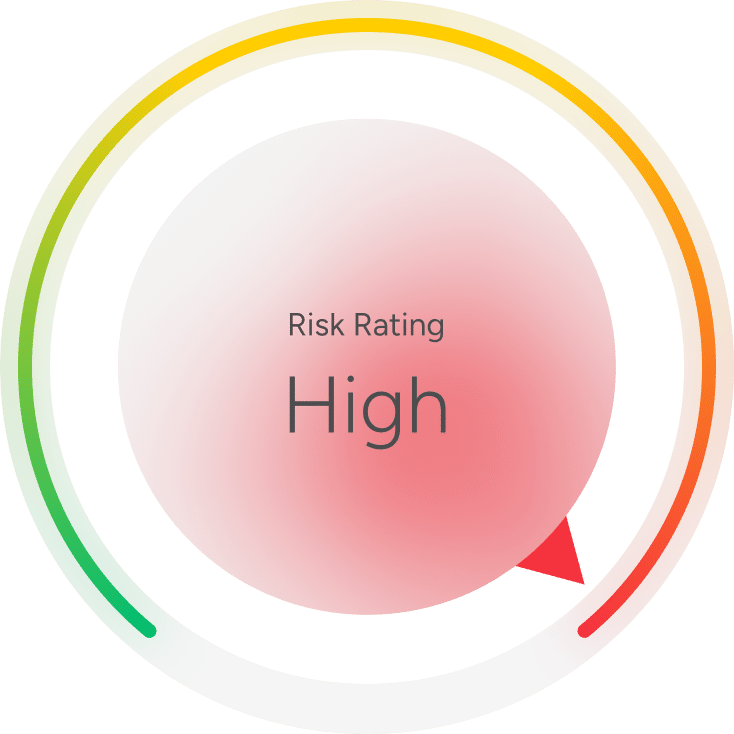
Rating Criteria
Rating Criteria Detail
Corporate Weaponization
Criteria:
Has canceled customers, suppliers, or vendors due to their political views or religious beliefs OR corporately boycotts, divests, or sanctions regions, people groups, or industries.
Risk Level:
HighRationale:
SunTrust (later merged with BB&T to form Truist) quit doing business with private prisons in response to social pressure groups who opposed then-President Trump’s immigration policies (1). Several conservative and far-right activists had their accounts canceled as well, including ALIPAC, who had been in good standing with the bank for years (2)(3). In August 2021, BB&T debanked Gab CEO Andrew Torba (4). BB&T also has a vague Code of Conduct policy that enables the bank to close accounts at its sole discretion (5). Truist received a score of 100 on the 2025 Corporate Equality Index (CEI) from the Human Rights Campaign (HRC), a political stakeholder group. The company recruits employees based on sexual identity issues. The company discriminates against vendors that do not promote divisive sex and gender policies, indicating it prioritizes sexual issues over merit (6)(7).
Criteria:
Charitable giving (including employee matching programs) policies or practices discriminate against charitable organizations based on views or religious beliefs.
Risk Level:
HighRationale:
Truist’s HRC 2025 CEI rating indicates the company will not donate to non-religious charities unless they embrace controversial sexual identity policies (1)(2). The bank requires “Faith-based community service organizations or schools may be considered if their programs are open to all individuals in the community regardless of religious beliefs and serve a secular purpose, such as a food pantry, homeless shelter or education” (3). Therefore, it is likely that religious organizations would not be eligible for charitable giving.
Criteria:
Employment policies fail to protect against viewpoint or other discrimination and/or are ideological in nature.
Risk Level:
HighRationale:
Truist’s HRC 2025 CEI rating indicates the company forces employees to attend multiple, controversial trainings on gender identity, sexual orientation, transgender issues, and divisive racial ideology. The company provides gender transition guidelines for its employees and a specific benefits guide with a comprehensive explanation of transgender services funded by the company (1)(2). The bank signed Orlando Economic Partnership’s DEI pledge, committing themselves to fight systemic racism, prioritize the success of diverse people in its workplace, and ensure DEI “is a strategic imperative with demonstrated commitment and actions” (3). Truist was a supporter of United Way of Greater Charlotte’s (UWGC) Racial Equity 21-Day Challenge. The challenge was a self-guided program of daily learning activities intended to “help participants develop more effective social justice habits around issues of race, power, privilege and leadership.” The challenge was intended to help employees “launch a lifelong commitment to improving equity and dismantling systemic racism” in their communities (4)(5)(6). The bank does not provide viewpoint protections for its employees (7).
Corporate Governance and Public Policy
Criteria:
Uses corporate reputation to support causes, organizations, or policies hostile to freedom of expression.
Risk Level:
HighRationale:
Truist’s HRC 2025 CEI rating indicates the company agrees to allow a controversial stakeholder group focused on sexual identity issues to dictate marketing or advertising strategy. By doing so, the company risks dividing employees, alienating customers and harming shareholders (1)(2). The bank was the first bank to issue “Social Bonds,” where the capital funds equity-oriented systems, after the bank specifically acknowledged its role in slavery and “systemic racism” (3)(4). The bank also signed an open letter endorsing the Equality Act, a contentious proposal to amend the 1964 Civil Rights Act by adding sexual orientation and so-called gender identity as protected categories. The legislation would, among other implications, grant biological men access to women-only spaces such as sports teams and public restrooms, and compel healthcare providers to deliver sex-denying healthcare (5). The bank’s CEO William Rogers is a member of the Business Roundtable, which supports stakeholder capitalism over traditional shareholder obligations (6). The bank is a Ceres Network Member and a PCAF member, committed to net zero carbon emissions by 2040 (7)(8)(9)(10). The bank’s former CEO, signed the CEO Action for Diversity & Inclusion pledge, which includes a commitment to promote DEI through bias education training in the workplace, strategize on DEI programs/initiatives with other signatories, and engage boards of directors when developing and evaluating DEI strategies (11)(12). The bank is committed to net zero carbon emissions by 2050 (13). The bank scored a 100 out of 100 on the 2023-2024 Corporate Equality Index (CEI) from the Human Rights Campaign (HRC), a political stakeholder group (14)(15). Truist has adopted The Knoble’s Human Crime Specialist (HCS) training program, which helps financial institutions and professionals “identify and disrupt financial activity connected to human trafficking, child sexual exploitation, elder fraud, scams, and other forms of human crime” (16)(17)(18).
Criteria:
Uses corporate funds to advance ideological causes, organizations, or policies hostile to freedom of expression.
Risk Level:
HighRationale:
Truist‘s HRC 2025 CEI rating indicates the company covers transgender related costs for its employees and their children, including paid short-term leave, puberty blockers, cross-sex hormones, chest surgeries, genital surgeries, medical visits and lab monitoring, travel and lodging. Additionally, the company has pledged philanthropic support of at least one organization or event that promotes sex and gender ideology. By allowing a political stakeholder group to dictate operations, the company increases health care costs and risks dividing employees, alienating customers and harming shareholders (1)(2). The bank’s Financial Corporation funded a critical race theory, “Racial Equity 21-Day Challenge,” that encouraged whites to “cede power to Blacks” and other discriminatory measures (3). The bank has also donated to Planned Parenthood (4). The bank has also pledged $7 million to the Black Lives Matter movement and related causes, including its local Urban League affiliate (5)(6)(7). The bank is a corporate partner of the National LGBT Chamber of Commerce (8). Otherwise, there are no publicly known cases of the bank using corporate funds to advance ideological causes, organizations, or policies (9).
Criteria:
Uses corporate political actions and/or financial contributions for ideological, non-business purposes.
Risk Level:
HighRationale:
Truist‘s HRC 2025 CEI rating indicates the company publicly advocated for controversial sex and gender ideology through local, state or federal legislation or initiatives. By allowing a political stakeholder group to dictate operations, the company risks dividing employees, alienating customers and harming shareholders (1)(2). In 2020, 2022, and 2024, the bank donated to Equality PAC (3)(4)(5)(6). The bank does not report on its lobbying at this time (7).
Related Resources
Related Companies
Banks, Diversified Financials

JPMorgan Chase

Banks, Diversified Financials
BMO Harris
Banks, Diversified Financials

Bank of America

Banks
PNC Financial Services Group

Banks, Diversified Financials
Wells Fargo

Banks
Fifth Third Bank (5/3 Bank)

Banks
U.S. Bancorp

Banks, Diversified Financials
Capital One Financial

Banks, Diversified Financials
Morgan Stanley

Banks
Citigroup