Coca-Cola
Companies who scored 100% on the 2023-2024 Corporate Equality Index.
Companies who scored 100% on the 2025 Corporate Equality Index.
Companies that likely use Benevity to vet charitable recipients, thereby discriminating against mainstream advocacy organizations through the SPLC's overly broad "Hate List."
Companies who signed the Business Roundtable 2019 Stakeholder Capitalism statement
These companies are committed to leveraging shareholder or investor assets for net-zero emission goals and climate ambitions for GFANZ, Climate Action 100+, CERES, PCAF, UN PRI, NZLA, FIT, or HSCP.
The biggest 1000 U.S. companies by revenue according to form 10-K.
Companies who were members of the Global Alliance for Responsible Media, which subjectively demonetized advertisements and suppressed content to stifle mainstream perspectives online
Companies who are/were a corporate partner of the The Trevor Project, an organization that advocates for controversial sex and gender ideology, including for children.
Companies that offer so-called transgender healthcare for their employees and covered dependents.




Rating Overview
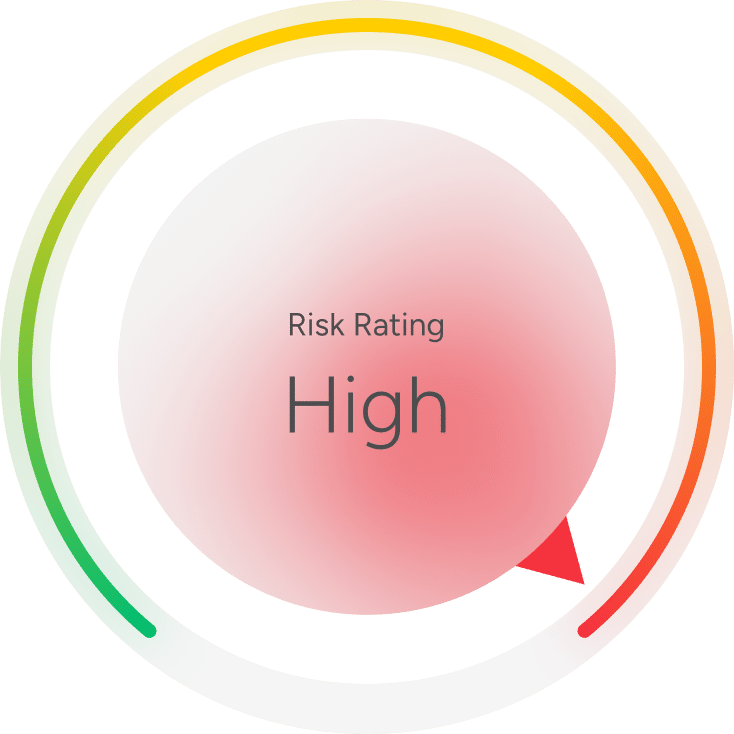
Rating Criteria
Rating Criteria Detail
Corporate Weaponization
Criteria:
Has canceled customers, suppliers, or vendors due to their political views or religious beliefs OR corporately boycotts, divests, or sanctions regions, people groups, or industries.
Risk Level:
HighRationale:
Coca-Cola terminated its relationship with the American Legislative Exchange Council in 2012 after Color of Change boycotted the organization (1). Coca-Cola was a member of the Global Alliance for Responsible Media, which demonetized and suppressed content that it deemed to spread “hate speech” or “misinformation”, discuss “debated social issues in a negative or partisan context”, or “vilif[y]” individuals based on sexual orientation and gender identity. These arbitrary guidelines were used to censor mainstream perspectives online (2)(3)(4). In August 2026, Coca-Cola’s personalized can feature came under scrunity after inconsistently discriminating against which messages its system would allow. Messages including “Jesus is good” or “White pride” and “Democrats suck” were rejected entries. However, “I love Satan”, “Indian Pride” or “Republicans suck” and even exploitative messages about children were accepted entries. Coca-Cola responded that they were actively working on updating their website to make the changes and the error came from a technical issue. The feature has since been disabled (5)(6)(7)(8)(9). Coca-Cola received a score of 100 on the 2025 Corporate Equality Index (CEI) from the Human Rights Campaign (HRC), a political stakeholder group. The company recruits employees based on sexual identity issues. The company discriminates against vendors that do not promote divisive sex and gender policies, indicating it prioritizes sexual issues over merit (10)(11).
Criteria:
Charitable giving (including employee matching programs) policies or practices discriminate against charitable organizations based on views or religious beliefs.
Risk Level:
HighRationale:
Coca-Cola’s HRC 2025 CEI rating indicates the company will not donate to non-religious charities unless they embrace controversial sexual identity policies (1)(2). The company will not fund or support “religious beliefs or institutions” (3). Coca-Cola likely uses Benevity as its charitable giving platform. Benevity vets charities according to the Southern Poverty Law Center’s Hate List, which includes mainstream libertarian, conservative, family, and religious advocacy organizations (4)(5)(6).
Criteria:
Employment policies fail to protect against viewpoint or other discrimination and/or are ideological in nature.
Risk Level:
HighRationale:
In January 2021, The Coca-Cola Company announced proposed diversity requirements for its outside law firms. Then-General Counsel Bradley Gayton sent a letter stating that “For each new matter, at least 30% of each of the billed associate and partner time must be from ‘diverse attorneys’, and at least half of that must be from black attorneys. Failure to meet the commitment over two quarterly reviews will result in a non-refundable 30% reduction in the fees payable for such new matters going forward until the commitment is met,” Firms that did not meet the goals over time could also be excluded from consideration for future work (1)(2)(3). Subsequently, in a February 7 letter to shareholders, Coca-Cola’s current General Counsel, Monica Howard Douglas, clarified that the proposed requirements “have not been and are not a policy” of The Coca-Cola Company (4)(5). Coca-Cola’s HRC 2025 CEI rating indicates the company forces employees to attend multiple, controversial trainings on gender identity, sexual orientation, transgender issues, and divisive racial ideology. The company provides gender transition guidelines for its employees and a specific benefits guide with a comprehensive explanation of transgender services funded by the company (6)(7). The company hosted employee training that encouraged employees to “be less white” and promoted aspects of critical race theory (8). Coca-Cola’s Chairman and CEO James Quincey signed Catalyst’s Champions for Change pledge, indicating its support of DEI in its leadership composition through the establishment of gender and racial targets (9)(10). The company is a signatory of the Gender & Diversity KPI Alliance, appearing to prioritize diversity over merit in its business structure through the establishment of gender and racial targets for its leadership composition and its support of DEI in its hiring and promotions (11)(12). Coca-Cola is a member of myGwork, a professional job and networking platform that connects employers with LGBTQ+ professionals and advances workplace diversity and inclusion initiatives. Corporate membership benefits vary by level and include LGBTQ+-focused services in areas such as talent recruitment, job postings, employer branding, employee engagement, DEI programming and training, and media exposure (13)(14)(15). The company does not provide viewpoint protections for its employees (16).
Corporate Governance and Public Policy
Criteria:
Uses corporate reputation to support causes, organizations, or policies hostile to freedom of expression.
Risk Level:
HighRationale:
Coca-Cola‘s HRC 2025 CEI rating indicates the company agrees to allow a controversial stakeholder group focused on sexual identity issues to dictate marketing or advertising strategy. By doing so, the company risks dividing employees, alienating customers and harming shareholders (1)(2). The company’s PGLE membership reflects its commitment to “operationalize” company coverage of transgender surgery and treatment, the vetting of business partners based on LGBTQ+ policies, and the financial support of LGBTQ organizations on a global level (3)(4). The company signed an open letter endorsing the Equality Act, a contentious proposal to amend the 1964 Civil Rights Act by adding sexual orientation and so-called gender identity as protected categories. The legislation would, among other implications, grant biological men access to women-only spaces such as sports teams and public restrooms, and compel healthcare providers to deliver sex-denying healthcare, and opposed SB202 (5)(6)(7). The company also denounced the Religious Freedom Restoration Act legislation in Georgia in 2016 and the heartbeat bill in 2019 (8)(9). CEO James Quincey is a member of the Business Roundtable and signed its 2019 Statement on the Purpose of a Corporation, which promotes stakeholder capitalism over traditional obligations to shareholders (10)(11). It is a Ceres Network Member, committed to carbon neutrality by 2040 (12)(13)(14). The company’s CEO, James Quincey, signed the CEO Action for Diversity & Inclusion pledge, which includes a commitment to promote DEI through bias education training in the workplace (15)(16).
Criteria:
Uses corporate funds to advance ideological causes, organizations, or policies hostile to freedom of expression.
Risk Level:
HighRationale:
Coca-Cola’s HRC 2025 CEI rating indicates the company covers transgender related costs for its employees and their children, including paid short-term leave, puberty blockers, cross-sex hormones, chest surgeries, genital surgeries, medical visits and lab monitoring, travel and lodging. Additionally, the company has pledged philanthropic support of at least one organization or event that promotes sex and gender ideology. By allowing a political stakeholder group to dictate operations, the company increases health care costs and risks dividing employees, alienating customers and harming shareholders (1)(2). The company was a Platinum Corporate Partner of the HRC (3). Coca-Cola was a partner of the HRC’s Foundation (4)(5). The company was a sponsor of the 2022 HRC National Dinner (6). Coca-Cola is a Platinum Tier corporate sponsor of the Trevor Project, and its subsidiary, Vitamin Water, is a Silver Tier corporate sponsor of the Trevor Project, an organization that advocates for controversial sex and gender ideology, including “gender transition” drugs and surgeries for minors, through legislation, litigation, advertising, and PR campaigns. The organization also hosts online chatrooms that allow adults to communicate with minors as young as 13 about sexually explicit topics. Adults in these chatrooms have encouraged minors to adopt transgender identities and withhold this information from their parents (7)(8)(9)(10)(11). The company pledged $4 million to the Black Lives Matter movement and/or related causes, including the Anti-Defamation League (12)(13)(14). The company was a member of the Global Alliance for Responsible Media (15)(16)(17). It also donated to GLAAD and is a corporate partner of the NGLCC (18)(19). The company is a founding member of the PGLE and was a partner of the HRC’s Foundation (20)(21). Coca-Cola is a Bronze Sponsor of NYC Pride (22). The company is a sponsor of the Centre for Sports and Human Rights, an organization that advocates for men playing in women’s sports (23). In 2023 the Coca-Cola foundation gave a $150,000 grant to the Transgender Law Center for “leadership development and skill building for transgender activists and allies” (24). Coca-Cola sponsored the following Pride events in 2026: LA! Pride, Phoenix Pride, Miami Beach Pride, and Atlanta Pride (25)(26)(27)(28). The company is a sponsor of America250, a bipartisan initiative created to commemorate the 250th anniversary of the United States in 2026 (29). Coca-Cola is a Legacy Member of Out Leadership, a global network of LGBT+ business leaders from major companies that seeks to advance LGBTQ+ representation in corporate leadership and integrate LGBTQ+ priorities into workplace strategies. The first LGBTQ+ B-Corporation, Out Leadership accomplishes this through convening leadership summits, directing talent initiatives, and providing advisory solutions that emphasize the positive impact of LGBT+ inclusion for business (30)(31)(32)(33). Otherwise, there are no publicly known cases of the company using corporate funds to advance ideological causes, organizations, or policies (34).
Criteria:
Uses corporate political actions and/or financial contributions for ideological, non-business purposes.
Risk Level:
HighRationale:
Coca-Cola’s HRC 2025 CEI rating indicates the company publicly advocated for controversial sex and gender ideology through local, state or federal legislation or initiatives. By allowing a political stakeholder group to dictate operations, the company risks dividing employees, alienating customers and harming shareholders (1)(2). The company donated to the Equality PAC and has lobbied for the Equality Act (3)(4)(5).
Related Companies
Food Beverage and Tobacco

PepsiCo
Food Beverage and Tobacco

Tyson Foods
Food Beverage and Tobacco

Archer Daniels Midland

Food Beverage and Tobacco
CHS
Food Beverage and Tobacco
Mondelez International

Food Beverage and Tobacco
Kraft Heinz
Food Beverage and Tobacco
Starbucks

Food Beverage and Tobacco
Philip Morris International
Food Beverage and Tobacco
Altria Group

Food Beverage and Tobacco
General Mills