Starbucks
Companies who scored 100% on the 2023-2024 Corporate Equality Index.
Companies who scored 100% on the 2025 Corporate Equality Index.
Companies that scored a 100 on the 2026 Corporate Equality Index.
Companies provide a benefit package for employees which covers travel/lodging costs for an abortion.
Companies that likely use Benevity to vet charitable recipients, thereby discriminating against mainstream advocacy organizations through the SPLC's overly broad "Hate List."
These companies are committed to leveraging shareholder or investor assets for net-zero emission goals and climate ambitions for GFANZ, Climate Action 100+, CERES, PCAF, UN PRI, NZLA, FIT, or HSCP.
The biggest 1000 U.S. companies by revenue according to form 10-K.
Companies who are/were a corporate partner of the The Trevor Project, an organization that advocates for controversial sex and gender ideology, including for children.
Companies that offer so-called transgender healthcare for their employees and covered dependents.


Rating Overview
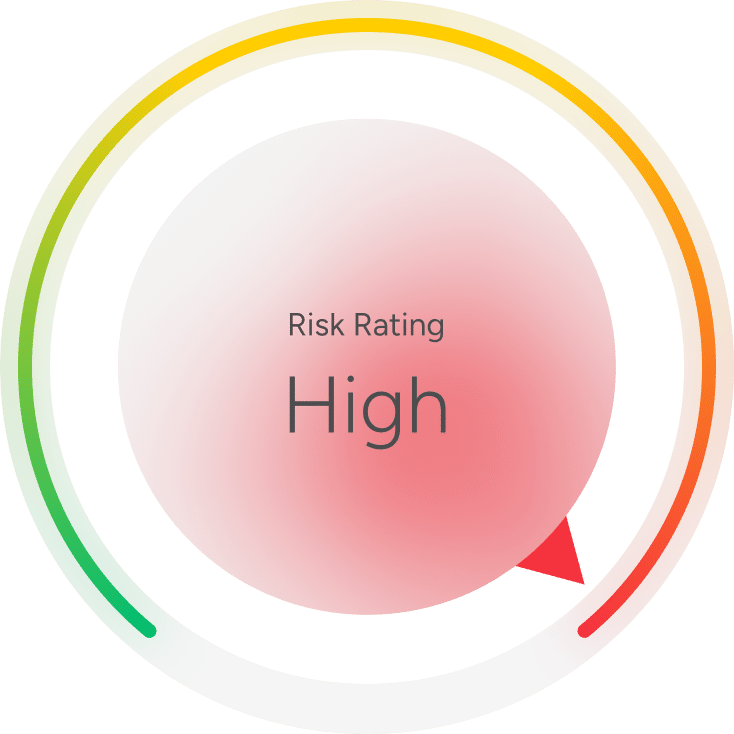
Rating Criteria
Rating Criteria Detail
Corporate Weaponization
Criteria:
Has canceled customers, suppliers, or vendors due to their political views or religious beliefs OR corporately boycotts, divests, or sanctions regions, people groups, or industries.
Risk Level:
HighRationale:
In 2020, Betsy Fresse, a Starbucks employee, filed a lawsuit alleging that she was terminated for refusing to wear a LGBTQ Pride t-shirt. Starbucks responded, “no part of our dress code requires partners to wear any approved items that they have not personally selected”. The case was settled out of court in 2021, with neither party giving a public statement (1)(2)(3)(4). In June 2023, a jury found the company guilty of violating anti-discrimination laws after firing a manager following the arrest of two Black men at a Philadelphia store. Phillips claimed she was terminated to show Starbucks was addressing racial bias. Starbucks argued her firing was for “poor performance” and that Phillips “lacked awareness of how critical the situation was for Starbucks and its partners” (5). In 2023, a report came out exposing child and slave labor and worker rights violations at some of the Starbucks’ coffee farm suppliers. The company responded by stating its commitment to responsibly source its coffee and work with suppliers in Brazil to improve working conditions, and also indicated that it was looking into the allegations (6)(7). Starbucks received a score of 100 on the 2026 Corporate Equality Index (CEI) from the Human Rights Campaign (HRC), a political stakeholder group. The company recruitsemployees based on sexual identity issues. The company discriminates against vendors that do not promote divisive sex and gender policies, indicating it prioritizes sexual issues over merit (8)(9)(10). Starbucks received a score of 100 on the 2025 Corporate Equality Index (CEI) from the Human Rights Campaign (HRC), a political stakeholder group. The company recruits employees based on sexual identity issues. The company discriminates against vendors that do not promote divisive sex and gender policies, indicating it prioritizes sexual issues over merit (11)(12). Starbucks integrates DEI into its Executive Compensation for FY21. From its Milestones page: “Connecting the building of inclusive and diverse teams to our executive compensation program” (13)(14). The company promotes divisive sex and gender policies. Its Supplier Code of Conduct requires international vendors to include sexual orientation and gender identity in their nondiscrimination policy (15).
Criteria:
Charitable giving (including employee matching programs) policies or practices discriminate against charitable organizations based on views or religious beliefs.
Risk Level:
HighRationale:
Starbucks’ HRC 2026 CEI rating indicates the company will not donate to non-religious charities unless they embrace controversial sexual identity policies (1)(2)(3). The company’s HRC 2025 CEI rating indicates the company will not donate to non-religious charities unless they embrace controversial sexual identity policies (4)(5). Starbucks discriminates against charitable organizations based on views or beliefs in its Giving Match program by using the discredited Southern Poverty Law Center Hate List (6). The company likely uses Benevity as its charitable giving platform. Benevity vets charities according to the Southern Poverty Law Center’s Hate List, which includes mainstream libertarian, conservative, family, and religious advocacy organizations (7)(8)(9)(10). Starbucks has a history of divisive corporate policies and practices. However, in 2026, the company removed its public usage of SPLC in vetting charitable giving from its from its Giving Match page. To date, the company has not publicly addressed this change, leaving shareholders without clarity regarding the company’s reasoning or future direction (11)(12).
Criteria:
Employment policies fail to protect against viewpoint or other discrimination and/or are ideological in nature.
Risk Level:
HighRationale:
Starbucks’ HRC 2026 CEI rating indicates the company forces employees to attend at least one, controversial training on gender identity, sexual orientation, transgender issues, and divisive racial ideology. The company provides gender transition guidelines for its employees and a specific benefits guide with a comprehensive explanation of transgender services funded by the company (1)(2)(3). Starbucks’ HRC 2025 CEI rating indicates the company forces employees to attend multiple, controversial trainings on gender identity, sexual orientation, transgender issues, and divisive racial ideology. The company provides gender transition guidelines for its employees and a specific benefits guide with a comprehensive explanation of transgender services funded by the company (4)(5). Starbucks requires its employees to take “anti-bias content into all hiring, development, and performance assessment toolkits” (6)(7). The company appears to prioritize diversity over merit in its leadership composition and mentorship program. From its Milestones page: “Launching a mentorship program connecting BIPOC (Black, Indigenous and People of Color) partners to senior leaders and investing in strategic partnerships with professional organizations that focus on the development of BIPOC talent” (8)(9). Starbucks appears to prioritize diversity over merit in its leadership composition. From its Milestones page: “Joining peer organizations in the Board Diversity Action Alliance committed to racially and ethnically diverse representation on corporate boards of directors” (10). The company appears to prioritize diversity over merit in its business structure through the establishment of racial targets for its recruitment and hiring. The company is seeking “BIPOC representation of at least 30 percent at all corporate levels and at least 40 percent of all retail and manufacturing roles by 2025” (11)(12). In October 2022 America First Legal filed a letter with the EEOC requesting a civil rights investigation into Starbucks over discriminatory practices in hiring (13)(14). The company is a corporate partner of Advocates for Trans Equality (A4TE), a transgender-rights organization that engages in public policy, impact litigation, political activity, research and data collection, and community organizing to advance transgender civil rights. A4TE corporate partners may receive feedback from the organization on corporate policies and marketing campaigns, and gain access to A4TE speaking engagements for employees (15)(16)(17)(18)(19)(20)(21). Starbucks operates a supplier diversity program. “The Starbucks Supplier Diversity and Inclusion program drives inclusion of qualified businesses with a focus on suppliers of all sizes and categories” (22). However, in September 2026, the company agreed to no longer participate in organizations that require racially diverse boards and committed to comply with Florida Civil Rights Act. The act requires companies “[prohibit] race and sex-based preferences in hiring, promotions, pay, executive compensation, mentorship programs, supplier selection and board composition.” Starbucks will “submit annual certifications of the company’s continued compliance for four years” to show it has no wrongdoing of “racial and sex-based goals, quotas and preferences in its workplace policies” (23). Starbucks does not provide viewpoint protections for its employees (24).
Corporate Governance and Public Policy
Criteria:
Uses corporate reputation to support causes, organizations, or policies hostile to freedom of expression.
Risk Level:
HighRationale:
Starbucks’ HRC 2026 CEI rating indicates the company potentially agrees to allow a controversial stakeholder group focused on sexual identity issues to dictate marketing or advertising strategy. By doing so, the company risks dividing employees, alienating customers and harming shareholders (1)(2)(3). Starbucks’ HRC 2025 CEI rating indicates the company agrees to allow a controversial stakeholder group focused on sexual identity issues to dictate marketing or advertising strategy. By doing so, the company risks dividing employees, alienating customers and harming shareholders (4)(5). The company reversed its company policy allowing employees to wear Black Lives Matter t-shirts and pins on their uniforms after initially not allowing employees to do so (6). Starbucks signed an open letter endorsing the Equality Act, a contentious proposal to amend the 1964 Civil Rights Act by adding sexual orientation and so-called gender identity as protected categories. The legislation would, among other implications, grant biological men access to women-only spaces such as sports teams and public restrooms, and compel healthcare providers to deliver sex-denying healthcare and supported revisions to the Voting Rights Act of 1965 in the wake of state election security laws (7)(8)(9). In 2015, the company encouraged its 12,000 baristas to strike up conversations with customers about racism (10). Starbucks’ former CEO denounced the 2015 NC bathroom bill requiring citizens to use the restroom of their biological gender and pushed for bathrooms to correspond with gender identity (11)(12). In 2018, the company closed over 8,000 locations to give over 175,000 employees implicit bias training regarding race and gender (13). Starbucks CEO is a member of the Business Roundtable, which supports stakeholder capitalism over traditional shareholder obligations (14). The company is a Ceres Network Member, committed to carbon neutrality by 2040 (15)(16)(17). Starbucks opposed various state and local legislation intended to protect parental rights, girls’ sports, bathroom facilities, and gendered spaces (18). In July 2026, the company announced they are “actively reassessing” a previously announced goal to achieve a “50% absolute reduction in scope 1, 2 and 3 greenhouse gas (GHG) emissions…by the end of 2030” (19)(20). Starbucks supports DEI within its business practices, hosting an Inclusion and Diversity Executive Council and employing a chief inclusion and diversity officer (21)(22). In March 2021, the company bragged about its 100% pay equity by race and sex “for similar roles in the U.S.” (23). In March 2021, Starbucks published its third Civil Rights Assessment, conducted by Covington & Burling LLP, to evaluate the company’s “journey in inclusion, diversity and equity” and “[help] track progress over time to drive truly lasting change” (24). In May 2020, the company hosted an internal series of “courageous conversations with thousands of partners and their families” to ” join a talk about the murders of George Floyd, Ahmaud Arbery and Breonna Taylor” (25).
Criteria:
Uses corporate funds to advance ideological causes, organizations, or policies hostile to freedom of expression.
Risk Level:
HighRationale:
Starbucks provides a benefits package for employees that covers travel/lodging costs for an abortion and transgender medical procedures for covered employees and dependents, including children (1)(2)(3)(4)(5)(6)(7). In Starbucks’ 2026 Annual General Meeting, the National Center for Public Policy Research presented a shareholder proposal requesting a report on the company’s inclusion of gender transition medical coverage but not detransition coverage. The board of directors recommended a vote against the proposal, stating “the board believes that the requested evaluation and report would not yield meaningful additional insight or value for shareholders” (8)(9). The company’s HRC 2026 CEI rating indicates the company covers transgender related costs for its employees and their children, including paid short-term leave, puberty blockers, cross-sex hormones, chest surgeries, genital surgeries, medical visits, lab monitoring, and mental health benefits. The company also covers at least five of the following services: reconstructive hair removal, cosmetic hair removal, tracheal shave or reduction, facial surgeries, voice modification surgery, voice modification therapy, lipoplasty or filling for body masculinization or feminization, and travel and lodging expenses. Additionally, the company has potentially pledged philanthropic support of at least one organization or event that promotes sex and gender ideology. By allowing a political stakeholder group to dictate operations, the company increases health care costs and risks dividing employees, alienating customers and harming shareholders (10)(11)(12)(13). Starbucks’ HRC 2025 CEI rating indicates the company covers transgender related costs for its employees and their children, including paid short-term leave, puberty blockers, cross-sex hormones, chest surgeries, genital surgeries, medical visits and lab monitoring, travel and lodging. Additionally, the company has pledged philanthropic support of at least one organization or event that promotes sex and gender ideology. By allowing a political stakeholder group to dictate operations, the company increases health care costs and risks dividing employees, alienating customers and harming shareholders (14)(15). The company is a Bronze Corporate Partner and was a Silver Corporate Partner of the HRC (16)(17)(18)(19)(20). Starbucks is a Champion Tier corporate sponsor of the Trevor Project, an organization that advocates for controversial sex and gender ideology, including “gender transition” drugs and surgeries for minors, through legislation, litigation, advertising, and PR campaigns. The organization also hosts online chatrooms that allow adults to communicate with minors as young as 13 about sexually explicit topics. Adults in these chatrooms have encouraged minors to adopt transgender identities and withhold this information from their parents (21)(22)(23)(24)(25). The company has pledged over $1.6 billion to BLM-adjacent organizations (26)(27)(28)(29). In January 2022, Starbucks set a goal to increase annual spend with diverse suppliers to $1.5B by 2030, announced $21 million to “seven community development financial institutions (CDFIs),” and reported the result of its $5 million investment in eight nonprofits supporting BIPOC youth (30). In July 2021, the company donated $1.7 million to Feeding America to “support equitable food access grants” (31). In January 2021, Starbucks invested “$100 million to create the Starbucks Community Resilience Fund,” a fund to advance “racial equity and environmental resilience” by supporting BIPOC small businesses and communities (32). In June 2020, the company donated $1 million in Neighborhood Grants to “promote racial equity and create more inclusive and just communities” (33). Starbucks is a bronze sponsor of Out & Equal (34)(35). In 2024, the company Investors approved an executive compensation pay package proposed by management that decreases the DEI component of executive bonuses from 25% to 20% while increasing the portion of the bonus paid for hitting financial targets to 75% (36). In 2024, Starbucks started offering “Name and gender marker change support extended to partners, through the National Center for Transgender Equality, providing access to advisory services and reimbursement up to $500 for eligible costs associated with changes to state and U.S. federal identification” as a benefit to employees (37)(38). The company contributed to the Trans Health Project (39). Starbucks is a Gold Sponsor of NYC Pride (40). The company sponsored the following 3x events in 2025: WorldPride 2025, Ferndale Pride, Dallas Pride (41)(42)(43). Starbucks sponsored the following Pride events in 2026: Dallas Pride, NYC Pride, and LA! Pride (44)(45)(46). The company is a sponsor of America250, a bipartisan initiative created to commemorate the 250th anniversary of the United States in 2026 (47). In years 2019, 2021, 2022, 2023, 2024, 2025, Starbucks donated a total of $1,102,500 to YWCA (48)(49)(50)(51)(52)(53). In years 2019, 2020, the company donated a total of $125,000 to National Urban League (54)(55). In years 2021, 2022, Starbucks donated a total of $100,000 to Partnership for Gender Equity (56)(57). Otherwise, there are no publicly known cases of the company using corporate funds to advance ideological causes, organizations, or policies (58).
Criteria:
Uses corporate political actions and/or financial contributions for ideological, non-business purposes.
Risk Level:
HighRationale:
Starbucks’ HRC 2025 CEI rating indicates the company publicly advocated for controversial sex and gender ideology through local, state or federal legislation or initiatives. By allowing a political stakeholder group to dictate operations, the company risks dividing employees, alienating customers and harming shareholders (1)(2). The company does not operate a PAC at this time and has not lobbied for ideological purposes (3)(4)(5).
Related Companies
Food Beverage and Tobacco

Coca-Cola
Food Beverage and Tobacco

PepsiCo
Food Beverage and Tobacco
Tyson Foods
Food Beverage and Tobacco

Archer Daniels Midland

Food Beverage and Tobacco
CHS
Food Beverage and Tobacco
Mondelez International

Food Beverage and Tobacco
Kraft Heinz

Food Beverage and Tobacco
Philip Morris International
Food Beverage and Tobacco
Altria Group
Food Beverage and Tobacco
General Mills