Kawasaki Heavy Industries
Rating Overview
Rating Criteria
Rating Criteria Detail
Corporate Weaponization
Criteria:
Has canceled customers, suppliers, or vendors due to their political views or religious beliefs OR corporately boycotts, divests, or sanctions regions, people groups, or industries.
Risk Level:
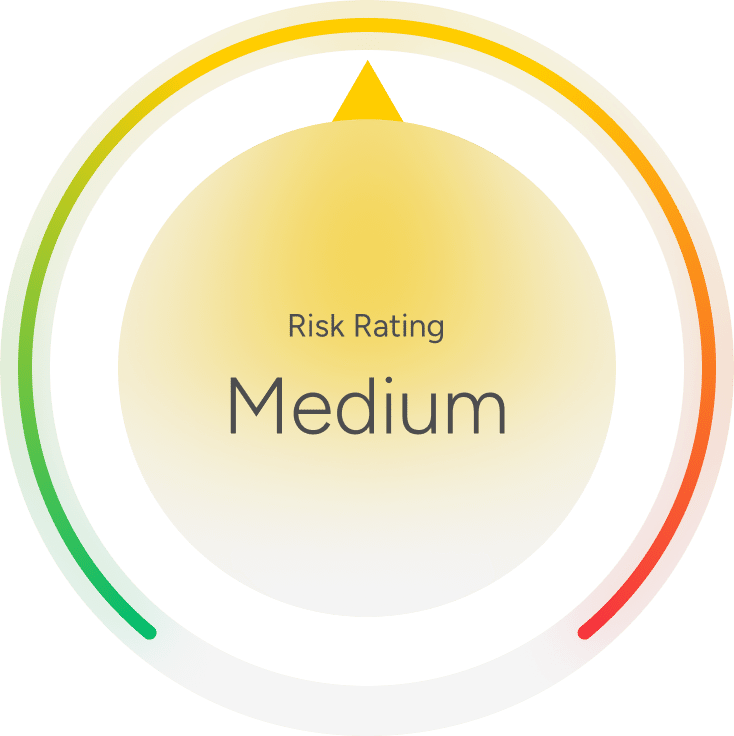
MediumRationale:
Kawasaki integrates ESG into its business practices. From its 2025 Sustainability Report: “Under the new system, employee engagement indicators and ESG indicators (CO reductions and thirdparty institution evaluations) are reflected as independent evaluation metrics for performance-based compensation” (1). The company promotes divisive sex and gender policies. Its Sustainable Procurement
Guidelines requires international vendors to include sexual orientation and gender identity in their nondiscrimination policy (2). However, Kawasaki has not canceled customers, suppliers, or vendors based on political views or religious beliefs (3).
Criteria:
Charitable giving (including employee matching programs) policies or practices discriminate against charitable organizations based on views or religious beliefs.
Risk Level:
LowerRationale:
Kawasaki does not appear to discriminate against charitable organizations based on views or beliefs. The company’s charitable giving focus areas are local communities, next generation, and environmental conservation (1).
Criteria:
Employment policies fail to protect against viewpoint or other discrimination and/or are ideological in nature.
Risk Level:
HighRationale:
Kawasaki offers unconscious bias and DEI training to its employees (1). The company appears to prioritize diversity over merit in its recruitment and hiring. From its Diversity, Equity, and Inclusion page: “Kawasaki launched a regular hiring program for non-Japanese new graduates in fiscal 2012 and continues to recruit from countries around the globe, including Korea, China, Sweden, and India” (2). Kawasaki appears to prioritize diversity over merit in its business structure through the establishment of gender targets for its recruitment, hiring and leadership composition. The company is seeking “the proportion of women in career-track administrative positions to at least 40% and in career-track technical positions to at least 15% among newly hired graduates. We also set a target to increase the proportion of women in managerial positions to 10% by fiscal 2030” (3). The company protects its employees against viewpoint discrimination (4).
Corporate Governance and Public Policy
Criteria:
Uses corporate reputation to support causes, organizations, or policies hostile to freedom of expression.
Risk Level:
HighRationale:
Kawasaki is aligned with the Paris Agreement, which entails a commitment to net zero carbon emissions by 2050 (1). The company supports DEI within its business practices. From its Diversity, Equity, and Inclusion: “We believe that diversity and inclusion (D&I) is crucial for the Kawasaki Group to sustainably improve its enterprise value in such an environment” (2). Kawasaki supports ESG within its business practices. From its 2025 Sustainability Report: “Our goal is to earn continuing social recognition of the value of the Kawasaki Group as a company that contributes to the realization of a sustainable future for society. We aim to achieve that by continuing to respond to the needs of society in partnership with our stakeholders, by taking up the challenge of creating solutions for various social issues, and by pursuing ESG initiatives” (3). The company has an “LGBT-related Efforts” section on its website, where it describes “sending out messages from the President, holding in-house seminars, issuing an LGBT handbook to be used in employee education, distributing the “Kawasaki LGBT ALLY Mark” to help employees express their support of LGBT individuals, and participating in relevant external events.” The company also created a Kawasaki Declaration of Action in Support of LGBT, adopted rules that treat employees with same-sex partners who meet certain conditions as legally married, and allows employees to work in ways that align with their gender identity (4).
Criteria:
Uses corporate funds to advance ideological causes, organizations, or policies hostile to freedom of expression.
Risk Level:
LowerRationale:
Kawasaki has not used corporate funds to advance ideological causes, organizations, or policies (1).
Related Companies

Technology Hardware and Equipment

Apple

Technology Hardware and Equipment
Dell Technologies

Cloud & Data Storage, Software and Services, Technology Hardware and Equipment

IBM

Transportation
UPS

Transportation
FedEx
Energy
Chevron

Transportation
Lyft
Energy, Health Care Equipment and Services, Technology Hardware and Equipment
General Electric

Transportation
Uber Technologies

Energy
Phillips 66