Nestlé
Companies who scored 100% on the 2023-2024 Corporate Equality Index.
Companies who scored 100% on the 2025 Corporate Equality Index.
Companies that scored a 100 on the 2026 Corporate Equality Index.
Company is a corporate partner of Ashoka, a global network of entrepreneurs focused on widespread, systemic social and environmental change
Companies who were members of the Global Alliance for Responsible Media, which subjectively demonetized advertisements and suppressed content to stifle mainstream perspectives online
Companies who are/were a corporate partner of the The Trevor Project, an organization that advocates for controversial sex and gender ideology, including for children.
Companies that offer so-called transgender healthcare for their employees and covered dependents.
Rating Overview
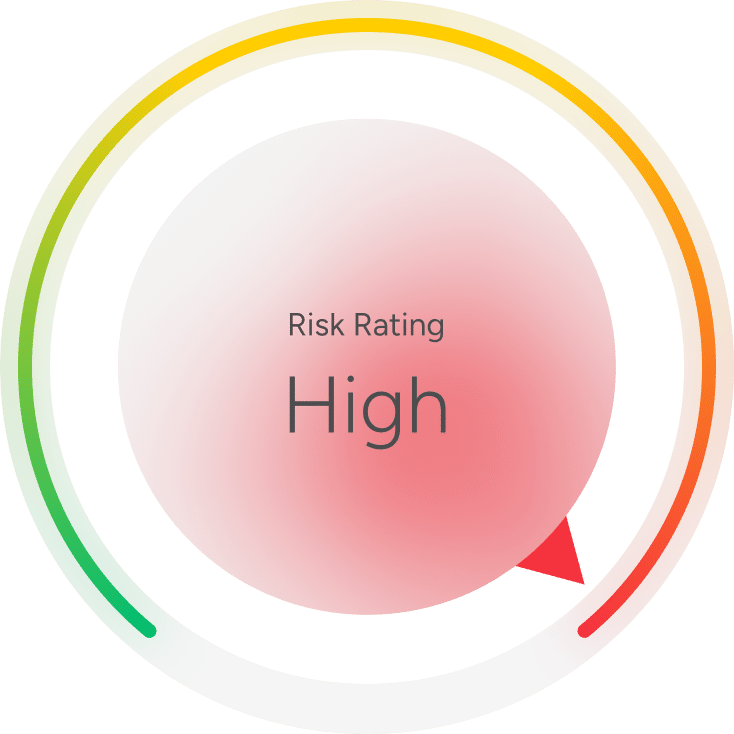
Rating Criteria
Rating Criteria Detail
Corporate Weaponization
Criteria:
Has canceled customers, suppliers, or vendors due to their political views or religious beliefs OR corporately boycotts, divests, or sanctions regions, people groups, or industries.
Risk Level:
MediumRationale:
Nestle USA Inc. received a score of 100 on the 2026 Corporate Equality Index (CEI) from the Human Rights Campaign (HRC), a political stakeholder group. The company recruits employees based on sexual identity issues. The company discriminates against vendors that do not promote divisive sex and gender policies, indicating it prioritizes sexual issues over merit
(1)(2)(3).
Nestlé USA Inc. received a score of 100 on the 2025 Corporate Equality Index (CEI) from the Human Rights Campaign (HRC), a political stakeholder group. The company recruits employees based on sexual identity issues. The company discriminates against vendors that do not promote divisive sex and gender policies, indicating it prioritizes sexual issues over merit (4)(5). The company was a member of the Global Alliance for Responsible Media, which demonetized and suppressed content that it deemed to spread “hate speech” or “misinformation”, discuss “debated social issues in a negative or partisan context”, or “vilif[y]” individuals based on sexual orientation and gender identity. These arbitrary guidelines were used to censor mainstream perspectives online (6)(7)(8). The company integrates ESG into its business practices. From its Responsible Sourcing Core Requirements: “A time-bound plan is in place, setting out actions encompassing Scope 1, 2 and 3 greenhouse gas emissions (GHG), in order to mitigate and decrease the GHG footprint in accordance with science-based targets that are in line with the Paris Agreement or an equivalent standard” (9). The company’s PGLE membership reflects its commitment to vet business partners based on LGBTQ+ policies (10)(11)(12). The company promotes divisive sex and gender policies. Its Responsible Sourcing Core Requirements require international vendors to include sexual orientation in their nondiscrimination policy (13). However, the company has not canceled customers, suppliers, or vendors based on political views or religious beliefs (14).
Criteria:
Charitable giving (including employee matching programs) policies or practices discriminate against charitable organizations based on views or religious beliefs.
Risk Level:
HighRationale:
Nestlé’s HRC 2026 CEI rating indicates the company will not donate to non-religious charities unless they embrace controversial sexual identity policies (1)(2)(3). Nestlé’s HRC 2025 CEI rating indicates the company will not donate to non-religious charities unless they embrace controversial sexual identity policies (4)(5). The company does not appear to discriminate against religious organizations based on views or beliefs. The company’s charitable giving focus areas are disaster relief, food access, community life, and employee giving (6).
Criteria:
Employment policies fail to protect against viewpoint or other discrimination and/or are ideological in nature.
Risk Level:
HighRationale:
Nestlé’s HRC 2026 CEI rating indicates the company forces employees to attend at least one, controversial training on gender identity, sexual orientation, transgender issues, and divisive racial ideology. The company provides gender transition guidelines for its employees and a specific benefits guide with a comprehensive explanation of transgender services funded by the company (1)(2)(3). Nestlé USA Inc.’s HRC 2025 CEI rating indicates the company forces employees to attend multiple, controversial trainings on gender identity, sexual orientation, transgender issues, and divisive racial ideology. The company provides gender transition guidelines for its employees and a specific benefits guide with a comprehensive explanation of transgender services funded by the company (4)(5). The company doffers unconscious bias training to its employees (6). The company appears to prioritize diversity over merit in its hiring and promotions. From its Diversity, Equity, and Inclusion page: “Hiring and promoting more women in senior executive positions” (7). The company appears to prioritize diversity over merit in its leadership composition. From its 2024 Corporate Governance Report: “The Nomination Committee periodically reviews the composition of the Board using various criteria, including, without limitation:… the Board’s diversity of personal attributes including gender, age, ethnicity, nationality, culture and leadership approach” (8). The company does not provide viewpoint protections for its employees (9).
Corporate Governance and Public Policy
Criteria:
Uses corporate reputation to support causes, organizations, or policies hostile to freedom of expression.
Risk Level:
HighRationale:
Nestlé’s HRC 2026 CEI rating indicates the company potentially agrees to allow a controversial stakeholder group focused on sexual identity issues to dictate marketing or advertising strategy. By doing so, the company risks dividing employees, alienating customers and harming shareholders (1)(2)(3). Nestlé’s HRC 2025 CEI rating indicates the company agrees to allow a controversial stakeholder group focused on sexual identity issues to dictate marketing or advertising strategy. By doing so, the company risks dividing employees, alienating customers and harming shareholders (4)(5). The company’s PGLE membership reflects its commitment to “operationalize” company coverage of transgender surgery and treatment, the vetting of business partners based on LGBTQ+ policies, and the financial support of LGBTQ organizations on a global level (6)(7)(8). The company signed an open letter endorsing the Equality Act, a contentious proposal to amend the 1964 Civil Rights Act by adding sexual orientation and so-called gender identity as protected categories. The legislation would, among other implications, grant biological men access to women-only spaces such as sports teams and public restrooms, and compel healthcare providers to deliver sex-denying healthcare (9). The company also supports a variety of “inclusive” policies, such as funding employee gender transitions and mandating racial unconscious bias training for all employees (10). The company opposed the Florida Parental Rights in Education Act, which would prohibit teaching gender identity and sexual orientation to kids in K-3rd grade (11). The company opposed various state and local legislation intended to protect parental rights, girls’ sports, bathroom facilities, and gendered spaces (12)(13). The company opposed legislation in Iowa intended to protect parental rights, girls’ sports, bathroom facilities, and gendered spaces (14). The company is aligned with the Paris Agreement, which entails a commitment to net zero carbon emissions by 2050 (15). The company is committed to net zero carbon emissions by 2050 (16). The company supports DEI within its business practices. From its Diversity, Equity, and Inclusion page: “This commitment starts at recruitment and continues to the end of the working relationship. Each of our markets has a diversity, equity & inclusion action plan designed to provide equal opportunities for everyone to contribute, grow and feel valued” (17). The company supports ESG within its business practices. From its 2024 Non-Financial Statement: “The implementation of Nestlé’s ESG and Sustainability Strategy is delegated to the ESG and Sustainability Council, chaired by the Executive Vice President (EVP) Head of Strategic Business Units and Marketing and Sales” (18). The company scored a 100 out of 100 on the 2023-2024 Corporate Equality Index (CEI) from the Human Rights Campaign (HRC), a political stakeholder group (19)(20).
Criteria:
Uses corporate funds to advance ideological causes, organizations, or policies hostile to freedom of expression.
Risk Level:
HighRationale:
Nestlé’s HRC 2026 CEI rating indicates the company covers transgender related costs for its employees and their children, including paid short-term leave, puberty blockers, cross-sex hormones, chest surgeries, genital surgeries, medical visits, lab monitoring, and mental health benefits. The company also covers at least five of the following services: reconstructive hair removal, cosmetic hair removal, tracheal shave or reduction, facial surgeries, voice modification surgery, voice modification therapy, lipoplasty or filling for body masculinization or feminization, and travel and lodging expenses. Additionally, the company has potentially pledged philanthropic support of at least one organization or event that promotes sex and gender ideology. By allowing a political stakeholder group to dictate operations, the company increases health care costs and risks dividing employees, alienating customers and harming shareholders (1)(2)(3)(4). Nestlé’s HRC 2025 CEI rating indicates the company covers transgender related costs for its employees and their children, including paid short-term leave, puberty blockers, cross-sex hormones, chest surgeries, genital surgeries, medical visits and lab monitoring, travel and lodging. Additionally, the company has pledged philanthropic support of at least one organization or event that promotes sex and gender ideology. By allowing a political stakeholder group to dictate operations, the company increases health care costs and risks dividing employees, alienating customers and harming shareholders (5)(6). The company was a member of the Global Alliance for Responsible Media and has donated to the Human Right’s Campaign (HRC) (7)(8)(9)(10). The company is a PGLE member, a copper sponsor of Out & Equal, and a corporate partner of the NGLCC (11)(12)(13). The company is a partner of the HRC’s Foundation (14). Nestlé Health Science, a subsidiary of Nestlé, was a Bronze Tier corporate sponsor of the Trevor Project, an organization that advocates for controversial sex and gender ideology, including “gender transition” drugs and surgeries for minors, through legislation, litigation, advertising, and PR campaigns. The organization also hosts online chatrooms that allow adults to communicate with minors as young as 13 about sexually explicit topics. Adults in these chatrooms have encouraged minors to adopt transgender identities and withhold this information from their parents. Vital Proteins, a subsidiary of Nestlé Health Science, was a Bronze Tier corporate sponsor of the Trevor Project (15)(16)(17)(18)(19)(20). Sweet Earth, a subsidiary of the company, is a Friend level partner of PFLAG, an LGBTQ+ activist group that promotes books for children with sexually explicit and gender fluid content and advocates against laws that inform parents of their child’s gender dysphoria or prevent unapproved transgender medical treatments for minors (21)(22)(23). The company is a corporate partner of Ashoka, a global network of entrepreneurs focused on widespread, systemic social and environmental change (24). PECA has reported the company to have spent $104,350 towards Pride (LGBTQ) events and partnerships from 2013-2024 (25). Nestlé was a Bronze Partner of the Trevor Project, an organization that advocates for controversial sex and gender ideology, including “gender transition” drugs and surgeries for minors, through legislation, litigation, advertising, and PR campaigns. The organization also hosts online chatrooms that allow adults to communicate with minors as young as 13 about sexually explicit topics. Adults in these chatrooms have encouraged minors to adopt transgender identities and withhold this information from their parents (26)(27)(28)(29)(30)(31). Nestlé sponsored the following Pride events in 2026: Pride in the CLE and Capital Pride Alliance (32)(33). Otherwise, there are no publicly known cases of the company using corporate funds to advance ideological causes, organizations, or policies (34).
Criteria:
Uses corporate political actions and/or financial contributions for ideological, non-business purposes.
Risk Level:
HighRationale:
Nestlé has lobbied for the Equality Act (1)(2). Nestlé’s HRC 2025 CEI rating indicates the company publicly advocated for controversial sex and gender ideology through local, state or federal legislation or initiatives. By allowing a political stakeholder group to dictate operations, the company risks dividing employees, alienating customers and harming shareholders (3)(4). In 2019, 2020, the company lobbied for the Equality Act (5)(6). The company’s PAC has been defunct since 2008 (7)(8).
Related Companies

Food Beverage and Tobacco

Coca-Cola
Food Beverage and Tobacco

PepsiCo

Food Beverage and Tobacco
Tyson Foods
Food Beverage and Tobacco

Archer Daniels Midland

Food Beverage and Tobacco
CHS
Food Beverage and Tobacco
Mondelez International

Food Beverage and Tobacco
Kraft Heinz

Food Beverage and Tobacco
Starbucks
Food Beverage and Tobacco
Philip Morris International
Food Beverage and Tobacco
Altria Group