
NetApp
Companies who scored 100% on the 2025 Corporate Equality Index.
Companies that likely use Benevity to vet charitable recipients, thereby discriminating against mainstream advocacy organizations through the SPLC's overly broad "Hate List."
The biggest 1000 U.S. companies by revenue according to form 10-K.
The biggest 3000 companies in the U.S. in the year of 2025.
Companies that offer so-called transgender healthcare for their employees and covered dependents.

Rating Overview
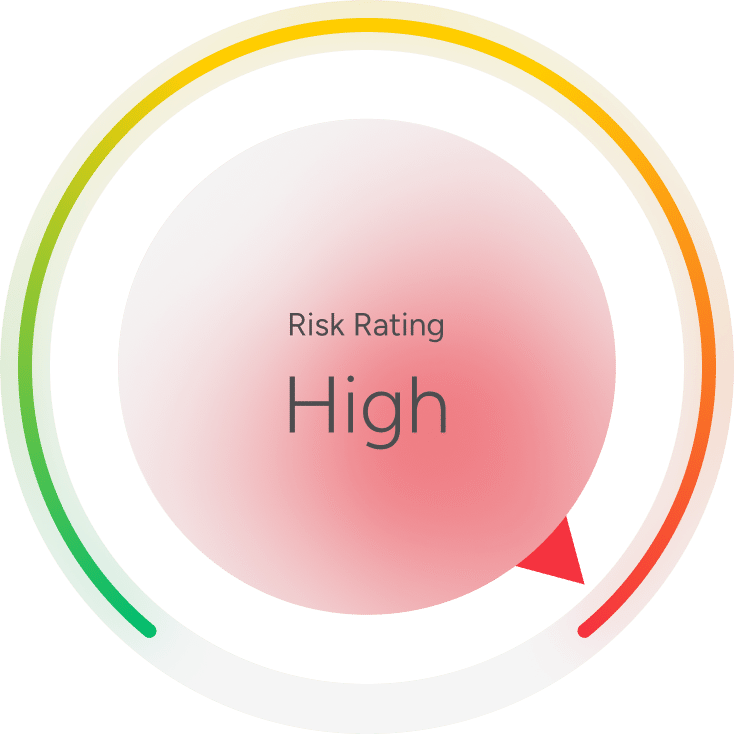
Rating Criteria
Rating Criteria Detail
Corporate Weaponization
Criteria:
Has canceled customers, suppliers, or vendors due to their political views or religious beliefs OR corporately boycotts, divests, or sanctions regions, people groups, or industries.
Risk Level:
MediumRationale:
NetApp received a score of 100 on the 2025 Corporate Equality Index (CEI) from the Human Rights Campaign (HRC), a political stakeholder group. The company recruits employees based on sexual identity issues. The company discriminates against vendors that do not promote divisive sex and gender policies, indicating it prioritizes sexual issues over merit (1)(2). The company integrates ESG into its business practices. From its Supplier Code of Conduct: “Emissions and discharges of pollutants and generation of waste are to be minimized or eliminated at the source or by practices such as adding pollution control equipment; modifying production, maintenance, and facility processes; or by other means. The use of natural resources, including water, fossil fuels, minerals, and virgin forest products, is to be conserved by practices such as modifying production, maintenance and facility processes, materials substitution, re-use, conservation, recycling, or other means” (3). From its 2024 Proxy Statement: “Following the end of fiscal 2024, the Talent and Compensation Committee determined the level of achievement by the Company of revenue and AOI goals and their respective payout levels and the achievement of the MBOs tied to strategic/leadership objectives and DEI&B objectives…” (4). NetApp promotes divisive sex and gender policies. Its Supplier Code of Conduct requires international vendors to include sexual orientation and gender identity in their nondiscrimination policy (5). The company had a history of tying executive pay to DEI metrics. However, in 2025, the company removed DEI metrics from the compensation plans. “As part of the annual review of the Company’s executive incentive programs, the Talent and Compensation Committee considers feedback from stockholders, market practices, and the short- and long-term strategic plans of the Company as discussed with the management team. For fiscal 2025, the plan design was streamlined and more focus was placed on profitable, top-line growth to more closely align with our long-term priorities by: … removing the MBO component (20% of fiscal 2024 ICP, which consisted of: strategic/leadership objectives and DEI&B objectives)…” (6). However, the company has not publicly canceled customers, suppliers, or vendors based on political views or religious beliefs (7).
Criteria:
Charitable giving (including employee matching programs) policies or practices discriminate against charitable organizations based on views or religious beliefs.
Risk Level:
HighRationale:
NetApp’s HRC 2025 CEI rating indicates the company will not donate to non-religious charities unless they embrace controversial sexual identity policies (1)(2). The company likely uses Benevity as its charitable giving platform. Benevity vets charities according to the Southern Poverty Law Center’s Hate List, which includes mainstream libertarian, conservative, family, and religious advocacy organizations (3)(4)(5). NetApp’s charitable giving guidelines require that organizations abide by its nondiscrimination policy, including on the basis of sexual orientation and gender identity, thereby excluding some religious charities (6)(7)(8).
Criteria:
Employment policies fail to protect against viewpoint or other discrimination and/or are ideological in nature.
Risk Level:
HighRationale:
NetApp’s HRC 2025 CEI rating indicates the company forces employees to attend multiple, controversial trainings on gender identity, sexual orientation, transgender issues, and divisive racial ideology. The company provides gender transition guidelines for its employees and a specific benefits guide with a comprehensive explanation of transgender services funded by the company (1)(2). The company requires its employees to take unconscious bias and DEI training (3). NetApp appears to prioritize diversity over merit in its recruitment, hiring, leadership composition and supply chain. From its 2024 ESG Report: “We work internally and partner externally to recruit, retain, support, and empower women and other underrepresented groups, and design our products with accessibility in mind;” “We strive to maintain a diverse board by identifying and considering qualified candidates who will increase the board’s breadth of business experience, professions, skills, perspectives, and backgrounds, as well as diversity with respect to race, ethnicity, gender, culture, and geographic representation;” and “We believe diversity is always an asset—including in our supply chain. Through our supplier diversity program, we partner with veteran-, minority-, and women-owned businesses, small businesses, and companies with representation from disabled or otherwise disadvantaged communities” (4). NetApp does not provide viewpoint protections for its employees (5).
Corporate Governance and Public Policy
Criteria:
Uses corporate reputation to support causes, organizations, or policies hostile to freedom of expression.
Risk Level:
HighRationale:
NetApp’s HRC 2025 CEI rating indicates the company agrees to allow a controversial stakeholder group focused on sexual identity issues to dictate marketing or advertising strategy. By doing so, the company risks dividing employees, alienating customers and harming shareholders (1)(2). The company’s CEO George Kurian signed the CEO Action for Diversity & Inclusion pledge, which includes a commitment to promote DEI through bias education training in the workplace, strategize on DEI programs/initiatives with other signatories, and engage boards of directors when developing and evaluating DEI strategies (3)(4). NetApp supports DEI within its business practices, employing a DEI Officer (5). The company supports DEI and ESG within its business practices. From its Jobs page: “Inclusion and Belonging: By embedding belonging into every decision that we make, we open the door to other voices, different perspectives, and most important, our true potential for innovation” (6). From its 2024 ESG report: “As we mature our ESG programs and initiatives, we work to integrate these topics into our overall company strategy” (7). NetApp scored an 85 out of 100 on the 2023-2024 Corporate Equality Index (CEI) from the Human Rights Campaign (HRC), a political stakeholder group (8)(9). The company’s CEO George Kurian has criticized Trump-era immigration policy as “misguided” (10).
Criteria:
Uses corporate funds to advance ideological causes, organizations, or policies hostile to freedom of expression.
Risk Level:
HighRationale:
NetApp’s HRC 2025 CEI rating indicates the company covers transgender related costs for its employees and their children, including paid short-term leave, puberty blockers, cross-sex hormones, chest surgeries, genital surgeries, medical visits and lab monitoring, travel and lodging. Additionally, the company has pledged philanthropic support of at least one organization or event that promotes sex and gender ideology. By allowing a political stakeholder group to dictate operations, the company increases health care costs and risks dividing employees, alienating customers and harming shareholders (1)(2). NetApp is a Member of Out Leadership, a global network of LGBT+ business leaders from major companies that seeks to advance LGBTQ+ representation in corporate leadership and integrate LGBTQ+ priorities into workplace strategies. The first LGBTQ+ B-Corporation, Out Leadership accomplishes this through convening leadership summits, directing talent initiatives, and providing advisory solutions that emphasize the positive impact of LGBT+ inclusion for business (3)(4)(5)(6). The company made a one-time donation to the National Urban League in 2020 (7). Otherwise, there are no publicly known cases of the company using corporate funds to advance ideological causes, organizations, or policies (8).
Criteria:
Uses corporate political actions and/or financial contributions for ideological, non-business purposes.
Risk Level:
HighRationale:
NetApp’s HRC 2025 CEI rating indicates the company publicly advocated for controversial sex and gender ideology through local, state or federal legislation or initiatives. By allowing a political stakeholder group to dictate operations, the company risks dividing employees, alienating customers and harming shareholders (1)(2). The company does not operate a PAC or report on its lobbying at this time(3)(4)(5).
Related Companies

Cloud & Data Storage, Retailing, Software and Services

Amazon

Cloud & Data Storage, Media and Entertainment, Software and Services, Web Browsers
Alphabet
Cloud & Data Storage, Software and Services, Technology Hardware and Equipment

IBM
Cloud & Data Storage, Software and Services
Oracle

Cloud & Data Storage
Dropbox
Cloud & Data Storage, Data Security, Software and Services
Proton Technologies

Cloud & Data Storage, Data Security
Tresorit

Cloud & Data Storage, Data Security
Skiff

Cloud & Data Storage
Airtable

Cloud & Data Storage
Matillion