Callaway Golf Company
The biggest 1000 U.S. companies by revenue according to form 10-K.
Rating Overview
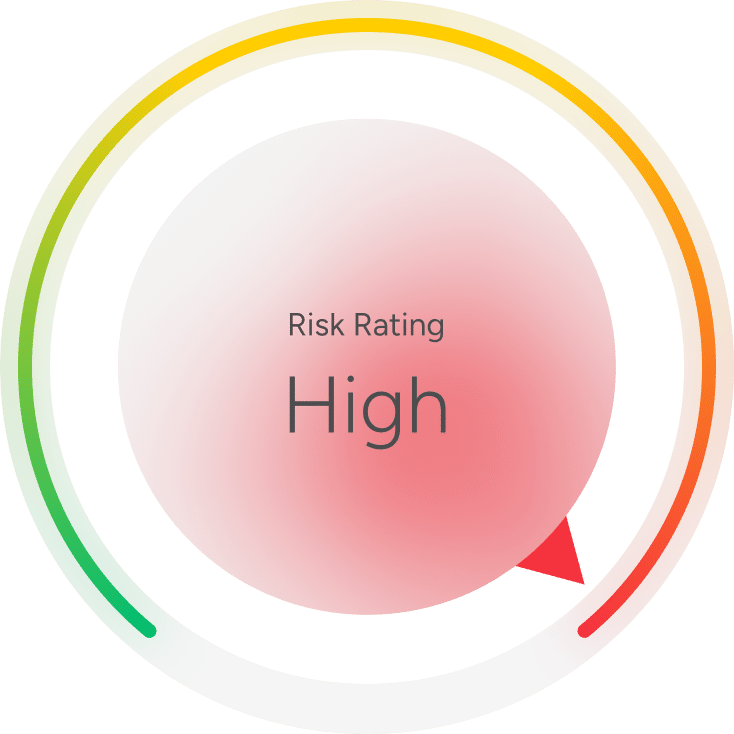
Rating Criteria
Rating Criteria Detail
Corporate Weaponization
Criteria:
Has canceled customers, suppliers, or vendors due to their political views or religious beliefs OR corporately boycotts, divests, or sanctions regions, people groups, or industries.
Risk Level:
HighRationale:
In 2026, Callaway fired Influencer Brand Good Good Golf following a social media backlash against a Callaway ad made in collaboration with the Brand (1)(2). Callaway integrates ESG into its business practices. From its 2026 Proxy Statement: “The Global Sustainability Program has played an integral role in assessing our primary ESG concerns and developing our sustainability strategy and goals. This strategy includes a sustainability strategy framework that categorizes our sustainability efforts into four pillars: People, Planet, Product, and Procurement. The Global Sustainability Program has also introduced a variety of new initiatives, including: establishing a quarterly internal sustainability newsletter; enhancing sustainability content on our website; and engaging employees globally to devise new sustainability action plans for our various brands and workspaces” Topgolf Callaway has not publicly canceled customers, suppliers, or vendors based on political views or religious beliefs (3).
Criteria:
Charitable giving (including employee matching programs) policies or practices discriminate against charitable organizations based on views or religious beliefs.
Risk Level:
MediumRationale:
Callaway likely uses Cybergrants, a Bonterra subsidiary, as its charitable giving platform. Bonterra vets charities according to the Southern Poverty Law Center’s Hate List, which includes mainstream libertarian, conservative, family, and religious advocacy organizations (1)(2)(3). Callaway’s charitable giving focus areas are “youth, health and the military” (4)(5)(6)(7)(8).
Criteria:
Employment policies fail to protect against viewpoint or other discrimination and/or are ideological in nature.
Risk Level:
HighRationale:
Topgolf Callaway (now Callaway) requires its employees to take unconscious bias training (1). However, in 2025, the company removed unconscious bias training from its website. To date, the company has not publicly addressed these changes, leaving shareholders without clarity regarding the company’s reasoning or future direction (2). Callaway appears to prioritize diversity over merit in its leadership composition. From its Corporate Governance Guidelines: “The Board also considers whether a potential new director would increase the ethnic, gender or cultural diversity of the Board, as the Board believes that such diversity is important and can provide distinct value. When searching for a new director, the Nominating and Corporate Governance Committee and the Board actively seek to include in the pool of candidates considered highly qualified candidates that provide ethnic, gender or cultural diversity” (3). Callaway does not provide viewpoint protections for its employees (4).
Corporate Governance and Public Policy
Criteria:
Uses corporate reputation to support causes, organizations, or policies hostile to freedom of expression.
Risk Level:
HighRationale:
Callaway supports ESG within its business practices. From its 2025 Annual Report: “Through our sustainability initiatives, we are committed to improving our ESG practices and have launched projects, and may from time to time set targets, with respect to improving our ESG practices” (1). Topgolf Callaway (now Callaway) also supports DEI within its business practices. From its 2021 Sustainability Report: “‘Employee Attraction and Retention’ is a principal concern for
Callaway’s most important asset — our employees — as is
‘Diversity, Equity, and Inclusion.’ Together, these two social
topics are essential to sustaining Callaway’s strong corporate
culture and position as an industry leader” (2).
Criteria:
Uses corporate funds to advance ideological causes, organizations, or policies hostile to freedom of expression.
Risk Level:
LowerRationale:
Callaway has not used corporate funds to advance ideological causes, organizations, or policies (1).
Related Companies
Consumer Durables and Apparel

Nike

Consumer Durables and Apparel
Whirlpool
Consumer Durables and Apparel, Semiconductors and Semiconductor Equipment
D.R. Horton
Consumer Durables and Apparel
Adidas
Consumer Durables and Apparel
Levi Strauss
Consumer Durables and Apparel, Technology Hardware and Equipment
Samsung

Consumer Durables and Apparel, Media and Entertainment
Sony

Consumer Durables and Apparel
IKEA
Consumer Durables and Apparel
LG Electronics
Consumer Durables and Apparel
SLNT