
Citigroup
Companies who scored 100% on the 2023-2024 Corporate Equality Index.
Companies who scored 100% on the 2025 Corporate Equality Index.
Companies provide a benefit package for employees which covers travel/lodging costs for an abortion.
Company is a corporate partner of Ashoka, a global network of entrepreneurs focused on widespread, systemic social and environmental change
Companies that likely use Benevity to vet charitable recipients, thereby discriminating against mainstream advocacy organizations through the SPLC's overly broad "Hate List."
Companies who signed the Business Roundtable 2019 Stakeholder Capitalism statement
These companies are committed to leveraging shareholder or investor assets for net-zero emission goals and climate ambitions for GFANZ, Climate Action 100+, CERES, PCAF, UN PRI, NZLA, FIT, or HSCP.
The biggest 1000 U.S. companies by revenue according to form 10-K.
Companies that offer so-called transgender healthcare for their employees and covered dependents.



Rating Overview
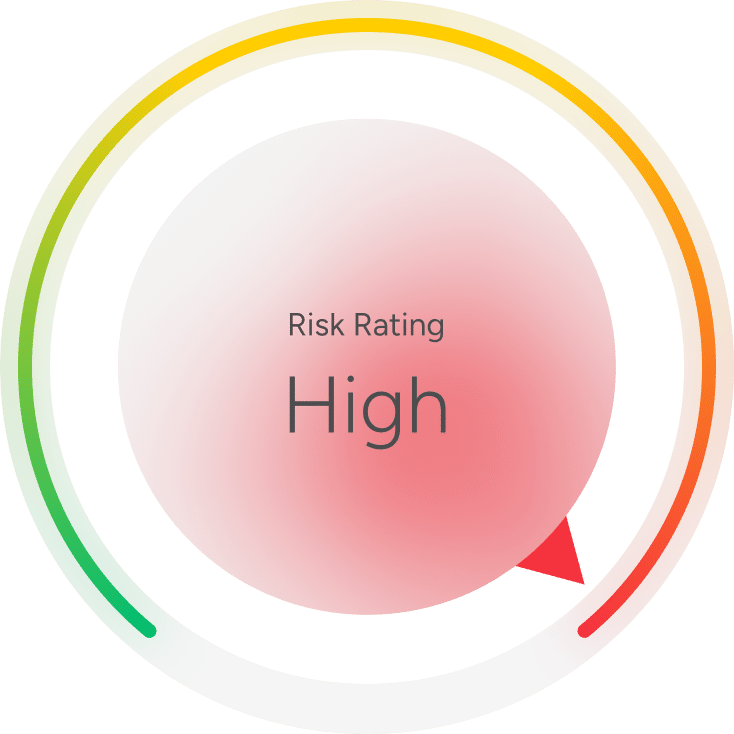
Rating Criteria
Rating Criteria Detail
Corporate Weaponization
Criteria:
Has canceled customers, suppliers, or vendors due to their political views or religious beliefs OR corporately boycotts, divests, or sanctions regions, people groups, or industries.
Risk Level:
HighRationale:
In April 2024, West Virginia placed Citigroup on its Restricted Financial Institutions List for its “boycott of energy companies” according to its ESG policies and publicly available statements. The West Virginia State Treasurer will remove Citigroup from the list “if the institution demonstrates that it has ceased all activity that boycotts energy companies according to West Virginia Code §§12-1C-1″ (1)(2)(3). On July 14, 2022 Citigroup was placed on Kentucky’s Restricted Financial 41.472(4)(c). After being placed on this list, Citigroup had 90 days to “cease engaging in the energy company boycott to avoid becoming subject to divestment. In Kentucky’s view, Citigroup did not cease its boycott and therefore remained on its 2025 list (4)(5). Citigroup required employees to get the Covid-19 vaccine or an exemption to maintain employment (6). Citigroup received a score of 100 on the 2025 Corporate Equality Index (CEI) from the Human Rights Campaign (HRC), a political stakeholder group. The company recruits employees based on sexual identity issues. The company discriminates against vendors that do not promote divisive sex and gender policies, indicating it prioritizes sexual issues over merit (7)(8). Citigroup had a history of discriminating against the firearm industry. However, in June 2025, Citigroup announced the end of its specific policy related to firearms. Furthermore, Citigroup amended its employee Code of Conduct and customer-facing Global Financial Access Policy to clarify that it does not discriminate based on political affiliation in the same way it does “not discriminate on the basis of other traits such as race and religion” (9)(10).
Criteria:
Charitable giving (including employee matching programs) policies or practices discriminate against charitable organizations based on views or religious beliefs.
Risk Level:
HighRationale:
Citigroup‘s HRC 2025 CEI rating indicates the company will not donate to non-religious charities unless they embrace controversial sexual identity policies (1)(2). Citigroup uses Benevity as its corporate philanthropy platform. However, in 2026, the company confirmed that it evaluates applicants for Citi Foundation Funding “without regard to any protected basis prohibited by applicable U.S. law” and does not “engage in politicized screenings.” (3)(4). The company’s charitable giving guidelines require that organizations abide by its nondiscrimination policy, including on the basis of sexual orientation and gender identity, thereby excluding some religious charities (5)(6). Citigroup’s charitable giving focus areas are: Community Solutions, Financial Inclusion, and Youth Economic Opportunities” (7). The company does not operate a gift matching program (8).
Criteria:
Employment policies fail to protect against viewpoint or other discrimination and/or are ideological in nature.
Risk Level:
MediumRationale:
Citigroup’s HRC 2025 CEI rating indicates the company forces employees to attend multiple, controversial trainings on gender identity, sexual orientation, transgender issues, and divisive racial ideology. The company provides gender transition guidelines for its employees and a specific benefits guide with a comprehensive explanation of transgender services funded by the company (1)(2). In the wake of backlash against DEI, Citigroup stopped mentioning “anti-racist practices” its annual 10-K filing. The bank said this change doesn’t reflect a shift in policy (3). The company provides unconscious bias training for its employees (4). 11 Attorneys General wrote a letter to Citigroup regarding its DEI policies, arguing that business and investment decisions based on race/sex could violate the company’s fiduciary duty to maximize shareholder value (5)(6). The company had a history of discriminatory hiring practices. However, in February 2025, the bank pledged to no longer discriminate based on race/sex in hiring and ended a rule requiring a “diverse slate” in reviewing candidates and in interview panels (7)(8). Citigroup further stated, “Equal employment opportunity is a fundamental responsibility and is the foundation of a true meritocracy in which employees succeed based on their talent, contributions, leadership, and teamwork.” (9). The company protects its employees against viewpoint discrimination (10)(11).
Corporate Governance and Public Policy
Criteria:
Uses corporate reputation to support causes, organizations, or policies hostile to freedom of expression.
Risk Level:
HighRationale:
Citigroup’s HRC 2025 CEI rating indicates the company agrees to allow a controversial stakeholder group focused on sexual identity issues to dictate marketing or advertising strategy. By doing so, the company risks dividing employees, alienating customers and harming shareholders (1)(2). The company signed an open letter endorsing the Equality Act, a contentious proposal to amend the 1964 Civil Rights Act by adding sexual orientation and so-called gender identity as protected categories. The legislation would, among other implications, grant biological men access to women-only spaces such as sports teams and public restrooms, and compel healthcare providers to deliver sex-denying healthcare and opposes protecting women’s sports (3)(4). The bank also opposed the GA voting integrity bill (5). Citigroup opposed the Florida Parental Rights in Education Act, which would prohibit teaching gender identity and sexual orientation to kids in K-3rd grade (6). The company is a CERES and a PCAF member, committed to net zero carbon emissions by 2040 (7)(8)(9)(10). CEO Jane Fraser is a member of the Business Roundtable and Former CEO Michael Corbat signed its 2019 Statement on the Purpose of a Corporation, which promotes stakeholder capitalism over traditional obligations to shareholders (11)(12). The company opposed various state and local legislation intended to protect parental rights, girls’ sports, bathroom facilities, and gendered spaces (13)(14). The company opposed legislation in Iowa intended to protect parental rights, girls’ sports, bathroom facilities, and gendered spaces (15). It is no longer a signatory to the Equator Principles, an industry benchmark for assessing environmental and social risks in project-related finance. A spokesperson for the company said Citigroup would continue to be informed by the Equator Principles and that its “commitment to implementing best practices in our evaluation of environmental and social risks in project-related finance transactions has not changed” (16). The company’s CEO, Jane Fraser, signed the CEO Action for Diversity & Inclusion pledge, which includes a commitment to promote DEI through bias education training in the workplace (17)(18). It was a part of the Net Zero Banking Alliance, committed to carbon neutrality by 2050. However, it withdrew its membership in December 2024 likely over growing concerns of potential antitrust violations (19). Citigroup previously operated a ‘Diversity, Equity and Inclusion and Talent Management’ team. However, following changes to the team’s mandate, the company rebranded the group as ‘Talent Management and Engagement,’ reflecting a shift toward broader talent management practices (20). Citigroup announced that it will match the government’s $1,000 contributions to Trump Accounts for the children of its employees (21)(22).
Criteria:
Uses corporate funds to advance ideological causes, organizations, or policies hostile to freedom of expression.
Risk Level:
HighRationale:
Citigroup provides a benefits package for employees that covers travel/lodging costs for an abortion and transgender medical procedures for covered employees and dependents, including children (1)(2)(3)(4). The company‘s HRC 2025 CEI rating indicates the company covers transgender related costs for its employees and their children, including paid short-term leave, puberty blockers, cross-sex hormones, chest surgeries, genital surgeries, medical visits and lab monitoring, travel and lodging. Additionally, the company has pledged philanthropic support of at least one organization or event that promotes sex and gender ideology. By allowing a political stakeholder group to dictate operations, the company increases health care costs and risks dividing employees, alienating customers and harming shareholders (5)(6). Citi was a Silver Corporate Partner of the HRC (7)(8)(9). However, in 2020, the bank designated $100 million over three years to “change agents” working on racial equity (10)(11). It also funded the Boise Pride event, which featured a children’s drag show for children as young as 11 years old (12). The bank is a copper sponsor of Out & Equal and is a corporate partner of the NGLCC (13)(14). The company is a bronze partner of PFLAG, an LGBTQ+ activist group that promotes books for children with sexually explicit and gender fluid content and advocates against laws that inform parents of their child’s gender dysphoria or prevent unapproved transgender medical treatments for minors (15)(16)(17). The company is a member of the MCCA, indicating its focus on recruiting, retaining, and promoting employees based on race (18)(19). Citi Foundation is a corporate partner of Ashoka, a global network of entrepreneurs focused on widespread, systemic social and environmental change (20). The company is a sponsor of America250, a bipartisan initiative created to commemorate the 250th anniversary of the United States in 2026 (21). Citigroup is a sponsor of the 2026 St.Pete’s Pride Festival & Parade (22). Citigroup is a Member Investor of Out Leadership, a global network of LGBT+ business leaders from major companies that seeks to advance LGBTQ+ representation in corporate leadership and integrate LGBTQ+ priorities into workplace strategies. The first LGBTQ+ B-Corporation, Out Leadership accomplishes this through convening leadership summits, directing talent initiatives, and providing advisory solutions that emphasize the positive impact of LGBT+ inclusion for business (23)(24)(25)(26). Otherwise, there are no publicly known cases of the company using corporate funds to advance ideological causes, organizations, or policies (27).
Criteria:
Uses corporate political actions and/or financial contributions for ideological, non-business purposes.
Risk Level:
HighRationale:
Citigroup’s HRC 2025 CEI rating indicates the company publicly advocated for controversial sex and gender ideology through local, state or federal legislation or initiatives. By allowing a political stakeholder group to dictate operations, the company risks dividing employees, alienating customers and harming shareholders (1)(2). The company donated to the Equality PAC but has not lobbied for ideological purposes (3)(4)(5).
Related Resources
Related Companies
Banks, Diversified Financials

JPMorgan Chase

Banks, Diversified Financials
BMO Harris
Banks, Diversified Financials

Bank of America

Banks
PNC Financial Services Group

Banks, Diversified Financials
Wells Fargo

Banks
Fifth Third Bank (5/3 Bank)

Banks
U.S. Bancorp

Banks
Truist Financial

Banks, Diversified Financials
Capital One Financial
Banks, Diversified Financials
Morgan Stanley