Ulta Beauty
Companies provide a benefit package for employees which covers travel/lodging costs for an abortion.
The biggest 1000 U.S. companies by revenue according to form 10-K.
Companies that offer so-called transgender healthcare for their employees and covered dependents.

Rating Overview
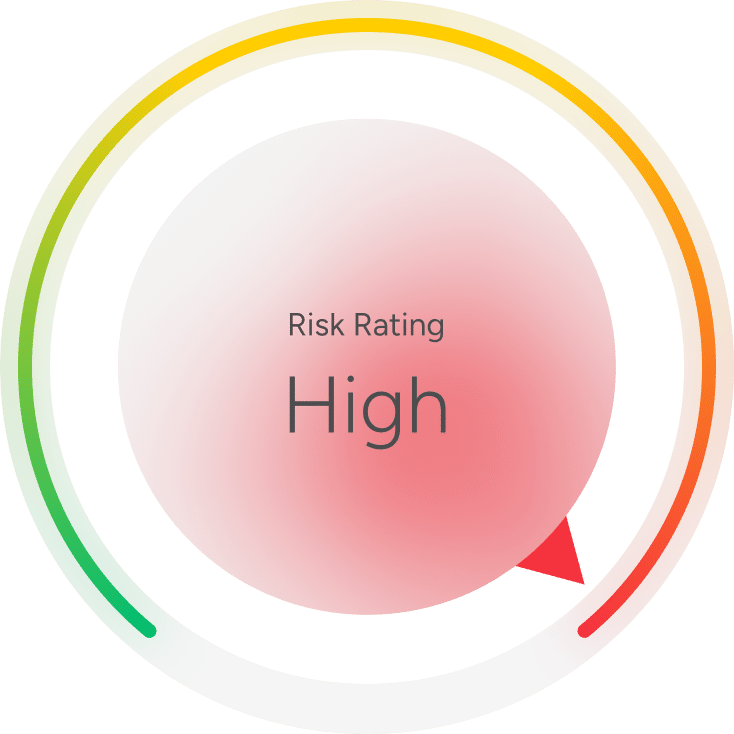
Rating Criteria
Rating Criteria Detail
Corporate Weaponization
Criteria:
Has canceled customers, suppliers, or vendors due to their political views or religious beliefs OR corporately boycotts, divests, or sanctions regions, people groups, or industries.
Risk Level:
MediumRationale:
Ulta Beauty received a score of 90 on the 2026 Corporate Equality Index (CEI) from the Human Rights Campaign (HRC), a political stakeholder group. The company recruits employees based on sexual identity issues. The company discriminates against vendors that do not promote divisive sex and gender policies, indicating it prioritizes sexual issues over merit (1)(2)(3). Ulta Beauty received a score of 85 on the 2025 Corporate Equality Index (CEI) from the Human Rights Campaign (HRC), a political stakeholder group. The company recruits employees based on sexual identity issues. The company discriminates against vendors that do not promote divisive sex and gender policies, indicating it prioritizes sexual issues over merit (4)(5). However, the company has not publicly canceled customers, suppliers, or vendors based on political views or religious beliefs (6).
Criteria:
Charitable giving (including employee matching programs) policies or practices discriminate against charitable organizations based on views or religious beliefs.
Risk Level:
HighRationale:
Ulta Beauty’s HRC 2026 CEI rating indicates the company will not donate to non-religious charities unless they embrace controversial sexual identity policies (1)(2)(3). Ulta Beauty’s HRC 2025 CEI rating indicates the company will not donate to non-religious charities unless they embrace controversial sexual identity policies (4)(5). The company does not appear to discriminate against charitable organizations based on views or beliefs (6).
Criteria:
Employment policies fail to protect against viewpoint or other discrimination and/or are ideological in nature.
Risk Level:
HighRationale:
Ulta Beauty’s HRC 2026 CEI rating indicates the company provides a specific benefits guide with a comprehensive explanation of transgender services funded by the company (1)(2)(3). Ulta Beauty’s HRC 2025 CEI rating indicates the company forces employees to attend multiple, controversial trainings on gender identity, sexual orientation, transgender issues, and divisive racial ideology (4)(5). The company mandates training on inclusivity and unconscious bias for its associates (6). The company does not provide viewpoint protections for its employees (7).
Corporate Governance and Public Policy
Criteria:
Uses corporate reputation to support causes, organizations, or policies hostile to freedom of expression.
Risk Level:
HighRationale:
Ulta Beauty’s HRC 2026 CEI rating indicates the company potentially agrees to allow a controversial stakeholder group focused on sexual identity issues to dictate marketing or advertising strategy. By doing so, the company risks dividing employees, alienating customers and harming shareholders (1)(2)(3). Ulta Beauty’s HRC 2025 CEI rating indicates the company agrees to allow a controversial stakeholder group focused on sexual identity issues to dictate marketing or advertising strategy. By doing so, the company risks dividing employees, alienating customers and harming shareholders (4)(5). The company hosted popular transgender influencer Dylan Mulvaney on its podcast in October of 2022 and subsequently defended its choice and affirmed its commitment to the related movements on Twitter after online backlash (6)(7). In July 2025, Ulta Beauty started selling hair care products from Jonathan Van Ness, a “genderqueer” star in Netflix’s Queer Eye (8). The company’s CEO, David Kimbell, signed the CEO Action for Diversity & Inclusion pledge, which includes a commitment to promote DEI through bias education training in the workplace (9)(10). The company scored an 85 out of 100 on the 2023-2024 Corporate Equality Index (CEI) from the Human Rights Campaign (HRC), a political stakeholder group (11)(12).
Criteria:
Uses corporate funds to advance ideological causes, organizations, or policies hostile to freedom of expression.
Risk Level:
HighRationale:
Ulta Beauty provides a benefits package for employees that covers travel/lodging costs for an abortion and transgender medical procedures for covered employees and dependents, including children (1)(2)(3)(4). Ulta Beauty’s HRC 2026 CEI rating indicates the company covers transgender related costs for its employees and their children, including paid short-term leave, puberty blockers, cross-sex hormones, chest surgeries, genital surgeries, medical visits, lab monitoring, and mental health benefits. The company also covers at least five of the following services: reconstructive hair removal, cosmetic hair removal, tracheal shave or reduction, facial surgeries, voice modification surgery, voice modification therapy, lipoplasty or filling for body masculinization or feminization, and travel and lodging expenses. Additionally, the company has potentially pledged philanthropic support of at least one organization or event that promotes sex and gender ideology. By allowing a political stakeholder group to dictate operations, the company increases health care costs and risks dividing employees, alienating customers and harming shareholders (5)(6)(7)(8). The company’s HRC 2025 CEI rating indicates the company covers transgender related costs for its employees and their children, including paid short-term leave, puberty blockers, cross-sex hormones, chest surgeries, genital surgeries, medical visits and lab monitoring, travel and lodging. Additionally, the company has pledged philanthropic support of at least one organization or event that promotes sex and gender ideology. By allowing a political stakeholder group to dictate operations, the company increases health care costs and risks dividing employees, alienating customers and harming shareholders (9)(10). Ulta Beauty has donated to the Chicago Urban League (11)(12). The company signed the Fifteen Percent Pledge and “committed to dedicate 15% of its shelf space to Black-owned brands” (13)(14). Ulta is a corporate partner of the National LGBT Chamber of Commerce (15)(16). The company is a silver partner of PFLAG, an LGBTQ+ activist group that promotes books for children with sexually explicit and gender fluid content and advocates against laws that inform parents of their child’s gender dysphoria or prevent unapproved transgender medical treatments for minors (17)(18)(19). Ulta Beauty Charitable Foundation was a “Thought Leader” donor of It Gets Better, an LGBTQ+ focused nonprofit that develops educational resources, operates youth leadership programs, and promotes storytelling and community initiatives for LGBTQ+ youth. Through its It Gets Better EDU program, the organization provides educators with classroom resources that encourage the inclusion of LGBTQ+ terminology, stories, and identity-related topics in K–12 learning environments. The organization also encourages educators to share its educational resources with students, discuss pronouns in the classroom, and incorporate LGBTQ+ stories into their curriculum (20)(21)(22)(23). The company is a sponsor of BG Pride Parade 2026 (24).
Criteria:
Uses corporate political actions and/or financial contributions for ideological, non-business purposes.
Risk Level:
HighRationale:
Ulta Beauty’s HRC 2025 CEI rating indicates the company publicly advocated for controversial sex and gender ideology through local, state or federal legislation or initiatives. By allowing a political stakeholder group to dictate operations, the company risks dividing employees, alienating customers and harming shareholders (1)(2). The company does not operate a PAC or engage in lobbying at this time (3)(4)(5).
Related Companies
Household and Personal Products

Procter & Gamble

Household and Personal Products
Northwestern Mutual

Capital Goods, Household and Personal Products

3M
Household and Personal Products
Kimberly-Clark
Household and Personal Products
Colgate-Palmolive
Household and Personal Products
Stanley Black & Decker
Household and Personal Products
Unilever
Household and Personal Products
Estee Lauder
Household and Personal Products
Harry’s
Household and Personal Products
L’Oreal