
Wolfspeed
The biggest 3000 companies in the U.S. in the year of 2025.
Companies that offer so-called transgender healthcare for their employees and covered dependents.
Rating Overview
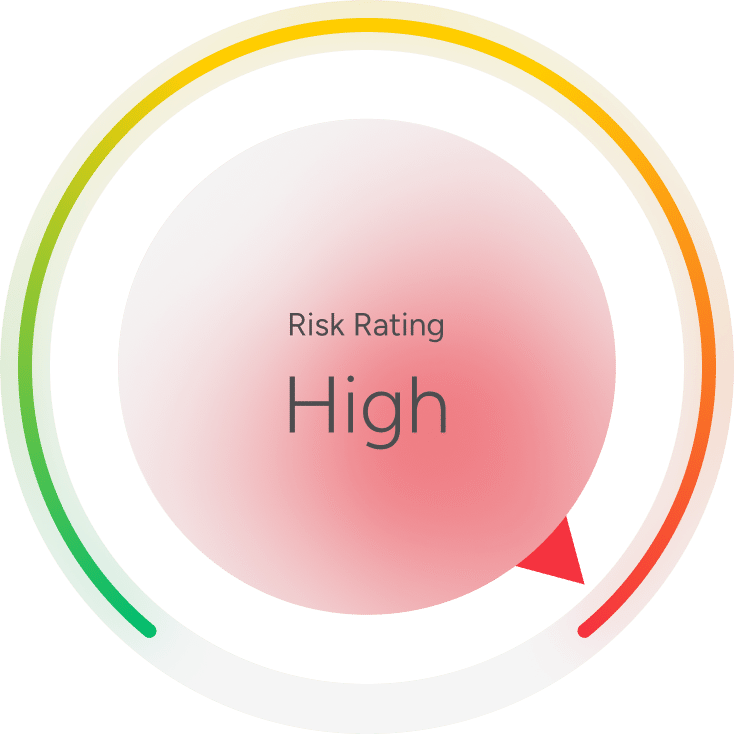
Rating Criteria
Rating Criteria Detail
Corporate Weaponization
Criteria:
Has canceled customers, suppliers, or vendors due to their political views or religious beliefs OR corporately boycotts, divests, or sanctions regions, people groups, or industries.
Risk Level:
HighRationale:
Wolfspeed received a score of 85 on the 2026 Corporate Equality Index (CEI) from the Human Rights Campaign (HRC), a political stakeholder group. The company recruits employees based on sexual identity issues. The company discriminates against vendors that do not promote divisive sex and gender policies, indicating it prioritizes sexual issues over merit (1)(2)(3). The company received a score of 85 on the 2025 Corporate Equality Index (CEI) from the Human Rights Campaign (HRC), a political stakeholder group. The company recruits employees based on sexual identity issues. The company discriminates against vendors that do not promote divisive sex and gender policies, indicating it prioritizes sexual issues over merit (4)(5). Wolfspeed integrates ESG into its business practices. From its Supplier Code of Conduct: “Energy consumption and all relevant Scope 1 and 2 greenhouse gas emissions
are to be tracked and documented, at the facility and/or corporate level.
Suppliers are to look for cost-effective methods to improve energy efficiency
and to minimize their energy consumption and greenhouse gas emissions” (6). However, the company has not canceled customers, suppliers, or vendors based on political views or religious beliefs (7).
Criteria:
Charitable giving (including employee matching programs) policies or practices discriminate against charitable organizations based on views or religious beliefs.
Risk Level:
HighRationale:
Wolfspeed’s HRC 2026 CEI rating indicates the company will not donate to non-religious charities unless they embrace controversial sexual identity policies (1)(2)(3). The company’s HRC 2025 CEI rating indicates the company will not donate to non-religious charities unless they embrace controversial sexual identity policies (4)(5). Wolfspeed does not appear to discriminate against charitable organizations based on views or beliefs. The company’s charitable giving focus areas are hunger and housing initiatives, and community education (6).
Criteria:
Employment policies fail to protect against viewpoint or other discrimination and/or are ideological in nature.
Risk Level:
HighRationale:
Wolfspeed’s HRC 2026 CEI rating indicates the company forces employees to attend at least one, controversial training on gender identity, sexual orientation, transgender issues, and divisive racial ideology. The company provides gender transition guidelines for its employees (1)(2)(3). The company’s HRC 2025 CEI rating indicates the company forces employees to attend multiple, controversial trainings on gender identity, sexual orientation, transgender issues, and divisive racial ideology. The company provides gender transition guidelines for its employees and a specific benefits guide with a comprehensive explanation of transgender services funded by the company (4)(5). Wolfspeed does not provide viewpoint protections for its employees (6)(7).
Corporate Governance and Public Policy
Criteria:
Uses corporate reputation to support causes, organizations, or policies hostile to freedom of expression.
Risk Level:
MediumRationale:
Wolfspeed’s HRC 2026 CEI rating indicates the company potentially agrees to allow a controversial stakeholder group focused on sexual identity issues to dictate marketing or advertising strategy. By doing so, the company risks dividing employees, alienating customers and harming shareholders (1)(2)(3). The company’s HRC 2025 CEI rating indicates the company agrees to allow a controversial stakeholder group focused on sexual identity issues to dictate marketing or advertising strategy. By doing so, the company risks dividing employees, alienating customers and harming shareholders (4)(5). Wolfspeed supports ESG within its business practices. From its 2026 Sustainability Report: “This Committee supports the Board in its oversight of environmental, social, and governance (ESG) matters, including issues such as climate change impacts, energy and natural resource conservation, environmental and supply chain sustainability, human rights” (6) Otherwise, the company has not supported ideological causes or policies (7).
Criteria:
Uses corporate funds to advance ideological causes, organizations, or policies hostile to freedom of expression.
Risk Level:
HighRationale:
Wolfspeed’s HRC 2026 CEI rating indicates the company has potentially pledged philanthropic support of at least one organization or event that promotes sex and gender ideology. By allowing a political stakeholder group to dictate operations, the company increases health care costs and risks dividing employees, alienating customers and harming shareholders (1)(2)(3)(4). The company’s HRC 2025 CEI rating indicates the company covers transgender related costs for its employees and their children, including paid short-term leave, puberty blockers, cross-sex hormones, chest surgeries, genital surgeries, medical visits and lab monitoring, travel and lodging. Additionally, the company has pledged philanthropic support of at least one organization or event that promotes sex and gender ideology. By allowing a political stakeholder group to dictate operations, the company increases health care costs and risks dividing employees, alienating customers and harming shareholders (5)(6). Otherwise, there are no publicly known cases of Wolfspeed using corporate funds to advance ideological causes, organizations, or policies (7).
Criteria:
Uses corporate political actions and/or financial contributions for ideological, non-business purposes.
Risk Level:
HighRationale:
Wolfspeed’s HRC 2025 CEI rating indicates the company publicly advocated for controversial sex and gender ideology through local, state or federal legislation or initiatives. By allowing a political stakeholder group to dictate operations, the company risks dividing employees, alienating customers and harming shareholders (1)(2). The company has not used its PAC donations or lobbying for ideological purposes (3)(4)(5).
Related Companies
Semiconductors and Semiconductor Equipment

Intel

Semiconductors and Semiconductor Equipment

Qualcomm

Semiconductors and Semiconductor Equipment
Micron Technology

Semiconductors and Semiconductor Equipment
CBRE Group

Semiconductors and Semiconductor Equipment

Broadcom
Consumer Durables and Apparel, Semiconductors and Semiconductor Equipment
D.R. Horton
Semiconductors and Semiconductor Equipment
Nvidia

Semiconductors and Semiconductor Equipment
Applied Materials

Semiconductors and Semiconductor Equipment
Jones Lang LaSalle (JLL)
Semiconductors and Semiconductor Equipment
Texas Instruments