Texas
373 Companies Headquartered in Texas
48Forty, Abrams Learning Trends, ABS Group Consulting, Academy Sports and Outdoors, Accelerate Learning Group, Adams Resources & Energy, Addus HomeCare Corporation, AECOM, Agile, Agility Bank
Texas Average CBR Summary
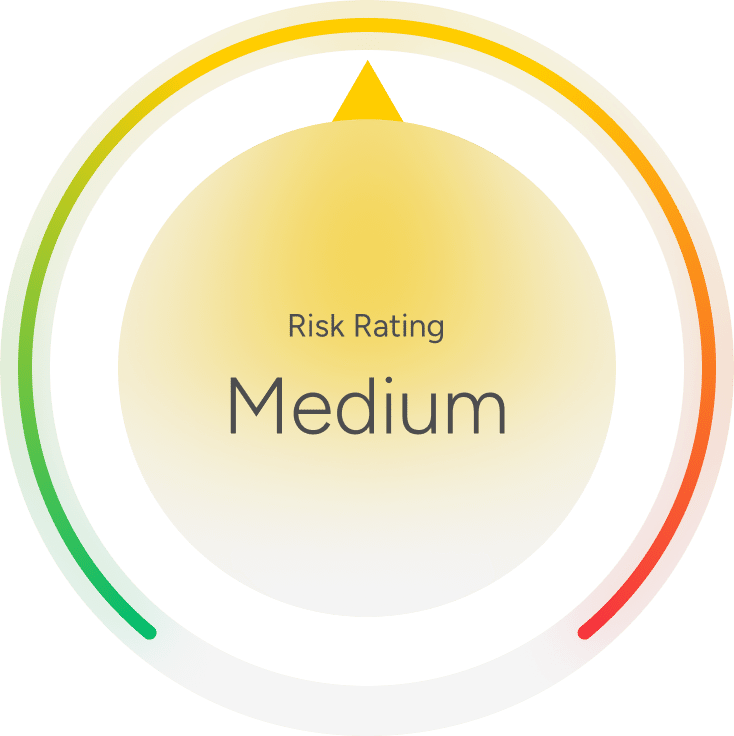
Avg. Company Rating
Avg. Rating Criteria
| Criteria | Risk Level |
|---|---|
| Cancellations | Medium Risk |
| Discriminatory Philanthropy | Medium Risk |
| Employment Protection | High Risk |
Corporate Weaponization
| Criteria | Risk Level |
|---|---|
| Advocacy Bias | Medium Risk |
| Funding | Medium Risk |
| Political Actions | Medium Risk |
Corporate Governance and Public Policy
State Leadership
State Pension Fund Summary
Texas has two main public pension systems: the Teacher Retirement System of Texas (TRS) and the Employees Retirement System of Texas (ERS).
- The TRS board represents public school teachers and consists of 9 members appointed by the Governor: 3 at the Governor’s discretion; 2 from a list prepared by the State Board of Education; 2 from the 3 public school district member candidates who have been nominated by employees of public school districts; 1 from the 3 retired member candidates who are nominated by retired TRS members; 1 from the three at-large candidates who have been nominated for the position.
- TRS discloses its proxy voting records for directly held equities on this website.
- TRS uses ISS for its proxy advisory services.
- According to a 2026 Actuarial Report, the TRS’ general investment consultant is Meketa.
- The ERS board represents other state and local government employees and consists of 6 members: 1 appointed by the Governor; 1 appointed by the Speaker of the Texas House of Representatives; 1 appointed by the Chief Justice of the Texas Supreme Court and confirmed by the Texas Senate; 3 elected by ERS members and retirees.
- ERS discloses its proxy voting records for directly held equities on this website.
- ERS uses ISS for its proxy advisory services.
- According to its 2025 Annual Comprehensive Financial Report, ERS’s general investment consultants Askia, Albourne and RVK.
- Texas also operates the Permanent School Fund (PSF), one of the largest educational endowments in the United States, first conceived in 1845 when Texas joined the United States and seeded with a $2,000,000 appropriation by the Legislature of 1854. The Fund is managed by the Texas Permanent School Fund Corporation, created by Senate Bill 1232 during the 87th Texas Legislature (2021), which began operations as a separate special-purpose governmental corporation on September 1, 2022. As of August 31, 2025, the Fund’s audited net position was $60.6 billion (total Fund assets at market value, including the land endowment portion, were $65,726,739,553, and the Fund returned 8.20% net of fees for the year ending August 31, 2025).
- The PSF Corporation Board of Directors is comprised of a mix of nine appointed and elected members: five elected members of the State Board of Education (SBOE), the elected Land Commissioner, one member appointed by the School Land Board (SLB), and two members appointed by the Governor. Constitutional authority rests with the SBOE, which has delegated investment management to the Corporation.
- Like the pension funds above, the PSF holds public equities, including large-cap and small/mid-cap domestic equity portfolios, making its proxy voting record a relevant indicator of how Texas leverages its sovereign wealth in support of or against ESG principles.
- Note: The data below on state voting does not include the votes cast through the public equities of Texas’s Sovereign Wealth Fund.
- Texas also operates the Permanent University Fund (PUF), a public endowment supporting The University of Texas System and the Texas A&M University System, established in the Texas Constitution of 1876 through land grants that today total over 2.1 million acres in West Texas producing oil, gas, mineral, and surface income. The State Constitution vests fiduciary responsibility for the PUF in the Board of Regents of The University of Texas System, which contracts investment management to the University of Texas/Texas A&M Investment Management Company (UTIMCO). On December 31, 2025, the market value and book value of the PUF was $42.4 billion and $35.6 billion, respectively, exclusive of land acreage.
- UTIMCO is governed by a nine-member board: at least three members of the UT System Board of Regents, four members appointed by the UT System Board of Regents (three of whom must have substantial background and expertise in investments), and two members appointed by the Texas A&M System Board of Regents (one of whom must have a substantial background and expertise in investments).
- Like the pension funds above, the PUF holds public equities — public equity comprised 25.9% of the Fund as of December 31, 2025, with largest holdings including Taiwan Semiconductor, Samsung Electronics, Nvidia, Microsoft, Alphabet, and Apple — making its proxy voting record a relevant indicator of how Texas leverages its sovereign wealth in support of or against ESG principles.
- Note: The data below on state voting does not include the votes cast through the public equities of Texas’s Sovereign Wealth Fund.
The Texas Treasury Safekeeping Trust Company (TTSTC) “administers and manages the assets of” Texas’s Tobacco Settlement Permanent Trust Fund. The State Comptroller is the sole officer of the Texas Treasury Safekeeping Trust Company. However, the Comptroller is required to “administer and manage the assets of the Fund with the advice of, and in consultation with, the appointed Tobacco Settlement Permanent Trust Account Investment Advisory Committee”.
The “By Asset Manager” and “Asset Manager Voting” tables show the proxy voting records of the state’s asset managers who manage the pensions’ stock market portfolio through index, exchange-traded, or mutual funds. Since these are externally managed funds, the asset managers typically retain and exercise proxy voting privileges. This data is used to calculate the state’s pro-ESG and anti-ESG scores to see how the state leverages its externally managed funds in proxy voting.
The “State Voting” table shows TRS’ proxy voting records for directly owned securities through pension fund portfolios. The 1792 Exchange commends TRS and ERS for publicly disclosing this information online for their pensioners.
Both tables are important to show a comprehensive picture of the state’s proxy voting record.