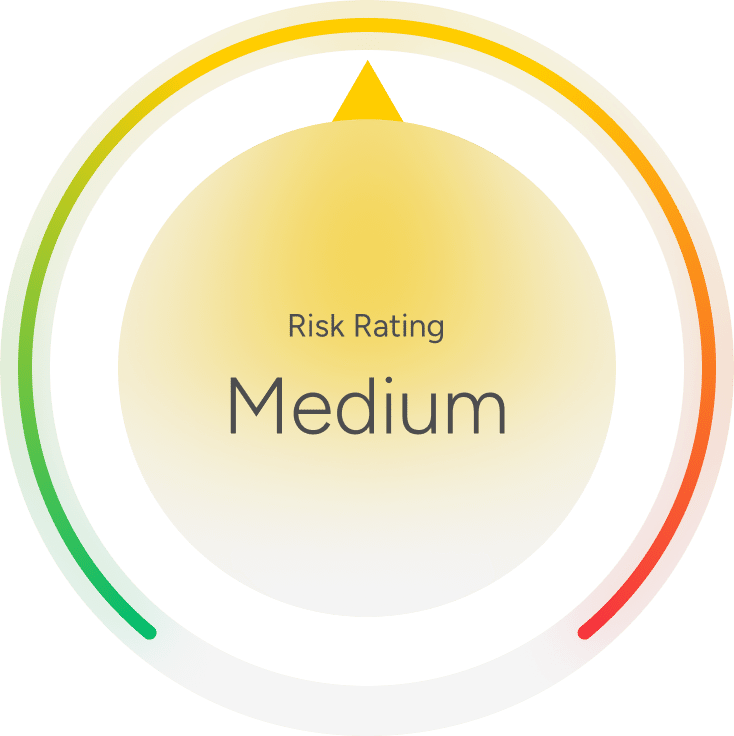
ICF is Medium Risk. The company often yields to political activism in shaping corporate governance, potentially alienating consumers, dividing employees, and harming shareholders. The company implements race and identity-based policies that replace merit, excellence, and integrity with preferential treatment and outcomes. ICF occasionally embraces corporate initiatives that redirect its central focus from business goals to partisan policies and divisive issues at times. This approach fails to safeguard free exercise, free speech, and free enterprise.
Rating Criteria
| Criteria | Risk Level |
|---|---|
| Cancellations | Medium Risk |
| Discriminatory Philanthropy | Lower Risk |
| Employment Protection | High Risk |
Corporate Weaponization ⓘ
| Criteria | Risk Level |
|---|---|
| Advocacy Bias | Medium Risk |
| Funding | Medium Risk |
| Political Actions | No Data |
Corporate Governance and Public Policy ⓘ
Latest Content
The Founders Built a Business Charter: The U.S. Constitution
Op-Ed
September 17, 2026
On September 17, 1787, 39 men signed a document we celebrate as the world’s most successful and enduring political charter. In our nation’s 250th year, it is worth remembering that the Constitution is not only a charter of limited government and ordered liberty; it is also the greatest business charter ever written. No governing charter has done more to create the conditions in which enterprise can flourish: stable laws, secure property, enforceable contracts, free exchange, individual liberty, and protection from arbitrary power. The men who gathered in Philadelphia knew commerce under the “old system.” They lived as colonists in a mercantilist empire where the right to trade was a favor dispensed by the Crown, where charters went to the well-connected, and where a merchant’s property and contracts were secure only so long as he stayed in the government’s good graces. When they wrote a new charter, they were determined that American commerce would rest on a solid foundation of law, not on the shifting sands of political favor. Consider what they built. The Commerce Clause, with related provisions, created a continental free-trade zone. The Constitution transformed 13 competing states into a vast common market. It gave Congress authority over interstate commerce and …
300+ Corporate Bias Ratings Available in Arabic
List
September 16, 2026
More than 300 Fortune 500 companies operate in both the United States and Arabic-speaking markets. Many adopt one moral and political posture in the West and an opposite posture in the Arab countries. Until now, Arabic-speaking audiences could only access this data in English. Our new Arabic database removes that language shield. Every company listed below is rated using the same publicly documented methodology as the flagship U.S. database, and is now available in Arabic. Abbott Laboratories AbbVie Inc. ABM Industries Inc. Adobe Inc. ADP Advanced Micro Devices Inc. AECOM Agco AIG Air Products & Chemicals Inc. Airbnb Inc. Albemarle Corporation Alcoa Corp. Altria Group Inc. Amazon.com Inc. American Airlines American Express Company Ameriprise Financial Inc. Amgen Inc. Amphenol Corp. Analog Devices Inc. Andersons Anheuser-Busch InBev (AB InBev) Apache Corp. Apollo Global Management Inc. Apple Inc. Aramark Corp. Archer Daniels Midland Co. ARKO Arrow Electronics Arthur J. Gallagher & Co. AT&T Inc. Autoliv Inc. AutoZone Inc. Avery Dennison Avis Budget Group Avnet Inc. Baker Hughes Inc. Ball Corp. Bank of America Corp. Bath & Body Works LLC Baxter International Inc. Becton, Dickinson and Co. Berkshire Hathaway Berry Global, Inc. Biogen BlackRock Blackstone Inc. Boeing Co. Booking Holdings Inc. Booz Allen …
1792 Launches 1st Arabic-Language Corp Bias Ratings Database to Expose Cross-Market Inconsistency at Over 300 Companies
September 16, 2026
Paris, France — 1792 Exchange, a nonprofit organization dedicated to advancing corporate neutrality and free enterprise, today in Paris announced the launch of an Arabic-language microsite carrying translated profiles from its Corporate Bias Rating database. The site includes more than 300 Fortune 500 companies that operate in both the United States and Arabic-speaking markets, including the Gulf, North Africa, and the broader Arab world. The launch follows 1792 Exchange’s expansion of the same work into French through the Index du Wokisme en Entreprise, published by the Observatoire du Wokisme. The flagship Corporate Bias Ratings database now features more than 4,500 company profiles. Using a proprietary ratings system grounded in the publicly documented record, companies are categorized as Lower, Medium, or High Risk, based on the degree to which their policies, practices, and affiliations indicate support for politicized DEI initiatives, restrictions on free speech, and related ideological commitments. Corporate Bias Rating Database The Arabic microsite is designed as a first-of-its-kind transparency resource for Arabic-speaking press, investors, sovereign wealth funds, regulators, trade and finance ministers, and consumers. Its primary purpose is transparency, using data to make visible a pattern 1792 Exchange has documented elsewhere: companies adopt one moral or political posture in the United …
Corporate Consistency Across Markets: New Arabic Ratings
Letter
September 14, 2026
This is a joint letter from 1792 Exchange and the Observatoire du Wokisme. 1792 Exchange is a nonprofit organization dedicated to advancing corporate neutrality and free enterprise. We examine the publicly available records of companies’ policies and practices and publish those findings. The Observatoire du Wokisme publishes the Index du Wokisme en Entreprise in association with 1792 Exchange. We write because your company appears with a RED / High Risk rating in our U.S. Corporate Bias Ratings database which is also now available in both French and Arabic. 1792 Exchange’s Corporate Bias Ratings database currently features more than 4,500 company profiles. As a company’s reach grows far beyond their U.S. headquarters, we have translated their profile into languages reflecting their presence in foreign markets: first in French through the Index du Wokisme en Entreprise, and now in Arabic. The Arabic site, https://ar.1792exchange.com, launching this month, highlights more than 300 companies, including yours. Using a proprietary ratings system, companies are categorized by the degree to which their publicly documented policies, practices, and affiliations indicate support for politicized initiatives and radical ideological commitments. When a company receives a RED rating in the database, it indicates that the company almost certainly engages in …
Faith-based investors should act like owners
Op-Ed
September 8, 2026
Earlier this summer, the rating service Morningstar released its second-ever report on faith-based investing, a market that has grown to roughly $169 billion in assets. The report analyzes hundreds of faith-based funds, comparing their screening methodologies and how those screens affect portfolio construction and performance. The report offers valuable insight into a complex and rapidly growing segment of the investment industry, but it overlooks several important aspects of the broader faith-based investing landscape. For starters, the universe of investors making decisions based on values is much broader than the funds formally labeled “faith-based” because no investment strategy is truly values-neutral. Every fund makes choices about which companies and industries to include, which to exclude, and how heavily to weight them. Even a broad-market index reflects a set of rules determining what qualifies for inclusion and how much representation each company receives within the portfolio. Every investor has some worldview or set of values that informs how he or she lives. Faith-based investing simply makes the connection between those values and investment decisions more explicit and, hopefully, more consistent. Investors who fall outside the Islamic, Catholic, and Christian categories examined by Morningstar may still make investment decisions based on deeply held beliefs about …