Credit Agricole
Banks, Diversified Financials
France
(Along with 41 other companies)
Credit Agricole often yields to political activism in shaping corporate governance, potentially alienating consumers, dividing employees, and harming shareholders. The company elevates merit, excellence, and integrity ahead of race and identity-based policies. Credit Agricola occasionally embraces corporate initiatives that redirect its central focus from business goals to partisan policies and divisive issues at times. This approach fails to safeguard free exercise, free speech, and free enterprise.
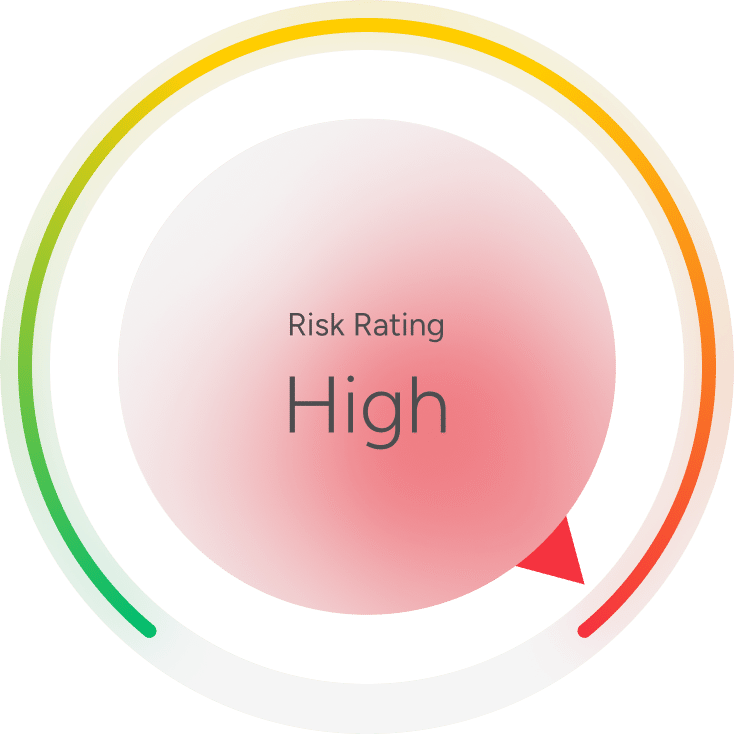
Rating Criteria
| Criteria | Risk Level |
|---|---|
| Cancellations | High Risk |
| Discriminatory Philanthropy | Lower Risk |
| Employment Protection | Lower Risk |
Corporate Weaponization ⓘ
| Criteria | Risk Level |
|---|---|
| Advocacy Bias | High Risk |
| Funding | Lower Risk |
| Political Actions | No Data |
Corporate Governance and Public Policy ⓘ
Latest Content
Bankers Seek Legal Cover After Backing $1.5 Trillion of ESG Debt
January 18, 2024
Doug Napier on Just the News: What Makes an American Company
Podcast
November 2, 2026
Doug Napier, Executive Chairman and CEO of 1792 Exchange, joined John Solomon on Just the News, No Noise to discuss the American Company, the new national call for companies to earn the name American. He explained the standard a company must meet, how the Corporate Bias Ratings help companies hold themselves to it, and why Europe is a warning for America. Patriotism isn’t a dirty wordNapier calls patriotism a noble obligation for companies. The first test is the Constitution: a company must protect free speech, free exercise and free enterprise. It is pass or fail. A company that fails it does not move on to the rest of the standard.DeVito describes how companies exposed in 2024 pledged to stop funding controversial non-business causes. Our Back to Business Tracker followed through on those pledges, and companies like Walmart and Lowe’s shifted to six-figure grants for hurricane relief in North Carolina. A database companies act onNapier explains that companies use the Corporate Bias Ratings to rate themselves and their competitors. Many are moving to green, restoring merit as the basis for hiring and dropping the activist agendas that pull them down. Keep our house in orderNapier says the unrest in Western Europe is a wake-up call. America must take inventory of the principles …
DEI Starbucks: A Breakpoint Between Better Business and Business Ends
November 2, 2026
Starbucks’ recent resolution of the lawsuit brought by the Florida Attorney General only scratches the surface of the business risks created by subordinating core operations to ideological priorities. Florida employees and applicants reported “feeling excluded or humiliated because they were White,” alleging that the company had effectively converted hiring and recruiting into a process that favored preferred demographic groups. The settlement, under which Starbucks agreed to forgo race- and sex-based goals, quotas, and preferences companywide, underscores that such practices carry both legal exposure and internal costs, even when the company does not admit liability. The deeper question is why these commitments became central in the first place. In Greenfield, Massachusetts, Last Ditch Bar and Arts Venue supplies a clear, small-scale illustration of the consequences. Last Ditch built its model around ideological priorities, one notable being an expansive open-door policy intended to accommodate a particular activist customer base. When financial pressures led the owners to make a limited operational adjustment- a one night a week deal to help the business make more money. Like a late Starbucks open-door policy. The bar advocated and accommodated everyone. What happened? The “advocate community,” the business’ main customer base, only tore the business apart. All …
New Heritage Report Highlights Risks of Corporate Alignment With the Human Rights Campaign
October 30, 2026
Last week, The Heritage Foundation released a very important report detailing the risks companies face from affiliating with the Human Rights Campaign (HRC) and its Corporate Equality Index (CEI). The report provides valuable insight into the scope of HRC’s influence on corporate America and the organizations pushing back against it. Any institution concerned about the growing influence of modern gender ideology should familiarize itself with these findings. In short, the CEI pressures companies to incorporate gender ideology into nearly every aspect of corporate governance, including employee healthcare benefits, charitable giving, and marketing. Its influence likely contributed to the controversial Bud Light and Target marketing decisions in 2023. Fortune 500 CEI participation dropped 65% this year, marking its first significant decline. However, according to Inspire Investing and the 1792 Exchange, there are still 242 publicly traded companies with a Verified 100 on the 2026 CEI, indicating coverage of transgender medical interventions for minors. Furthermore, 40 companies remain corporate partners of the HRC, including T-Mobile. This raises questions about T-Mobile’s pledge last year to the Federal Communications Commission that its approach to external organizations is “driven by [its] desire to advance [its] core business objectives.” Another corporate partner is Dell Technologies, which …
Corporate America’s Gender Ideology Ally Has A 99% Democratic Endorsement Record
Op-Ed
October 28, 2026
As Americans prepare to vote in November’s midterm elections, one of the Democratic Party’s most reliable political allies is mobilizing millions of voters and spending millions of dollars to influence the results. That organization is the Human Rights Campaign (HRC), which also happens to maintain close ties with some of America’s largest corporations, many of which publicly affiliate with and sponsor the organization. HRC bills itself as the nation’s largest advocacy organization dedicated to advancing LGBTQ equality. But a new analysis by 1792 Exchange reveals just how overwhelmingly partisan its political activities have become. After examining HRC’s online archive of press releases, 1792 Exchange documented 1,408 political endorsements covering 970 unique candidates between 2010 and October 2026. Of those 970 candidates, 964 were Democrats, two were Republicans, three were nonpartisan candidates and one was an independent. In other words, more than 99% of the unique candidates identified in HRC’s archived endorsements were Democrats. This record raises questions for companies that financially support HRC or affiliate with its infamous Corporate Equality Index under the banner of supporting nondiscrimination policies, particularly when they do not extend comparable affiliation with or support of conservative organizations. And HRC’s political operation is not slowing down …