Credit Agricole
These companies are committed to leveraging shareholder or investor assets for net-zero emission goals and climate ambitions for GFANZ, Climate Action 100+, CERES, PCAF, UN PRI, NZLA, FIT, or HSCP.
Rating Overview
Rating Criteria
Rating Criteria Detail
Corporate Weaponization
Criteria:
Has canceled customers, suppliers, or vendors due to their political views or religious beliefs OR corporately boycotts, divests, or sanctions regions, people groups, or industries.
Risk Level:
HighRationale:
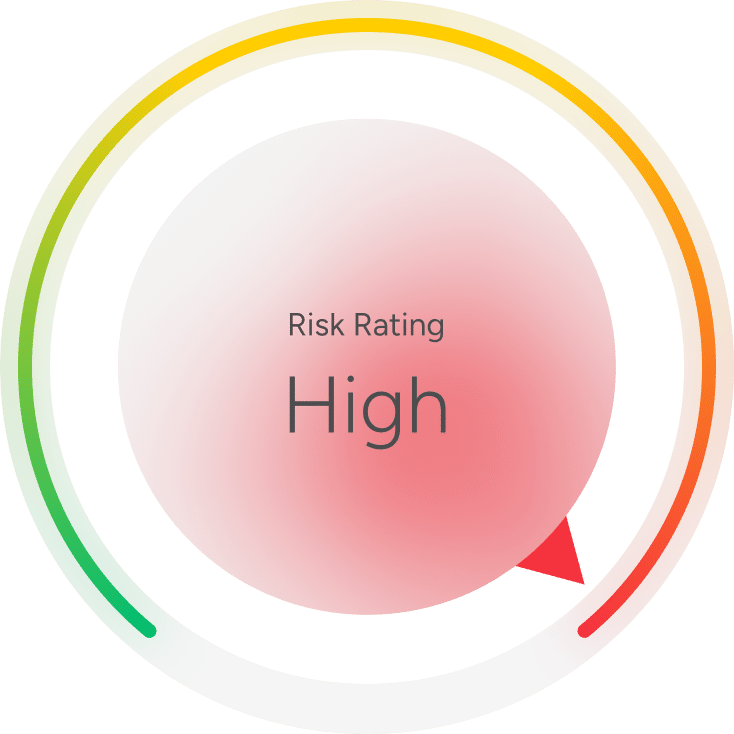
Credit Agricole has a “selective oil and gas” funding policy aligned with its net zero by 2050 goals (1). In November 2023, Texas placed Credit Agricole on its List of Financial Companies that Boycott Energy Companies list, which is based on ESG data, public commitments, and public pledges. These companies meet the Global Industrial Classification System (GICS) and Bloomberg Industrial Classification System (BICS) standard for being publicly traded financial companies in the financial sub-industries relevant to state oversight, scored higher than their peer group on the MSCI ESG Ratings Service Data, made public pledges to Climate Action 100 +, and made public pledges to either the Net Zero Banking Alliance or the Net Zero Asset Managers Initiative. However, in February 2026, a federal judge in Austin issued a ruling prohibiting enforcement of SB 13, the law that allowed the Texas Comptroller to create and maintain its Financial Companies that Boycott Energy Companies list. The court held that the law infringed upon First and Fourteenth Amendment protections. The plaintiffs argued that SB 13 unlawfully penalized financial firms for engaging in protected speech and investment decisions related to ESG policies, effectively compelling viewpoint-based certifications to do business with the state. The State of Texas, however, contended that SB 13 represented a lawful exercise of its authority to direct state investments and contracting decisions and to protect the state’s energy industry from what it characterized as discriminatory financial practices. In February 2026, the Texas Comptroller’s Office and the Texas Attorney General’s Office appealed the ruling to the Fifth Circuit Court of Appeals. The case remains pending (2)(3)(4)(5)(6). The company has stopped funding some oil and gas projects, however, it does not prohibit all investing in this industry nor has it terminated business relationships based on views or beliefs. Credit Agricole is a signatory of the Principles for Responsible Investment, incorporating ESG issues into investment analysis, decision-making, and other business practices (7)(8).
Criteria:
Charitable giving (including employee matching programs) policies or practices discriminate against charitable organizations based on views or religious beliefs.
Risk Level:
LowerRationale:
Credit Agricole does not discriminate against charitable organizations based on views or beliefs (1).
Criteria:
Employment policies fail to protect against viewpoint or other discrimination and/or are ideological in nature.
Risk Level:
LowerRationale:
Credit Agricole protects its employees against viewpoint discrimination (1).
Corporate Governance and Public Policy
Criteria:
Uses corporate reputation to support causes, organizations, or policies hostile to freedom of expression.
Risk Level:
HighRationale:
Credit Agricole is a member of the Net Zero Banking Alliance, which formerly required a commitment to net zero carbon emissions by 2050. However, in April 2025, the NZBA dropped that commitment as a requirement for membership but still expects members to align their climate targets with limiting global warming to below 2 degrees Celsius by 2100 (1)(2)(3)(4). Credit Agricole embraces ESG within its business operations, although these practices are in line with the French government’s requirements (5).
Criteria:
Uses corporate funds to advance ideological causes, organizations, or policies hostile to freedom of expression.
Risk Level:
LowerRationale:
Credit Agricole has not used corporate funds to advance ideological causes, organizations, or policies (1).
Related Companies

Banks, Diversified Financials

JPMorgan Chase

Banks, Diversified Financials
BMO Harris
Banks, Diversified Financials

Bank of America

Banks
PNC Financial Services Group
Banks, Diversified Financials
Wells Fargo

Banks
Fifth Third Bank (5/3 Bank)

Banks
U.S. Bancorp

Diversified Financials

Berkshire Hathaway

Banks
Truist Financial

Banks, Diversified Financials
Capital One Financial