
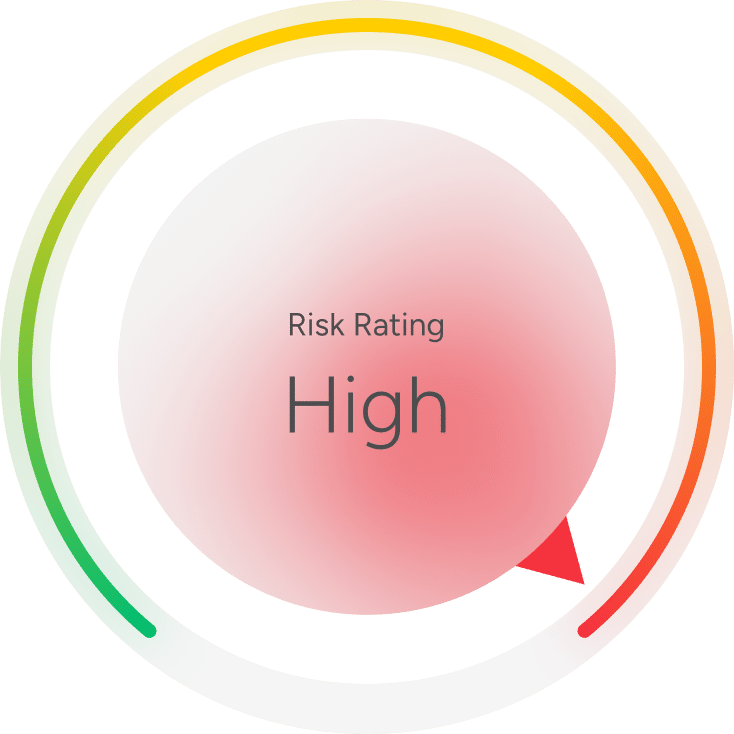
MSCI is High Risk. The company yields to political activism in shaping corporate governance, potentially alienating consumers, dividing employees, and harming shareholders. The company implements race and identity-based policies that replace merit, excellence, and integrity with preferential treatment and outcomes. The company embraces corporate initiatives that redirect its central focus from business goals to partisan policies and divisive issues. This approach fails to safeguard free exercise, free speech, and free enterprise.
Rating Criteria
| Criteria | Risk Level |
|---|---|
| Cancellations | High Risk |
| Discriminatory Philanthropy | Lower Risk |
| Employment Protection | High Risk |
Corporate Weaponization ⓘ
| Criteria | Risk Level |
|---|---|
| Advocacy Bias | High Risk |
| Funding | High Risk |
| Political Actions | Lower Risk |
Corporate Governance and Public Policy ⓘ
Latest Content
Your Company’s Charity List May Have a Political Screen Built in
Op-Ed
September 30, 2026
Millions of workers in America donate to charities through giving portals set up by their employers, confident that a full range of legitimate nonprofits is just a few clicks away. But this trust, unfortunately, is often misplaced. Many companies turn to third-party platforms such as Benevity, Bonterra and Groundswell to operate their charitable-giving programs. Benevity is the largest of these, processing billions of dollars in donations annually. Though it does not publish a full list of its clients, research by my organization, 1792 Exchange, has identified more than 200 Fortune 1000 companies with Benevity portals, representing millions of employees. Part of the appeal of these services is that experts have done the vetting work. So employees who use them to make donations reasonably assume that if a charity is excluded, it failed some objective test of legal compliance, financial transparency or organizational integrity. In the case of Benevity, however, that assumption is often incorrect. And the problem is not that companies outsource the work of vetting nonprofits to Benevity. The problem is in the process used to decide which organizations to include and which to leave out. The full article can be found in The Washington Post.
Carbon Measures: Measuring the Wrong Bottom Line
September 30, 2026
Carbon Measures represents a global coalition of businesses establishing a carbon emissions framework for company value chains which, ultimately, informs and restructures a business’s policies regarding emissions. The carbon accounting “framework” is no more than an extension of ESG integration into business practices, which puts business missional priority on the back burner while putting strain on suppliers. The coalition ultimately aims to influence policy: product-level carbon intensity standards that would “create markets in which businesses are rewarded for investing in low-carbon production.” That should concern businesses. Businesses are limited on resources: time and attention being absolute essentials for any business. When carbon becomes the primary measure, the business’ central mission automatically takes a back seat. Companies no longer fight for the quality of product that customers seek. When a customer comes to a business to purchase a product, they receive an abstract ideology purchased alongside a worthless product. Competition now lies in the order of the regulator. Specifically, to this coalition, “innovation, competition, and the power of the market” are vague empty platitudes, lacking in any specific details, for any sensible businessman to know that businesses are not built on whims or maybes.
The Companies That Left HRC’s Index Are Still Sponsoring Gender Ideology
Referenced
September 29, 2026
Several major corporations that publicly stepped back from DEI programs and the Human Rights Campaign’s Corporate Equality Index may not have retreated as far as headlines suggested. A new Blaze Media report, drawing on 1792 Exchange’s tracking, finds that Ford, Molson Coors, Target, and T-Mobile continued to bankroll LGBT activist events in 2026 even after signaling reform. The piece uses 1792 Exchange’s work on corporate DEI commitments, CEI participation, and ideological nonbusiness activities to show the gap between what these companies announced and what they still fund. Each of the four had signaled a change: Ford (2024) and Molson Coors (2024) said they would exit the CEI, and Target (2025) and T-Mobile (2025) announced they were ending DEI initiatives and index participation. Yet in 2026, Target was listed as a platinum sponsor of NYC Pride — whose youth programming included a rally “to demand protections for trans and queer youth” — along with Pride events in Los Angeles, Houston, San Francisco, Salt Lake City, and New Jersey. Molson Coors, through its Vizzy brand, sponsored Pride events in Miami Beach, Denver, and New Jersey; T-Mobile backed Pride events in Phoenix, Des Moines, and Philadelphia. Children appear to have been present at …
Inspire Investing Maps the Four-Year Reversal on Gender-Transition Care for Minors
Referenced
September 22, 2026
On August 11, 2026, the Centers for Medicare & Medicaid Services issued a first-of-its-kind final rule barring federal Medicaid and CHIP dollars from covering puberty blockers, cross-sex hormones, or surgeries for minors, effective October 13, 2026. A new analysis from Inspire Investing frames the rule as the capstone of a four-year reversal across American law, medicine, and corporate benefit plans. The piece, by Chris Hubbard with Tim Schwarzenberger, traces how a once-expanding consensus fractured, in the courts, in the medical literature, in Europe, and in corporate boardrooms, and why values-driven investors are now pressing companies on the issue. The Supreme Court’s June 2025 ruling in United States v. Skrmetti upheld state limits, leaving bans in roughly 27 states in force. A May 2025 HHS evidence review found the certainty of benefit “very low,” echoing England’s Cass Review. Corporate participation in the Human Rights Campaign’s Corporate Equality Index fell 65% in a single year, from 377 Fortune 500 companies to 131. 1792 Exchange has named 550-plus companies whose plans still cover these procedures for minor dependents and wrote to 568 companies in June urging them to exclude transgender drugs and surgeries for children. Inspire organized a coalition representing more than $100 …
Berkeley Study Finds No Financial Upside to Maintaining DEI
September 21, 2026
A new Berkeley study, Markets Do Not Punish Firms for Maintaining DEI, examines whether S&P 500 companies that maintained diversity, equity, and inclusion programs after the Trump administration’s January 2025 DEI executive order suffered financially compared with companies that rolled them back. The authors conclude that companies maintaining DEI performed “just as well” in stock-market returns and revenue, arguing that businesses can resist federal pressure on DEI without suffering significant financial consequences. But the inverse is equally important for corporate leaders: companies that rolled back DEI also performed just as well. The study found no statistically significant stock-market or revenue advantage from maintaining DEI across its various measures of corporate commitment. That finding is notable given longstanding claims that DEI improves financial performance. If particular DEI practices create shareholder value, companies should be able to identify which DEI practices increase shareholder value and at what point benefits begin to diminish. The study also captures only part of the risk environment. Its revenue analysis extends through July 2025, before several major federal enforcement actions involving allegedly discriminatory employment practices. IBM, Deloitte, and Accenture have since agreed to settlements totaling more than $63 million, while Nike has faced separate EEOC scrutiny. The Berkeley …