
SuMi Trust (Sumitomo Mitsui Trust Asset Management)
Diversified Financials
Japan
(Along with 38 other companies)
Sumitomo Mitsui Trust Asset Management (SuMi Trust) is Lower Risk. The company does not yield to political activism in shaping corporate governance, preventing initiatives that potentially alienate consumers, divide employees, and harm shareholders. The company elevates merit, excellence, and integrity ahead of race and identity-based policies. The company does not embrace corporate initiatives that redirect its central focus from business goals to partisan policies and divisive issues. This approach protects free exercise, free speech, and free enterprise.
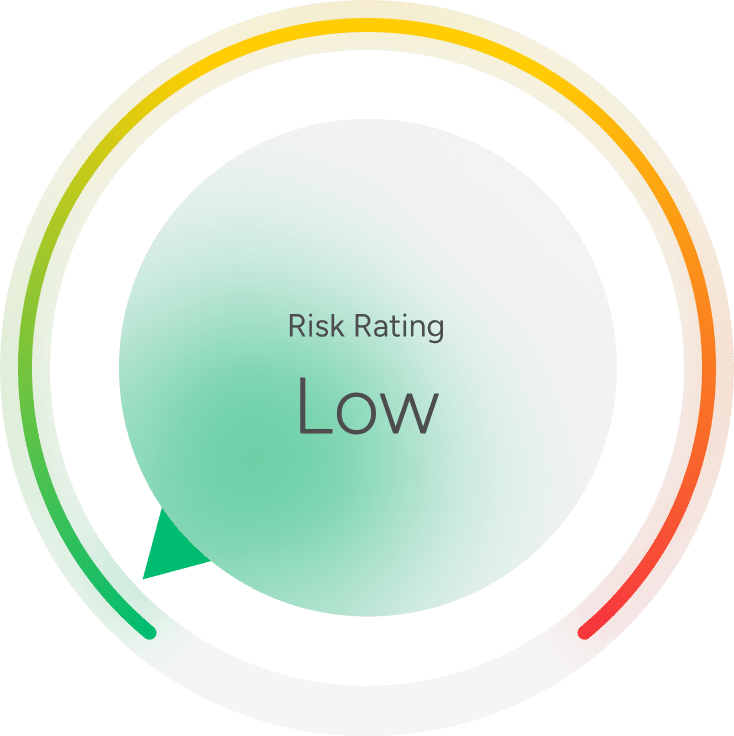
Rating Criteria
| Criteria | Risk Level |
|---|---|
| Cancellations | Medium Risk |
| Discriminatory Philanthropy | Lower Risk |
| Employment Protection | Medium Risk |
Corporate Weaponization ⓘ
| Criteria | Risk Level |
|---|---|
| Advocacy Bias | High Risk |
| Funding | Lower Risk |
| Political Actions | No Data |
Corporate Governance and Public Policy ⓘ
Latest Content
Sumitomo Mitsui Becomes First Japanese Bank to Exit Net Zero Banking Alliance
December 31, 2025
New Heritage Report Highlights Risks of Corporate Alignment With the Human Rights Campaign
October 30, 2026
Last week, The Heritage Foundation released a very important report detailing the risks companies face from affiliating with the Human Rights Campaign (HRC) and its Corporate Equality Index (CEI). The report provides valuable insight into the scope of HRC’s influence on corporate America and the organizations pushing back against it. Any institution concerned about the growing influence of modern gender ideology should familiarize itself with these findings. In short, the CEI pressures companies to incorporate gender ideology into nearly every aspect of corporate governance, including employee healthcare benefits, charitable giving, and marketing. Its influence likely contributed to the controversial Bud Light and Target marketing decisions in 2023. Fortune 500 CEI participation dropped 65% this year, marking its first significant decline. However, according to Inspire Investing and the 1792 Exchange, there are still 242 publicly traded companies with a Verified 100 on the 2026 CEI, indicating coverage of transgender medical interventions for minors. Furthermore, 40 companies remain corporate partners of the HRC, including T-Mobile. This raises questions about T-Mobile’s pledge last year to the Federal Communications Commission that its approach to external organizations is “driven by [its] desire to advance [its] core business objectives.” Another corporate partner is Dell Technologies, which …
Berkeley set out to defend DEI — and found no financial upside
Op-Ed
October 24, 2026
A new study meant to reassure corporations about diversity, equity, and inclusion programs has delivered an awkward finding for DEI advocates: Keeping the programs produced no measurable financial advantage over abandoning them. Researchers at the University of California in Berkeley compared S&P 500 companies that maintained DEI after President Trump’s January 2025 executive order with companies that scaled back their commitments. Firms that kept their programs performed about as well in stock returns and revenue as those that retreated. The authors and sympathetic news coverage emphasized the other half of that result: Companies could keep DEI without suffering a significant financial penalty. CBS News framed the finding that way, as did a subsequent Forbes analysis. But the conclusion cuts both ways. If companies paid no price for keeping DEI, they also paid no price for dropping it. For investors, that raises a straightforward question: Where is the financial return from DEI? The full article can be read in The Blaze.
How Companies Have Responded to the SPLC
October 22, 2026
Growing scrutiny of the Southern Poverty Law Center has sparked a broader conversation about how its “Hate List” is being used to blacklist mainstream advocacy organizations, particularly Christian and conservative nonprofits, from corporate charitable giving programs. This occurs most notably through Benevity who is used by hundreds of the Fortune 1000 companies. Below, we track how companies are responding to the public call to distance themselves from the SPLC and to stop using its designations as a filter in corporate giving. 9 Publicly removed the SPLC filter 5 Confirmed no politicized filters 5 Distanced themselves from the SPLC 2 Dodged or downplayed the filter 238 Have not addressed the SPLC filter 9 Publicly removed the SPLC filter BlackRock IWP Capital Salesforce Bowyer Research (Substack) Mastercard Bowyer Research (Substack) Texas Instruments Bowyer Research (Substack) AT&T Bowyer Research (Substack) NVIDIA Daily Signal Microsoft Daily Signal American Express Inspire Investing DoorDash Daily Signal 5 Confirmed they do not use politicized hate-group filters for charitable eligibility Meta Bowyer Research (Substack) Morgan Stanley Bowyer Research (Substack) Citi Citi Foundation statement McDonald’s Inspire Investing Philip Morris Bowyer Research (Substack) 5 Publicly distanced themselves from the SPLC Reported together in a single account of tech companies stepping …
1792 Exchange Marks One Year of Success in Campaign to End Corporate Reliance on SPLC’s “Hate List”
October 22, 2026
Following a year of research, corporate engagement, coalition building, and public accountability, major corporations have started to abandon SPLC-based charitable gift matching restrictions, charitable-giving processors have changed their practices, and hundreds of companies have faced calls for reform. October 17 marks one year of 1792 Exchange’s campaign to end corporate reliance on the Southern Poverty Law Center’s (SPLC) controversial “Hate List” to determine which nonprofit organizations are eligible for employee charitable giving and corporate matching programs. Working alongside Bowyer Research, Inspire Investing, The Heritage Foundation, Alliance Defending Freedom, and other coalition partners, 1792 Exchange has helped secure meaningful policy changes at major American corporations, raised national awareness of discriminatory charitable-giving practices, and pressed major charitable giving processors and hundreds of companies to review their reliance on the SPLC’s “Hate List” data. The campaign began with original research by 1792 Exchange into Benevity, one of the nation’s largest corporate charitable-giving platforms, which processes billions of dollars in donations annually. The research helped uncover how Benevity uses SPLC designations to exclude mainstream conservative, Christian, pro-family, and other advocacy organizations from corporate charitable gift matching programs, often without employees or corporate leadership understanding the criteria behind those restrictions. 1792 Exchange identified more than 200 Fortune …