Hilti
Companies that offer so-called transgender healthcare for their employees and covered dependents.

Rating Overview
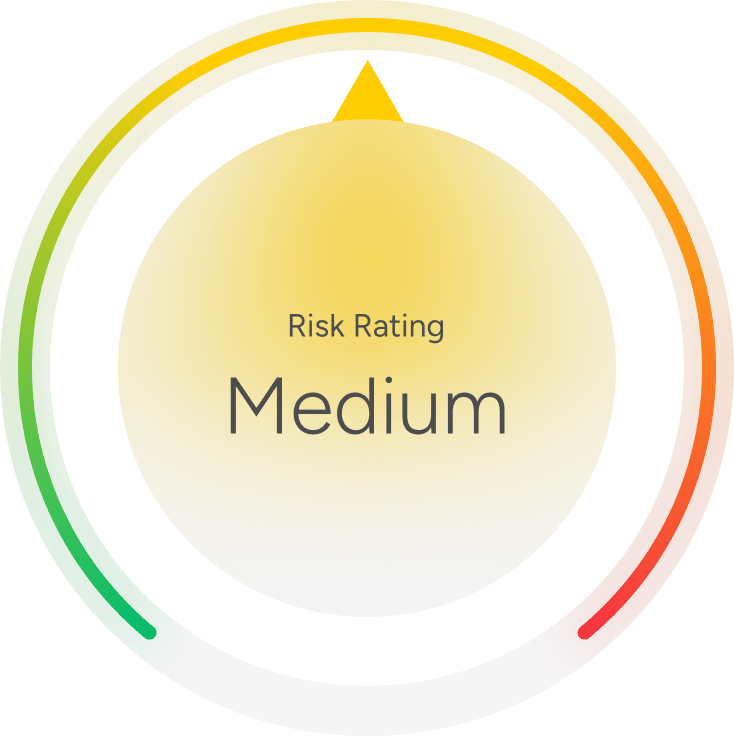
Rating Criteria
Rating Criteria Detail
Corporate Weaponization
Criteria:
Has canceled customers, suppliers, or vendors due to their political views or religious beliefs OR corporately boycotts, divests, or sanctions regions, people groups, or industries.
Risk Level:
MediumRationale:
Hilti received a score of 65 on the 2025 Corporate Equality Index (CEI) from the Human Rights Campaign (HRC), a political stakeholder group. The company recruits employees based on sexual identity issues. The company discriminates against vendors that do not promote divisive sex and gender policies, indicating it prioritizes sexual issues over merit (1)(2). The company integrates ESG into its business practices. From its 2025 Annual Report: “Decarbonizing supply chain: Procurement is shifted towards suppliers with low-emission practices and strong business partnerships are established with suppliers to ensure that raw materials have a reduced carbon footprint” (3). Hilti promotes divisive sex and gender policies. Its Code of Conduct for Suppliers and Third-Party Intermediaries requires international vendors to include sexual orientation and gender identity in their nondiscrimination policy (4). However, the company has not publicly canceled customers, suppliers, or vendors based on political views or religious beliefs (5).
Criteria:
Charitable giving (including employee matching programs) policies or practices discriminate against charitable organizations based on views or religious beliefs.
Risk Level:
HighRationale:
Hilti’s HRC 2025 CEI rating indicates the company will not donate to non-religious charities unless they embrace controversial sexual identity policies (1)(2). The company will not give to “sectarian or denominational religious organizations” (3). Hilti’s charitable giving focus areas are “education and science, culture and the arts, as well as social issues” (4).
Criteria:
Employment policies fail to protect against viewpoint or other discrimination and/or are ideological in nature.
Risk Level:
HighRationale:
Hilti offers DEI training to its employees (1). The company appears to prioritize diversity over merit in its hiring. From its 2023 Sustainability Report: “We are dedicated to increasing diversity within our workforce. We want to be able to measure progress and have a clear ambition to increase our representation of women in our workforce by 1 to 2 percentage points year-on-year” (2). Hilti was a signatory of the Gender & Diversity KPI Alliance, appearing to prioritize diversity over merit in its business structure through the establishment of gender and racial targets for its leadership composition and its support of DEI in its hiring and promotions (3)(4). The company’s Region Head and CEO Mike McGowan and board member Avi Kahn signed Catalyst’s Champions for Change pledge, indicating its support of DEI in its leadership composition through the establishment of gender and racial targets (5)(6). Hilti does not provide viewpoint protections for its employees (7).
Corporate Governance and Public Policy
Criteria:
Uses corporate reputation to support causes, organizations, or policies hostile to freedom of expression.
Risk Level:
HighRationale:
Hilti is aligned with the Paris Agreement, which entails a commitment to net zero carbon emissions by 2050 (1). The company is committed to net zero emissions by 2050 (2). Hilti supports DEI within its business practices. From its DEI webpage: “Driven by our caring and performance-oriented culture, we integrate DEI into everything we do as our ongoing commitment” (3). The company supports ESG within its business practices. From its 2025 Annual Report: “Hilti has significantly intensified its sustainability efforts to meet the rising expectations of stakeholders” (4).
Criteria:
Uses corporate funds to advance ideological causes, organizations, or policies hostile to freedom of expression.
Risk Level:
MediumRationale:
Hilti’s HRC 2025 CEI rating indicates the company covers transgender related costs for its employees and their children, including paid short-term leave, puberty blockers, cross-sex hormones, chest surgeries, genital surgeries, medical visits and lab monitoring, travel and lodging. By allowing a political stakeholder group to dictate operations, the company increases health care costs and risks dividing employees, alienating customers and harming shareholders (1)(2). Otherwise, there are no publicly known cases of the company using corporate funds to advance ideological causes, organizations, or policies (3).
Related Companies
Capital Goods

RTX

Capital Goods

Lockheed Martin
Capital Goods
Northrop Grumman
Capital Goods
Boeing

Capital Goods, Household and Personal Products
3M
Capital Goods
Honeywell International
Capital Goods
General Dynamics
Capital Goods
L3Harris Technologies
Capital Goods
Huntington Ingalls Industries (HII)
Capital Goods
Fluor Corporation