
HSBC Holdings
Companies who scored 100% on the 2023-2024 Corporate Equality Index.
Companies who scored 100% on the 2025 Corporate Equality Index.
Companies that scored a 100 on the 2026 Corporate Equality Index.
Company is a corporate partner of Ashoka, a global network of entrepreneurs focused on widespread, systemic social and environmental change
These companies are committed to leveraging shareholder or investor assets for net-zero emission goals and climate ambitions for GFANZ, Climate Action 100+, CERES, PCAF, UN PRI, NZLA, FIT, or HSCP.
Companies who are/were a corporate partner of the The Trevor Project, an organization that advocates for controversial sex and gender ideology, including for children.
Companies that offer so-called transgender healthcare for their employees and covered dependents.

Rating Overview
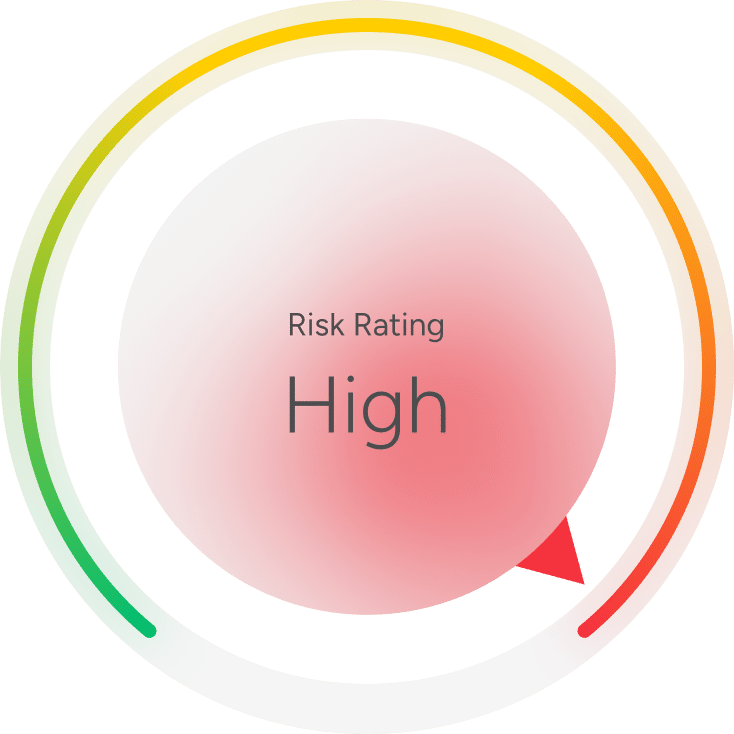
Rating Criteria
Rating Criteria Detail
Corporate Weaponization
Criteria:
Has canceled customers, suppliers, or vendors due to their political views or religious beliefs OR corporately boycotts, divests, or sanctions regions, people groups, or industries.
Risk Level:
HighRationale:
In April 2024, West Virginia placed HSBC on its Restricted Financial Institutions List for its “boycott of energy companies” according to its ESG policies and publicly available statements. The West Virginia State Treasurer will remove HSBC from the list “if the institution demonstrates that it has ceased all activity that boycotts energy companies according to West Virginia Code §§12-1C-1” (1)(2)(3). In March 2023, Texas placed HSBC on its List of Financial Companies that Boycott Energy Companies list, which is based on ESG data, public commitments, and public pledges. These companies meet the Global Industrial Classification System (GICS) and Bloomberg Industrial Classification System (BICS) standard for being publicly traded financial companies in the financial sub-industries relevant to state oversight, scored higher than their peer group on the MSCI ESG Ratings Service Data, made public pledges to Climate Action 100 +, and made public pledges to either the Net Zero Banking Alliance or the Net Zero Asset Managers Initiative. However, in February 2026, a federal judge in Austin issued a ruling prohibiting enforcement of SB 13, the law that allowed the Texas Comptroller to create and maintain its Financial Companies that Boycott Energy Companies list. The court held that the law infringed upon First and Fourteenth Amendment protections. The plaintiffs argued that SB 13 unlawfully penalized financial firms for engaging in protected speech and investment decisions related to ESG policies, effectively compelling viewpoint-based certifications to do business with the state. The State of Texas, however, contended that SB 13 represented a lawful exercise of its authority to direct state investments and contracting decisions and to protect the state’s energy industry from what it characterized as discriminatory financial practices. In February 2026, the Texas Comptroller’s Office and the Texas Attorney General’s Office appealed the ruling to the Fifth Circuit Court of Appeals. The case remains pending (4)(5)(6)(7)(8). In August 2022, Texas placed one or more funds from HSBC Asset Management on its List of Financial Companies that Boycott Energy Companies list. The Comptroller’s office examined publicly available data, including licensed information from Bloomberg, LSEG Workspace, and MSCI, to identify U.S.-based funds that appear to restrict or prohibit investments in energy companies. However, in February 2026, a federal judge in Austin issued a ruling prohibiting enforcement of SB 13, the law that allowed the Texas Comptroller to create and maintain its Financial Companies that Boycott Energy Companies list. The court held that the law infringed upon First and Fourteenth Amendment protections. The plaintiffs argued that SB 13 unlawfully penalized financial firms for engaging in protected speech and investment decisions related to ESG policies, effectively compelling viewpoint-based certifications to do business with the state. The State of Texas, however, contended that SB 13 represented a lawful exercise of its authority to direct state investments and contracting decisions and to protect the state’s energy industry from what it characterized as discriminatory financial practices. In February 2026, the Texas Comptroller’s Office and the Texas Attorney General’s Office appealed the ruling to the Fifth Circuit Court of Appeals. The case remains pending (9)(10)(11)(12)(13). The company suspended a senior executive, the global head of responsible investing, after he criticized the bank’s policy on incorporating environmental risks into investing. He later quit, saying, “cancel culture destroys wealth and progress,” and went on to start his own endeavor (14)(15). HSBC received a score of 100 on the 2026 Corporate Equality Index (CEI) from the Human Rights Campaign (HRC), a political stakeholder group. The company recruits employees based on sexual identity issues. The company discriminates against vendors that do not promote divisive sex and gender policies, indicating it prioritizes sexual issues over merit (16)(17)(18). The company received a score of 100 on the 2025 Corporate Equality Index (CEI) from the Human Rights Campaign (HRC), a political stakeholder group. The company recruits employees based on sexual identity issues. The company discriminates against vendors that do not promote divisive sex and gender policies, indicating it prioritizes sexual issues over merit (19)(20).
Criteria:
Charitable giving (including employee matching programs) policies or practices discriminate against charitable organizations based on views or religious beliefs.
Risk Level:
LowerRationale:
HSBC’s HRC 2026 CEI rating indicates the company will not donate to non-religious charities unless they embrace controversial sexual identity policies (1)(2)(3). HSBC’s HRC 2025 CEI rating indicates the company will not donate to non-religious charities unless they embrace controversial sexual identity policies (4)(5). The company does not appear to discriminate against charitable organizations based on views or beliefs. HSBC charitable giving focus areas are “Future Skills (Employability and Financial Literacy) programs for marginalized communities, as well as on programs that address climate change” (6).
Criteria:
Employment policies fail to protect against viewpoint or other discrimination and/or are ideological in nature.
Risk Level:
HighRationale:
HSBC’s HRC 2026 CEI rating indicates the company forces employees to attend at least one, controversial training on gender identity, sexual orientation, transgender issues, and divisive racial ideology. The company provides gender transition guidelines for its employees and a specific benefits guide with a comprehensive explanation of transgender services funded by the company (1)(2)(3). HSBC’s HRC 2025 CEI rating indicates the company forces employees to attend multiple, controversial trainings on gender identity, sexual orientation, transgender issues, and divisive racial ideology. The company provides gender transition guidelines for its employees and a specific benefits guide with a comprehensive explanation of transgender services funded by the company (4)(5). The company provides employees training on allyship and unconscious bias (6). The company does not provide viewpoint protections for its employees (7).
Corporate Governance and Public Policy
Criteria:
Uses corporate reputation to support causes, organizations, or policies hostile to freedom of expression.
Risk Level:
HighRationale:
HSBC’s HRC 2026 CEI rating indicates the company potentially agrees to allow a controversial stakeholder group focused on sexual identity issues to dictate marketing or advertising strategy. By doing so, the company risks dividing employees, alienating customers and harming shareholders (1)(2)(3). HSBC’s HRC 2025 CEI rating indicates the company agrees to allow a controversial stakeholder group focused on sexual identity issues to dictate marketing or advertising strategy. By doing so, the company risks dividing employees, alienating customers and harming shareholders (4)(5). HSBC opposed the Florida Parental Rights in Education Act, which would prohibit teaching gender identity and sexual orientation to kids in K-3rd grade (6). The company opposed various state and local legislation intended to protect parental rights, girls’ sports, bathroom facilities, and gendered spaces (7). The company opposed legislation in Iowa intended to protect parental rights, girls’ sports, bathroom facilities, and gendered spaces (8). The company’s CEO, signed the CEO Action for Diversity & Inclusion pledge, which includes a commitment to promote DEI through bias education training in the workplace (9)(10). The company was part of the Net Zero Asset Managers initiative prior to NZAM’s suspension in 2025. Its membership indicated a commitment to carbon neutrality with its investments by 2050 (11)(12)(13). The company is a member of the Paris Aligned Asset Owners, committed to net zero carbon emissions by 2050 (14)(15). The company is a member of the Partnership for Carbon Accounting Financials, committed to net zero carbon emissions by 2050 (16)(17)(18). The company is a member of Climate Action 100+, committed to carbon neutrality by 2050 (19)(20). The company was a member of the Net Zero Banking Alliance, committed to net zero carbon emissions by 2050. However, it withdrew its membership in July 2025, stating “we have decided to withdraw from the NZBA as we work towards updating and implementing our own net zero transition plan” (21)(22)(23).
Criteria:
Uses corporate funds to advance ideological causes, organizations, or policies hostile to freedom of expression.
Risk Level:
HighRationale:
HSBC’s HRC 2026 CEI rating indicates the company covers transgender related costs for its employees and their children, including paid short-term leave, puberty blockers, cross-sex hormones, chest surgeries, genital surgeries, medical visits, lab monitoring, and mental health benefits. The company also covers at least five of the following services: reconstructive hair removal, cosmetic hair removal, tracheal shave or reduction, facial surgeries, voice modification surgery, voice modification therapy, lipoplasty or filling for body masculinization or feminization, and travel and lodging expenses. Additionally, the company has potentially pledged philanthropic support of at least one organization or event that promotes sex and gender ideology. By allowing a political stakeholder group to dictate operations, the company increases health care costs and risks dividing employees, alienating customers and harming shareholders (1)(2)(3)(4). HSBC’s HRC 2025 CEI rating indicates the company covers transgender related costs for its employees and their children, including paid short-term leave, puberty blockers, cross-sex hormones, chest surgeries, genital surgeries, medical visits and lab monitoring, travel and lodging. Additionally, the company has pledged philanthropic support of at least one organization or event that promotes sex and gender ideology. By allowing a political stakeholder group to dictate operations, the company increases health care costs and risks dividing employees, alienating customers and harming shareholders (5)(6). The company was a Bronze Tier corporate sponsor of the Trevor Project, an organization that advocates for controversial sex and gender ideology, including “gender transition” drugs and surgeries for minors, through legislation, litigation, advertising, and PR campaigns. The organization also hosts online chatrooms that allow adults to communicate with minors as young as 13 about sexually explicit topics. Adults in these chatrooms have encouraged minors to adopt transgender identities and withhold this information from their parents (7)(8)(9)(10)(11). The company has previously been a platinum sponsor of the World Pride event in New York City (12). The company is a Silver sponsor of Out and Equal (13). The company is a corporate partner of Ashoka, a global network of entrepreneurs focused on widespread, systemic social and environmental change (14). Otherwise, there are no publicly known cases of the company using corporate funds to advance ideological causes, organizations, or policies (15).
Criteria:
Uses corporate political actions and/or financial contributions for ideological, non-business purposes.
Risk Level:
HighRationale:
HSBC‘s HRC 2025 CEI rating indicates the company publicly advocated for controversial sex and gender ideology through local, state or federal legislation or initiatives. By allowing a political stakeholder group to dictate operations, the company risks dividing employees, alienating customers and harming shareholders (1)(2). The company has not used its PAC donations or lobbying for ideological purposes (3)(4)(5).
Related Companies
Banks, Diversified Financials

JPMorgan Chase

Banks, Diversified Financials
BMO Harris
Banks, Diversified Financials

Bank of America

Banks
PNC Financial Services Group

Banks, Diversified Financials
Wells Fargo

Banks
Fifth Third Bank (5/3 Bank)

Banks
U.S. Bancorp

Diversified Financials

Berkshire Hathaway

Banks
Truist Financial

Banks, Diversified Financials
Capital One Financial