Kaiser Permanente
Companies provide a benefit package for employees which covers travel/lodging costs for an abortion.
These companies are committed to leveraging shareholder or investor assets for net-zero emission goals and climate ambitions for GFANZ, Climate Action 100+, CERES, PCAF, UN PRI, NZLA, FIT, or HSCP.
Companies who are/were a corporate partner of the The Trevor Project, an organization that advocates for controversial sex and gender ideology, including for children.
Companies that offer so-called transgender healthcare for their employees and covered dependents.


Rating Overview
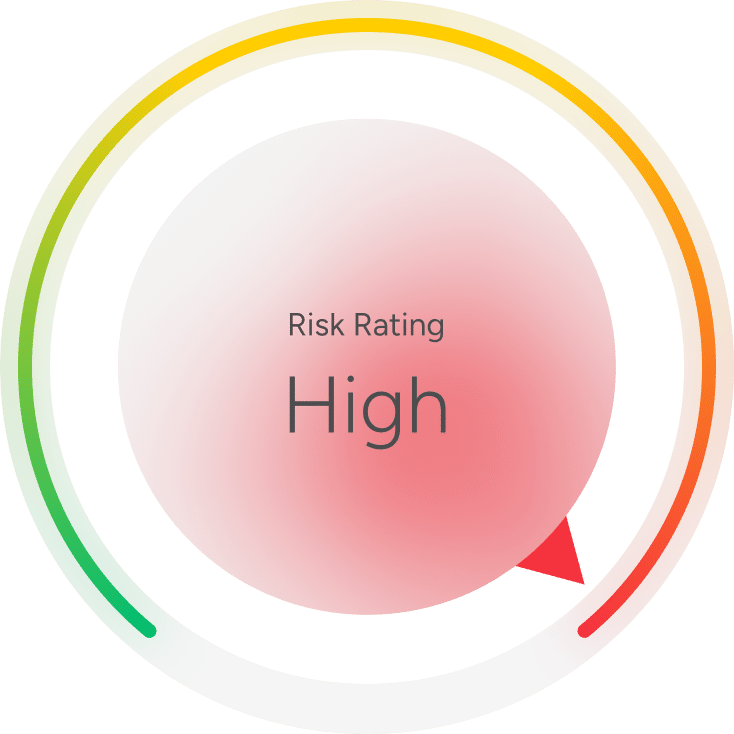
Rating Criteria
Rating Criteria Detail
Corporate Weaponization
Criteria:
Has canceled customers, suppliers, or vendors due to their political views or religious beliefs OR corporately boycotts, divests, or sanctions regions, people groups, or industries.
Risk Level:
HighRationale:
Kaiser Permanente placed over 2,200 employees on unpaid leave for refusing to be vaccinated for COVID-19, rejecting requests for religious exemptions and threatening termination for those who did not get vaccinated by the deadline of December 2021 (1). Kaiser Permanente received a score of 90 on the 2025 Corporate Equality Index (CEI) from the Human Rights Campaign (HRC), a political stakeholder group. The company recruits employees based on sexual identity issues. The company discriminates against vendors that do not promote divisive sex and gender policies, indicating it prioritizes sexual issues over merit (2)(3). The company integrates ESG into its business practices. From its 2024 Sustainability & Responsibility Report: “Environmental, social, and governance integration: Reinforcing our mission while aligning to the marketplace by integrating environmental, social, and governance criteria across our portfolio, including more than 10 years of renewable energy investment” (4). Kaiser Permanente integrates DEI into its supply chain. From its Vendor Code of Conduct: “Kaiser Permanente expects its Vendors to mirror our commitment to diversity by providing diverse businesses — defined as businesses who maintain a valid certification as being minority, woman, veteran, disabled, or LGBTQ+ owned — the maximum opportunity to participate in contracts in support of our business and in alignment with federal subcontracting requirements” (5).
Criteria:
Charitable giving (including employee matching programs) policies or practices discriminate against charitable organizations based on views or religious beliefs.
Risk Level:
HighRationale:
Kaiser Permanente’s HRC 2025 CEI rating indicates the company will not donate to non-religious charities unless they embrace controversial sexual identity policies (1)(2). The company’s charitable contributions guidelines require that organizations abide by its nondiscrimination policy, including on the basis of sexual orientation and gender identity, thereby excluding some religious charities (3).
Criteria:
Employment policies fail to protect against viewpoint or other discrimination and/or are ideological in nature.
Risk Level:
HighRationale:
Kaiser Permanente’s HRC 2025 CEI rating indicates the company provides gender transition guidelines for its employees (1)(2). The company offers “Belong @ KP” training to its employees, which includes inclusion and equity modules (3). Kaiser Permanente appears to prioritize diversity over merit in its supply chain. From its 2022 Sustainability and Responsibility Report: “Along with other members of the Healthcare Anchor Network, Kaiser Permanente is a signatory to the Impact Purchasing Commitment to improve supplier diversity, environmentally sustainable sourcing, and procurement-driven job creation. The signatories of the commitment pledge to collectively increase purchasing by at least $1 billion by 2025 with local, employee-owned businesses and businesses owned
by women or people of color” (4). Kaiser Permanente does not provide viewpoint protections for its employees (5).
Corporate Governance and Public Policy
Criteria:
Uses corporate reputation to support causes, organizations, or policies hostile to freedom of expression.
Risk Level:
HighRationale:
Kaiser Permanente is an advocate of pro-abortion policy, referring to the procedure as “comprehensive healthcare” (1)(2). The company’s HRC 2025 CEI rating indicates the company agrees to allow a controversial stakeholder group focused on sexual identity issues to dictate marketing or advertising strategy. By doing so, the company risks dividing employees, alienating customers and harming shareholders (3)(4). Kaiser Permanente’s CEO, Greg A. Adams, is a member of the Business Roundtable, which supports stakeholder capitalism over traditional shareholder obligations (5). The company’s CEO, Greg A. Adams, signed the CEO Action for Diversity & Inclusion pledge, which includes a commitment to promote DEI through bias education training in the workplace, strategize on DEI programs/initiatives with other signatories, and engage boards of directors when developing and evaluating DEI strategies (6)(7). Kaiser Permanente signed an open letter endorsing the Equality Act, a contentious proposal to amend the 1964 Civil Rights Act by adding sexual orientation and so-called gender identity as protected categories. The legislation would, among other implications, grant biological men access to women-only spaces such as sports teams and public restrooms, and compel healthcare providers to deliver sex-denying healthcare (8). The company was a signatory of the Health Sector Climate Pledge, committing itself to achieve net zero emissions by 2050. Signatories were expected to develop and release a climate resilience plan and appoint a corporate executive to oversee its implementation (9). Kaiser Permanente supports ESG within its business practices. From its 2021 Annual Report: “We continue active engagement with our investment partners on ESG elements, and ESG dimensions are increasingly present in investment decision-making, which is done solely in the interest of participants and beneficiaries” (10). The company supports DEI within its business practices. From its 2024 Sustainability & Responsibility Report: “That’s why
we cultivate an inclusive, diverse, and equitable culture within our organization: It makes us better able to deliver high-quality health care services to everyone” (11). In 2019, Kaiser Permanente ran an ad featuring a “Drag Queen Story Hour” attended by children. The company has published statements voicing support for transgender ideology and related medical treatments (12).
Criteria:
Uses corporate funds to advance ideological causes, organizations, or policies hostile to freedom of expression.
Risk Level:
HighRationale:
Kaiser Permanente provides a benefits package for employees that covers travel/lodging costs for an abortion (1)(2). The company allegedly donates to Planned Parenthood (3). Kaiser Permanente’s HRC 2025 CEI rating indicates the company covers transgender related costs for its employees and their children, including paid short-term leave, puberty blockers, cross-sex hormones, chest surgeries, genital surgeries, medical visits and lab monitoring, travel and lodging. Additionally, the company has pledged philanthropic support of at least one organization or event that promotes sex and gender ideology. By allowing a political stakeholder group to dictate operations, the company increases health care costs and risks dividing employees, alienating customers and harming shareholders (4)(5). The company was a Champion Tier corporate sponsor of the Trevor Project, an organization that advocates for controversial sex and gender ideology, including “gender transition” drugs and surgeries for minors, through legislation, litigation, advertising, and PR campaigns. The organization also hosts online chatrooms that allow adults to communicate with minors as young as 13 about sexually explicit topics. Adults in these chatrooms have encouraged minors to adopt transgender identities and withhold this information from their parents (6)(7)(8)(9)(10). Kaiser Permanente has donated $26,002,500.00 to Black Lives Matter and related causes (11)(12)(13)(14). The company is a member of the MCCA, indicating its focus on recruiting, retaining, and promoting employees based on race (15)(16). Kaiser Permanente is a corporate partner of the National LGBT Chamber of Commerce (17). The company dedicated $25 million in grant funding to nonprofits working to “dismantle discriminatory institutional practices, structures, and public policies” (18). Kaiser Permanente sponsored WorldPride 2025 (19). The company sponsored the following Pride events in 2026: Atlanta Pride, Denver Pride, Seattle Pride, and Capital Pride Alliance (20)(21)(22)(23). The company sponsors LGBTQ Pride events around the country, including Pride St. Louis Grand Pride Parade, the San Francisco Gay Pride Parade, Seattle Pride, Pride Beaverton, the Oakland Pride Parade, and the Santa Cruz Pride Parade, among others (24)(25)(26)(27)(28). Kaiser Permanente opened an LGBTQ Pride Medical Center in Washington D.C. (29)(30). The company has 4 medical centers which also received a perfect score on the 2024 HRC Healthcare Equality Index. This indicates, among other things, the medical centers “offer transgender-inclusive healthcare benefits to their employees”, which includes coverage for hormone replacement therapy, puberty blockers (even for minors), and gender reassignment surgeries (31)(32)(33). Otherwise, there are no publicly known cases of Kaiser Permanente using corporate funds to advance ideological causes, organizations, or policies (34).
Criteria:
Uses corporate political actions and/or financial contributions for ideological, non-business purposes.
Risk Level:
HighRationale:
Kaiser Permanente’s HRC 2025 CEI rating indicates the company publicly advocated for controversial sex and gender ideology through local, state or federal legislation or initiatives. By allowing a political stakeholder group to dictate operations, the company risks dividing employees, alienating customers and harming shareholders (1)(2). Kaiser Permanente does not operate a PAC at this time and has not used its lobbying for ideological purposes (3)(4)(5).
Related Companies

Health Care Equipment and Services

UnitedHealth Group

Health Care Equipment and Services, Insurance
Cigna

Health Care Equipment and Services
Humana

Health Care Equipment and Services
Cencora

Food and Staples Retailing, Health Care Equipment and Services
CVS Health

Food and Staples Retailing, Health Care Equipment and Services
Walgreens Boots Alliance

Health Care Equipment and Services
McKesson

Health Care Equipment and Services

Aetna (Meritain Health)

Health Care Equipment and Services
Cardinal Health

Health Care Equipment and Services
Merck