
Shein
Companies who are/were a corporate partner of the The Trevor Project, an organization that advocates for controversial sex and gender ideology, including for children.
Rating Overview
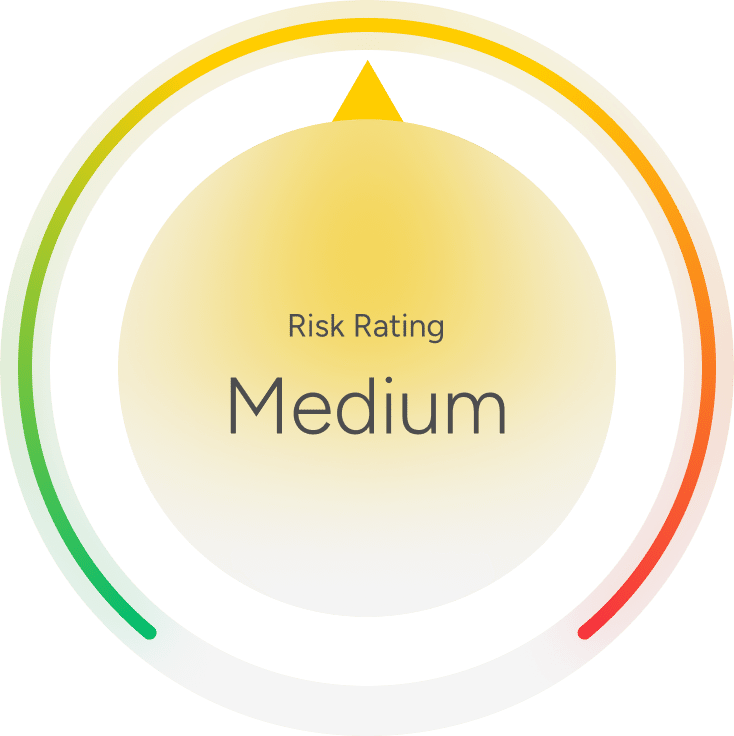
Rating Criteria
Rating Criteria Detail
Corporate Weaponization
Criteria:
Has canceled customers, suppliers, or vendors due to their political views or religious beliefs OR corporately boycotts, divests, or sanctions regions, people groups, or industries.
Risk Level:
MediumRationale:
Shein has been under scrutiny for possible human rights violations and slave labor in its supply chain by the Select Committee on the Chinese Communist Party (1)(2). Shein prohibits slave labor in its code of conduct, and denies that it has slave labor or human rights violations in its supply chain (3)(4). However, according to the Business and Human Rights Resource Center: “Unlike 54% of companies in the sector, Shein does not disclose a human rights risk assessment with comprehensive sources used and stakeholders consulted to identify high-risk locations, processes, or materials in its supply chains” and “A lack of visibility and transparency over supply chains – particularly those in locations designated as at high-risk of forced labour by the US Department of Labor… indicates a potential lack of accountability and poses barriers to being able to “identify and assess” risks, in line with human rights due diligence standards and hard law. Shein has faced allegations of sourcing cotton from farms linked to state-imposed forced labour, including through its key involvement at a large-scale industrial park in Qingyuan” (5)(6). The company integrates ESG into its business practices. From its 2025 Sustainability and Social Impact Report: the company seeks to “reduce absolute Scope 1 and 2 GHG emissions and absolute Scope 3 GHG emissions by 90% by 2050” (7). The company promotes divisive sex and gender policies. Its Supplier Responsibility Standards requires international vendors to include sexual orientation and gender identity in their nondiscrimination policy (8). However, the company has not publicly canceled customers, suppliers, or vendors based on political views or religious beliefs (9).
Criteria:
Charitable giving (including employee matching programs) policies or practices discriminate against charitable organizations based on views or religious beliefs.
Risk Level:
LowerRationale:
Shein does not appear to discriminate against charitable organizations based on views or beliefs. The company’s charitable giving focus areas are “improving lives in communities, protecting biodiversity, and advancing sustainable change (1).
Criteria:
Employment policies fail to protect against viewpoint or other discrimination and/or are ideological in nature.
Risk Level:
LowerRationale:
Shein appears to prioritize diversity over merit in its hiring, promotions, and mentorship program. From its Diversity, Equity and Inclusion Statement: “We are committed to maintaining a diverse and inclusive business…This commitment is applied in our hiring, promotion, and transfer decisions and in all aspects of the workplace, including training and mentorship opportunities” (1). The company protects its employees against viewpoint discrimination (2).
Corporate Governance and Public Policy
Criteria:
Uses corporate reputation to support causes, organizations, or policies hostile to freedom of expression.
Risk Level:
HighRationale:
Shein is a signatory to the Race To Zero campaign, which seeks to rally its participants to “take rigorous and immediate action to collectively halve emissions by 2030 and reach Net Zero by 2050 as the latest” (1)(2). The company supports DEI within its business practices. From its Diversity, Equity and Inclusion Statement: “We are committed to maintaining a diverse and inclusive business… Inclusion is both the key to our position in the marketplace and the key to creating an innovative and productive workforce” (3). Shein supports ESG within its business practices. From its 2025 Sustainability and Social Impact Report: The Board Sustainability Committee’s “specific responsibilities include, among others: Providing guidance on SHEIN’s overall ESG strategy and management, and ensuring our sustainability commitments are integrated into business operations” (4).
Criteria:
Uses corporate funds to advance ideological causes, organizations, or policies hostile to freedom of expression.
Risk Level:
HighRationale:
Shein was a corporate sponsor of the Trevor Project, an organization that advocates for controversial sex and gender ideology, including “gender transition” drugs and surgeries for minors, through legislation, litigation, advertising, and PR campaigns. The organization also hosts online chatrooms that allow adults to communicate with minors as young as 13 about sexually explicit topics. Adults in these chatrooms have encouraged minors to adopt transgender identities and withhold this information from their parents (1)(2)(3)(4)(5). The company donated a total of $50,000 to the NAACP Legal Defense and Education Fund, and $75,000 each to the Loveland Foundation and the Color of Change (6)(7). Otherwise, the company has not used corporate funds to advance ideological causes, organizations, or policies (8).
Related Companies

Cloud & Data Storage, Retailing, Software and Services

Amazon

Food and Staples Retailing, Retailing
Walmart
Food and Staples Retailing, Retailing

Costco Wholesale
Retailing
Home Depot
Retailing
Lowe’s

Food and Staples Retailing, Retailing
Target

Retailing
Best Buy
Retailing
Dollar General

Retailing
TJX

Retailing
Dollar Tree