Volkswagen
Companies who were members of the Global Alliance for Responsible Media, which subjectively demonetized advertisements and suppressed content to stifle mainstream perspectives online
Companies that offer so-called transgender healthcare for their employees and covered dependents.
Rating Overview
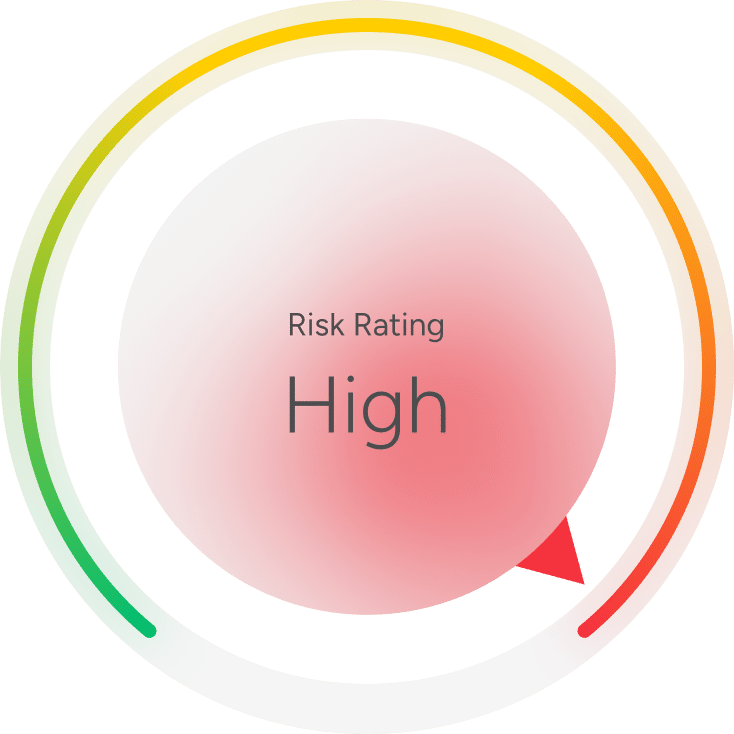
Rating Criteria
Rating Criteria Detail
Corporate Weaponization
Criteria:
Has canceled customers, suppliers, or vendors due to their political views or religious beliefs OR corporately boycotts, divests, or sanctions regions, people groups, or industries.
Risk Level:
MediumRationale:
Volkswagen received a score of 50 on the 2025 Corporate Equality Index (CEI) from the Human Rights Campaign (HRC), a political stakeholder group. The company recruits employees based on sexual identity issues. The company discriminates against vendors that do not promote divisive sex and gender policies, indicating it prioritizes sexual issues over merit (1)(2). Volkswagen was a member of the Global Alliance for Responsible Media, which demonetized and suppressed content that it deemed to spread “hate speech” or “misinformation”, discuss “debated social issues in a negative or partisan context”, or “vilif[y]” individuals based on sexual orientation and gender identity. These arbitrary guidelines were used to censor mainstream perspectives online (3)(4)(5). The company integrates ESG policies into all its business strategies. From its Responsible Supply Chain System page: “We want our entire Group to become net carbon neutral by 2050” (6)(7). From its 2025 Sustainability Report: “In order to create a direct incentive for compliance with diversity targets, the Group management’s remuneration is linked to the diversity index.” (8). Volkswagen promotes divisive sex and gender policies. Its Code of Conduct for Business Partner[s] requires international vendors to include sexual orientation and gender identity in their nondiscrimination policy (9). However, the company has not publicly canceled customers, suppliers, or vendors based on political views or religious beliefs (10)(11).
Criteria:
Charitable giving (including employee matching programs) policies or practices discriminate against charitable organizations based on views or religious beliefs.
Risk Level:
HighRationale:
Volkswagen‘s HRC 2025 CEI rating indicates the company will not donate to non-religious charities unless they embrace controversial sexual identity policies (1)(2). The company will not match employee donations to “Churches, Synagogues, Mosques, Temples ñ or other religious organizations, programs or causes” (3)(4)(5).
Criteria:
Employment policies fail to protect against viewpoint or other discrimination and/or are ideological in nature.
Risk Level:
HighRationale:
Volkswagen appears to prioritize diversity over merit in its business structure through the establishment of gender and racial targets for its leadership composition. From its 2025 Sustainability Report “We are particularly focused on increasing the proportion of women at all levels of the workforce” and “Diversity is also important to us with regard to culture, origin, and native language. Every year, we use the diversity index to measure the degree of internationalization in the top management of the Volkswagen Group, and our goal is to continuously increase this. For 2025, it was planned to increase the diversity index to 154. This target value for 2025 was exceeded with a score of 168.” (1). The company appears to prioritize diversity over merit in its leadership composition. From its Diversity & Inclusion page: “The Volkswagen Group has been setting goals to increase diversity in management with corresponding key figures in the Diversity Index since 2017.” (2). The company requires its employees to take DEI training (3). In 2021, Volkswagen pushed mandatory “Gender and Sexuality” training on its employees (4). The company protects its employees against viewpoint discrimination (5).
Corporate Governance and Public Policy
Criteria:
Uses corporate reputation to support causes, organizations, or policies hostile to freedom of expression.
Risk Level:
HighRationale:
Audi is a member of the Charta der Viefalt (German Diversity Charter) and the UnternehmensForum, which both engage in DEI advocacy (1). As part of its Pride celebrations, US Soccer partnered with Volkswagen to support The You Can Play Project (2). Volkswagen is aligned with the Paris Agreement, which entails a commitment to net zero carbon emissions by 2050 (3). The company supports DEI within its business practices. From its Diversity & Inclusion page: “This commitment to Diversity & Inclusion (D&I) forms a central foundation for the economic success of our company, and is firmly anchored in both our Strategy and the ten-point program” (4). Volkswagen supports DEI within its business practices. From its ESG-Performance & Reporting page: “The Volkswagen Group’s stakeholders (e.g., investors, employees, customers and NGOs) have high expectations of the company’s ESG performance, including in action areas such as decarbonization and integrity” (5). From its 2025 Sustainability Report the company employs “diversity experts” (6). From its 2025 Sustainability Report: “…matters such as diversity and inclusion are to be promoted.” (7). Volkswagen stated in their 2025 Sustainability Report: “Volkswagen AG encourages all managers to discuss the topic of unconscious bias in order to foster an unbiased workplace and establish processes that support equal opportunities” (8). Scout Motors, a subsidiary of Volkswagen, pledged to invest $300 million into a supplier facility for parts and batteries distribution (9)(10).
Criteria:
Uses corporate funds to advance ideological causes, organizations, or policies hostile to freedom of expression.
Risk Level:
HighRationale:
Volkswagen’s HRC 2025 CEI rating indicates the company covers transgender related costs for its employees and their children, including paid short-term leave, puberty blockers, cross-sex hormones, chest surgeries, genital surgeries, medical visits and lab monitoring, travel and lodging. By allowing a political stakeholder group to dictate operations, the company increases health care costs and risks dividing employees, alienating customers and harming shareholders (1)(2). Volkswagen was a member of the Global Alliance for Responsible Media and is a brass sponsor of Out & Equal (3)(4)(5)(6). Volkswagen Ireland is a Platinum sponsor of the Dublin Pride Parade (7). The Audi Environmental Foundation supports One Young World, which engages in ESG and DEI advocacy (8)(9). Otherwise, there are no publicly known cases of the company using corporate funds to advance ideological causes, organizations, or policies (10).
Criteria:
Uses corporate political actions and/or financial contributions for ideological, non-business purposes.
Risk Level:
HighRelated Companies
Automobiles and Components
Ford Motor Co.

Automobiles and Components

General Motors
Automobiles and Components
Tesla
Automobiles and Components
Lear Corporation
Automobiles and Components
Toyota
Automobiles and Components
Honda
Automobiles and Components
Hyundai
Automobiles and Components
Interstate Batteries
Automobiles and Components
O’Reilly Auto Parts

Automobiles and Components, Insurance
AAA