
Earlier this summer, as the 2025-2026 proxy season came to a close, leading progressive shareholder group As You Sow intentionally misled readers about the success of anti-DEI proposals. As You Sow suggested that voting results on anti-DEI shareholder proposals at 43 companies this season, including Disney, Costco, Visa, and Apple, proved that 99% of investors are opposed to anti-DEI measures.
As You Sow claimed that the universal failure of these proposals sends an “unmistakable message” to corporate boards that DEI is a “financial asset” that directors need to prioritize for the needs of the company, labelling anti-DEI efforts as a “political threat.”
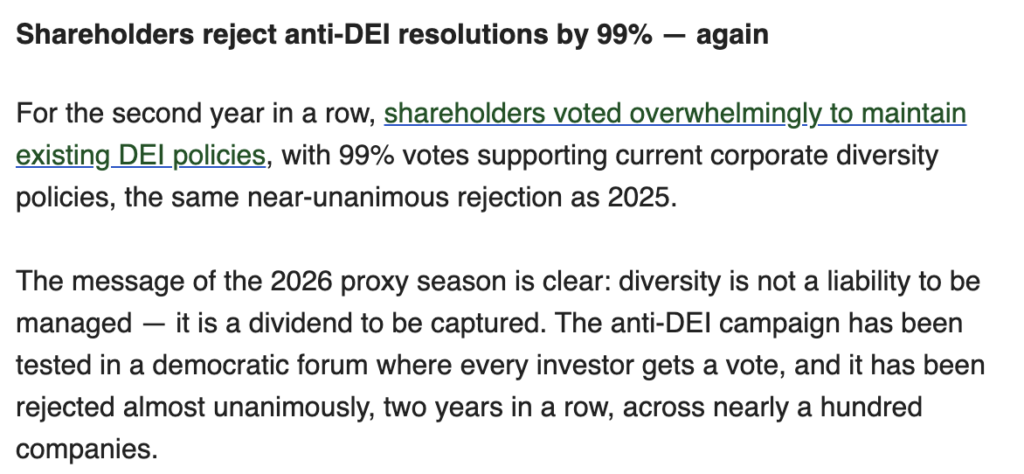
A 0-43 record for anti-DEI proposals does appear striking at first. However, no ESG proposals won majority support in the 2025-2026 proxy season, which includes pro-DEI proposals at 0-10 with an average support around 13%.
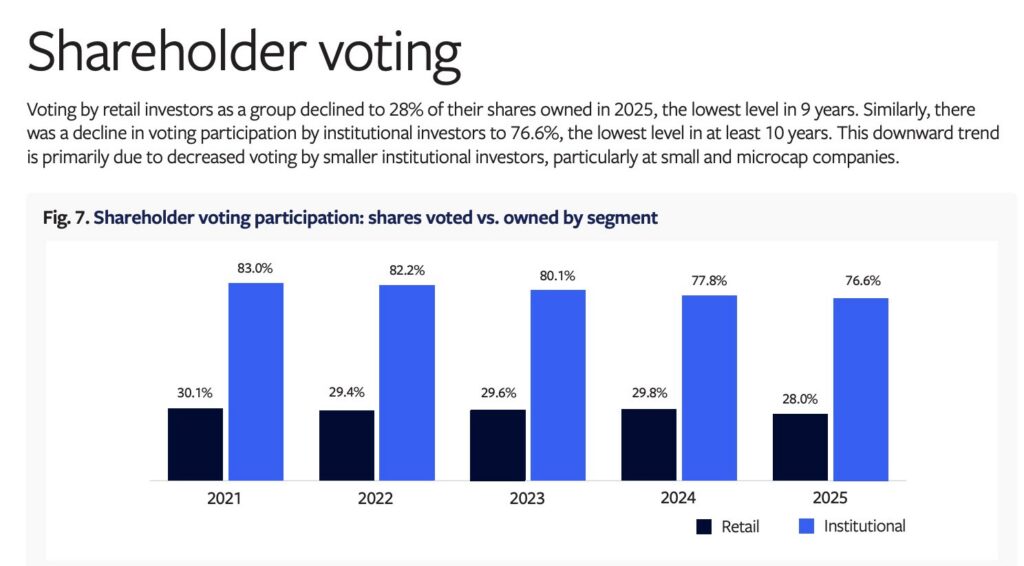
According to Broadridge’s 2025 ProxyPulse report, voting by retail investors “declined to 28% of their shares owned in 2025,” which is the lowest level of participation in 9 years. Low retail investor participation is the historical norm, as proxy votes are disproportionately cast by large institutions on their behalf, not by individual investors. As You Sow knows this.
Furthermore, for As You Sow to suggest that “[d]iversity is not a liability to be managed, it is a dividend to be captured” when companies like IBM and Nike have recently faced intense scrutiny for their DEI practices is absurd.
To learn more about the Myth of Shareholder Democracy, consider reading Stefan Padfield’s piece titled: Proxy Voting and the Myth About Shareholder Democracy.