
Bausch Health
Health Care Equipment and Services
Bausch + Lomb, Medicis Pharmaceuticals, OraPharma, Salix Pharmaceuticals, Solta Medical
Canada
(Along with 66 other companies)
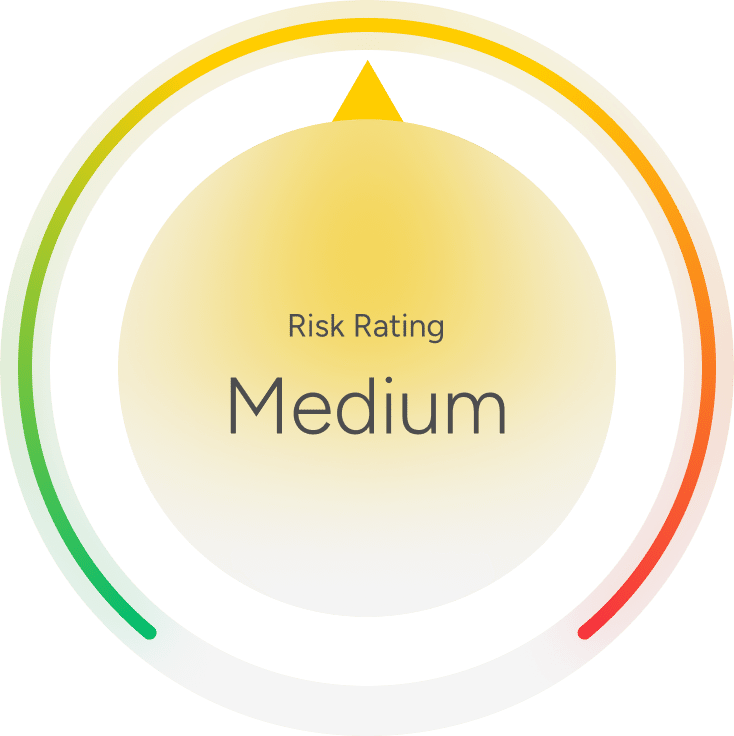
Bausch Health is Medium Risk. The company often yields to political activism in shaping corporate governance, potentially alienating consumers, dividing employees, and harming shareholders. The company elevates merit, excellence, and integrity ahead of race and identity-based policies. Bausch Health occasionally embraces corporate initiatives that redirect its central focus from business goals to partisan policies and divisive issues at times. This approach fails to safeguard free exercise, free speech, and free enterprise.
Rating Criteria
| Criteria | Risk Level |
|---|---|
| Cancellations | Medium Risk |
| Discriminatory Philanthropy | Lower Risk |
| Employment Protection | High Risk |
Corporate Weaponization ⓘ
| Criteria | Risk Level |
|---|---|
| Advocacy Bias | Lower Risk |
| Funding | Medium Risk |
| Political Actions | No Data |
Corporate Governance and Public Policy ⓘ
Latest Content
America First Legal Files Lawsuit Against Bausch + Lomb for Racial Discrimination in Board Appointments
January 5, 2026
How Companies Have Responded to the SPLC
October 22, 2026
Growing scrutiny of the Southern Poverty Law Center has sparked a broader conversation about how its “Hate List” is being used to blacklist mainstream advocacy organizations, particularly Christian and conservative nonprofits, from corporate charitable giving programs. This occurs most notably through Benevity who is used by hundreds of the Fortune 1000 companies. Below, we track how companies are responding to the public call to distance themselves from the SPLC and to stop using its designations as a filter in corporate giving. 9 Publicly removed the SPLC filter 5 Confirmed no politicized filters 5 Distanced themselves from the SPLC 2 Dodged or downplayed the filter 238 Have not addressed the SPLC filter 9 Publicly removed the SPLC filter BlackRock IWP Capital Salesforce Bowyer Research (Substack) Mastercard Bowyer Research (Substack) Texas Instruments Bowyer Research (Substack) AT&T Bowyer Research (Substack) NVIDIA Daily Signal Microsoft Daily Signal American Express Inspire Investing DoorDash Daily Signal 5 Confirmed they do not use politicized hate-group filters for charitable eligibility Meta Bowyer Research (Substack) Morgan Stanley Bowyer Research (Substack) Citi Citi Foundation statement McDonald’s Inspire Investing Philip Morris Bowyer Research (Substack) 5 Publicly distanced themselves from the SPLC Reported together in a single account of tech companies stepping …
1792 Exchange Marks One Year of Success in Campaign to End Corporate Reliance on SPLC’s “Hate List”
October 22, 2026
Following a year of research, corporate engagement, coalition building, and public accountability, major corporations have started to abandon SPLC-based charitable gift matching restrictions, charitable-giving processors have changed their practices, and hundreds of companies have faced calls for reform. October 17 marks one year of 1792 Exchange’s campaign to end corporate reliance on the Southern Poverty Law Center’s (SPLC) controversial “Hate List” to determine which nonprofit organizations are eligible for employee charitable giving and corporate matching programs. Working alongside Bowyer Research, Inspire Investing, The Heritage Foundation, Alliance Defending Freedom, and other coalition partners, 1792 Exchange has helped secure meaningful policy changes at major American corporations, raised national awareness of discriminatory charitable-giving practices, and pressed major charitable giving processors and hundreds of companies to review their reliance on the SPLC’s “Hate List” data. The campaign began with original research by 1792 Exchange into Benevity, one of the nation’s largest corporate charitable-giving platforms, which processes billions of dollars in donations annually. The research helped uncover how Benevity uses SPLC designations to exclude mainstream conservative, Christian, pro-family, and other advocacy organizations from corporate charitable gift matching programs, often without employees or corporate leadership understanding the criteria behind those restrictions. 1792 Exchange identified more than 200 Fortune …
Corporate Gender Ideology Has Borders After All
Op-Ed
October 20, 2026
“Pride has no borders.” That was the slogan. Then the map showed up. In June 2022, Amazon told American consumers it was going to “Pride Out Loud.” The same month, Amazon.ae hid more than 150 search terms in the United Arab Emirates (UAE) — among them “LGBTQ,” “Pride,” and “transgender flag.” Even so, the company said it remained committed to the cause. The usual defense writes itself: different markets, different audiences, different campaigns. That is what the marketing department says when it wants credit for a conviction it can’t carry through customs. Ordinary localization changes a menu, clothing colors, or a commercial. The difference is that these companies are changing the moral script they demand that American employees, customers and shareholders treat as non-negotiable. In the U.S. the script is a cause. In the Gulf, it is a liability. A cause you will not own anywhere on the map is not a cause. It is a costume. The pattern is not subtle. And Amazon is not a one-off. The full article can be read in Daily Caller.
Dustin DeVito on Timcast IRL: Benevity, the SPLC and the American Company
Podcast
October 20, 2026
Dustin DeVito, 1792 Exchange’s Director of Research, joined Timcast IRL to discuss his Washington Post piece on the political screen inside corporate gift matching. He explained how Benevity, the platform behind many corporate gift-match programs, relied on the Southern Poverty Law Center’s hate list, what happened to the archived evidence after the piece ran, and how companies are responding. He also covered the origin of the 1792 name and the launch of the American Company. The hate list behind your company’s gift matchDeVito describes how companies exposed in 2024 pledged to stop funding controversial non-business causes. Our Back to Business Tracker followed through on those pledges, and companies like Walmart and Lowe’s shifted to six-figure grants for hurricane relief in North Carolina. The hate list behind your company’s gift match DeVito explains how more than 200 Fortune 1000 companies use Benevity to vet the charities they match. Benevity’s internal vetting document shows its list builds on the SPLC’s hate list, which includes Turning Point USA, Alliance Defending Freedom, Focus on the Family, Do No Harm and Moms for Liberty. The SPLC’s credibility problemDeVito explains that the SPLC, now under federal indictment, is accused of funding the extremist groups it claims to counter. He points to the 2012 shooting at the …