Bank of New York Mellon
Companies who scored 100% on the 2023-2024 Corporate Equality Index.
Companies who scored 100% on the 2025 Corporate Equality Index.
Companies provide a benefit package for employees which covers travel/lodging costs for an abortion.
Companies who signed the Business Roundtable 2019 Stakeholder Capitalism statement
The biggest 1000 U.S. companies by revenue according to form 10-K.
Companies who have given money to the SPLC through corporate gifts or employee matching, supporting a controversial organization that claims to combat extremism while funding extremist groups and labeling mainstream political and religious views as “hateful"
Companies that offer so-called transgender healthcare for their employees and covered dependents.

Rating Overview
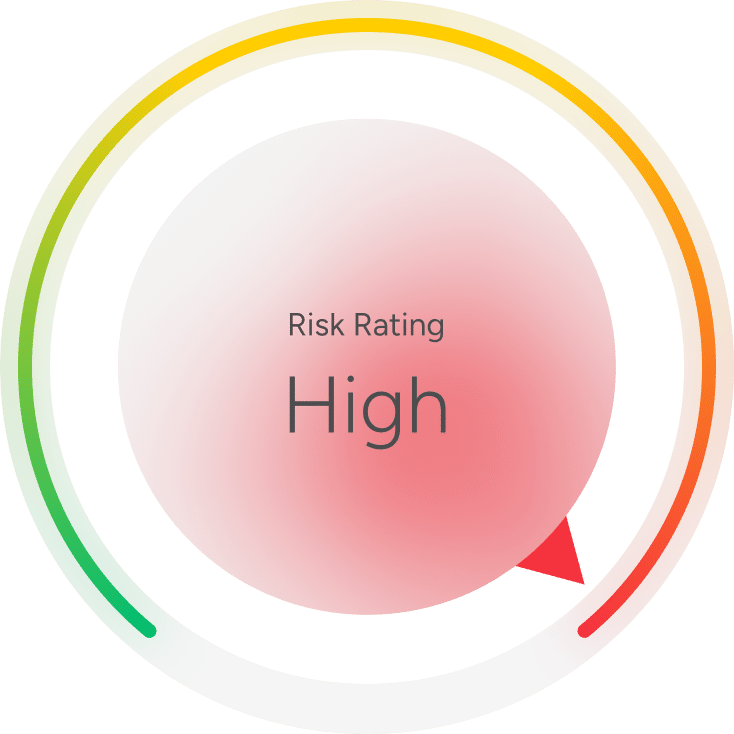
Rating Criteria
Rating Criteria Detail
Corporate Weaponization
Criteria:
Has canceled customers, suppliers, or vendors due to their political views or religious beliefs OR corporately boycotts, divests, or sanctions regions, people groups, or industries.
Risk Level:
HighRationale:
In August 2022, Texas placed one or more funds from BNY Mellon on its List of Financial Companies that Boycott Energy Companies list. The Comptroller’s office examined publicly available data, including licensed information from Bloomberg, LSEG Workspace, and MSCI, to identify U.S.-based funds that appear to restrict or prohibit investments in energy companies. However, in February 2026, a federal judge in Austin issued a ruling prohibiting enforcement of SB 13, the law that allowed the Texas Comptroller to create and maintain its Financial Companies that Boycott Energy Companies list. The court held that the law infringed upon First and Fourteenth Amendment protections. The plaintiffs argued that SB 13 unlawfully penalized financial firms for engaging in protected speech and investment decisions related to ESG policies, effectively compelling viewpoint-based certifications to do business with the state. The State of Texas, however, contended that SB 13 represented a lawful exercise of its authority to direct state investments and contracting decisions and to protect the state’s energy industry from what it characterized as discriminatory financial practices. In February 2026, the Texas Comptroller’s Office and the Texas Attorney General’s Office appealed the ruling to the Fifth Circuit Court of Appeals. The case remains pending (1)(2)(3)(4)(5). Additionally, a BNY Mellon recruiter claims she was fired because she publicly said that her religious beliefs prohibited her from supporting the LGBTQ community outside the workplace. BNY Mellon, claims she was fired for unprofessional conduct after an altercation (6). The dispute ended in a settlement in October 2021 (7). The company received a score of 100 on the 2025 Corporate Equality Index (CEI) from the Human Rights Campaign (HRC), a political stakeholder group. The company recruits employees based on sexual identity issues. The company discriminates against vendors that do not promote divisive sex and gender policies, indicating it prioritizes sexual issues over merit (8)(9). BNY Mellon received a letter from over two dozen states warning it to “to take five concrete actions to demonstrate their ‘commitment to a fiduciary model grounded in financial integrity, not political advocacy’” (10). The company integrates ESG into its business practices. From its Supplier Code of Conduct: “We expect our suppliers to publish environmental goals on relevant metrics including GHG emissions, and report regularly on those targets” (11). BNY Mellon promotes divisive sex and gender policies. Its Supplier Code of Conduct require[s] international vendors to include gender identity, gender expression, and gender reassignment in their nondiscrimination policy (12).
Criteria:
Charitable giving (including employee matching programs) policies or practices discriminate against charitable organizations based on views or religious beliefs.
Risk Level:
HighRationale:
BNY Mellon‘s HRC 2025 CEI rating indicates the company will not donate to non-religious charities unless they embrace controversial sexual identity policies (1)(2). BNY Mellon maintains a Groundswell portal. Groundswell historically used the SPLC “Hate List” to determine nonprofit eligibility but discontinued platform-level restrictions in 2024. Individual corporate clients determine their own charitable restrictions, and BNY Mellon has not publicly clarified whether it relies on the SPLC’s Hate List to vet charities (3)(4)(5).
Criteria:
Employment policies fail to protect against viewpoint or other discrimination and/or are ideological in nature.
Risk Level:
HighRationale:
BNY Mellon’s HRC 2025 CEI rating indicates the company forces employees to attend multiple, controversial trainings on gender identity, sexual orientation, transgender issues, and divisive racial ideology. The company provides gender transition guidelines for its employees and a specific benefits guide with a comprehensive explanation of transgender services funded by the company (1)(2). The company offers allyship training to its employees (3). BNY Mellon is an affirmative action employer. “BNY is an Equal Employment Opportunity/Affirmative Action Employer” (4)(5)(6). The company does not provide viewpoint protections for its employees (7).
Corporate Governance and Public Policy
Criteria:
Uses corporate reputation to support causes, organizations, or policies hostile to freedom of expression.
Risk Level:
HighRationale:
BNY Mellon’s HRC 2025 CEI rating indicates the company agrees to allow a controversial stakeholder group focused on sexual identity issues to dictate marketing or advertising strategy. By doing so, the company risks dividing employees, alienating customers and harming shareholders (1)(2). The CEO of BNY Mellon, Robin Vince, is a member of the Business Roundtable and Former CEO Charles Scharf signed its 2019 Statement on the Purpose of a Corporation, which promotes stakeholder capitalism over traditional obligations to shareholders (3)(4). The company is a member of Climate Action 100+, committed to carbon neutrality by 2050 (5). BNY Mellon’s former CEO, Thomas Gibbons, signed the CEO Action for Diversity & Inclusion pledge, which includes a commitment to promote DEI through bias education training in the workplace (6)(7). The company supports ESG within its business practices. From its 2024 Sustainability Report: “Setting and executing evolved Environmental Sustainability goals that support BNY’s global Location Strategy and ongoing AI journey” (8). BNY Mellon announced that it will match the government’s $1,000 contributions to Trump Accounts for the children of its employees (9)(10)(11).
Criteria:
Uses corporate funds to advance ideological causes, organizations, or policies hostile to freedom of expression.
Risk Level:
HighRationale:
BNY Mellon provides a benefits package for employees that covers travel/lodging costs for an abortion and transgender medical procedures for covered employees and dependents, including children (1)(2)(3). The company‘s HRC 2025 CEI rating indicates the company covers transgender related costs for its employees and their children, including paid short-term leave, puberty blockers, cross-sex hormones, chest surgeries, genital surgeries, medical visits and lab monitoring, travel and lodging. Additionally, the company has pledged philanthropic support of at least one organization or event that promotes sex and gender ideology. By allowing a political stakeholder group to dictate operations, the company increases health care costs and risks dividing employees, alienating customers and harming shareholders (4)(5). The company allegedly funded a Planned Parenthood event (6). It is a Bronze sponsor of Out & Equal and a member of LGBT Great (7)(8). BNY Mellon donated $1,400,000 to “the National Network for Safe Communities at John Jay College, NAACP Legal Defense and Educational Fund (LDF), Southern Poverty Law Center, and Vera Institute of Justice” (9)(10). The company donated $309,520 to various organizations: “The bank funds the Ali Forney Center, the Hudson Pride Center, and StartOut. BNY Mellon is a corporate member of LGBT Great and a Silver Partner of The Center. From 2017 to 2023 (more recent data was not available at the time of writing), the BNY Mellon Charitable Foundation granted $13k to GLAAD, $10k to the LGBT Legacy Project, $52,250 to The Trevor Project, $5,270 to the Human Rights Campaign, $164k to the Pacific Pride Foundation, and $65k to the South Coast LGBTQ Network” (11)(12)(13). BNY donated $428,500 to the SPLC, a controversial organization that claims to combat extremism while labeling mainstream political and religious views as “hateful.” The SPLC has faced a number of controversies over the years, including its April 2026 indictment by a federal grand jury for wire fraud, making false statements to a federally insured bank, and money laundering connected to its alleged funneling of more than $3 million to individuals associated with various violent extremist groups (14)(15)(16)(17)(18). Otherwise, there are no publicly known cases of the company using corporate funds to advance ideological causes, organizations, or policies (19). BNY Mellon is a sponsor of America250, a bipartisan initiative created to commemorate the 250th anniversary of the United States in 2026 (20).
Criteria:
Uses corporate political actions and/or financial contributions for ideological, non-business purposes.
Risk Level:
HighRationale:
BNY Mellon’s HRC 2025 CEI rating indicates the company publicly advocated for controversial sex and gender ideology through local, state or federal legislation or initiatives. By allowing a political stakeholder group to dictate operations, the company risks dividing employees, alienating customers and harming shareholders (1)(2). The company has not used its PAC donations or lobbying for ideological purposes (3)(4)(5).
Related Resources
Related Companies
Banks, Diversified Financials

JPMorgan Chase

Banks, Diversified Financials
BMO Harris
Banks, Diversified Financials

Bank of America
Banks, Diversified Financials
Wells Fargo

Diversified Financials

Berkshire Hathaway
Banks, Diversified Financials
Capital One Financial

Diversified Financials
American Express
Banks, Diversified Financials
Morgan Stanley

Diversified Financials
Mastercard

Diversified Financials
Visa