Goldman Sachs Group
Companies who scored 100% on the 2023-2024 Corporate Equality Index.
Companies who scored 100% on the 2025 Corporate Equality Index.
Companies provide a benefit package for employees which covers travel/lodging costs for an abortion.
Companies who signed the Business Roundtable 2019 Stakeholder Capitalism statement
These companies are committed to leveraging shareholder or investor assets for net-zero emission goals and climate ambitions for GFANZ, Climate Action 100+, CERES, PCAF, UN PRI, NZLA, FIT, or HSCP.
The biggest 1000 U.S. companies by revenue according to form 10-K.
Companies who were members of the Global Alliance for Responsible Media, which subjectively demonetized advertisements and suppressed content to stifle mainstream perspectives online
Companies who are members of the OneTen Coalition, appearing to prioritize diversity over merit in their business practices
Companies who have given money to the SPLC through corporate gifts or employee matching, supporting a controversial organization that claims to combat extremism while funding extremist groups and labeling mainstream political and religious views as “hateful"
Companies who are/were a corporate partner of the The Trevor Project, an organization that advocates for controversial sex and gender ideology, including for children.
Companies that offer so-called transgender healthcare for their employees and covered dependents.



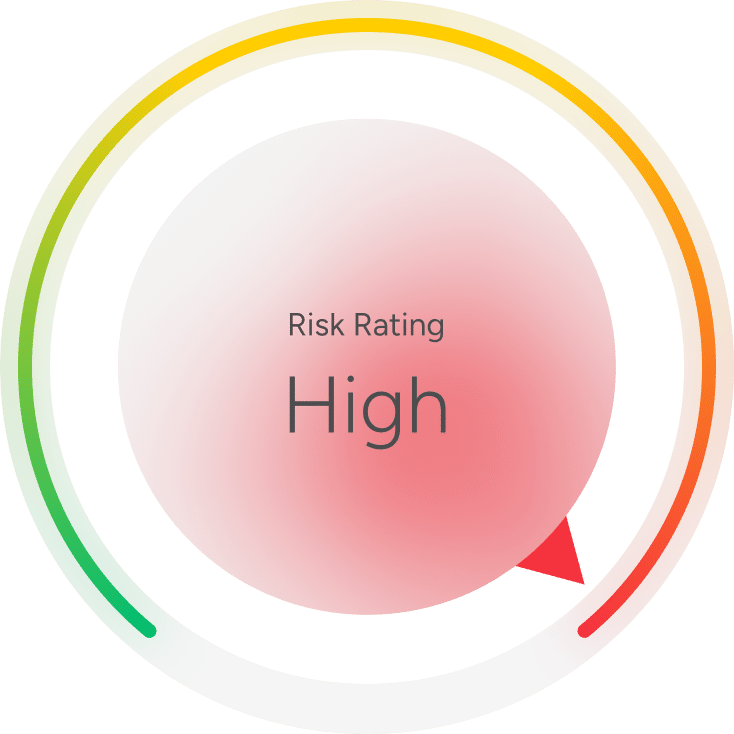
Rating Overview
Rating Criteria
Rating Criteria Detail
Corporate Weaponization
Criteria:
Has canceled customers, suppliers, or vendors due to their political views or religious beliefs OR corporately boycotts, divests, or sanctions regions, people groups, or industries.
Risk Level:
HighRationale:
In July 2022, West Virginia placed Goldman Sachs on its Restricted Financial Institutions List for its “boycott of energy companies” according to its ESG policies and publicly available statements. The West Virginia State Treasurer will remove Goldman Sachs from the list “if the institution demonstrates that it has ceased all activity that boycotts energy companies according to West Virginia Code §§12-1C-1” (1)(2). In August 2022, Texas placed one or more funds from Goldman Sachs Asset Management on its List of Financial Companies that Boycott Energy Companies list. The Comptroller’s office examined publicly available data, including licensed information from Bloomberg, LSEG Workspace, and MSCI, to identify U.S.-based funds that appear to restrict or prohibit investments in energy companies. However, in February 2026, a federal judge in Austin issued a ruling prohibiting enforcement of SB 13, the law that allowed the Texas Comptroller to create and maintain its Financial Companies that Boycott Energy Companies list. The court held that the law infringed upon First and Fourteenth Amendment protections. The plaintiffs argued that SB 13 unlawfully penalized financial firms for engaging in protected speech and investment decisions related to ESG policies, effectively compelling viewpoint-based certifications to do business with the state. The State of Texas, however, contended that SB 13 represented a lawful exercise of its authority to direct state investments and contracting decisions and to protect the state’s energy industry from what it characterized as discriminatory financial practices. In February 2026, the Texas Comptroller’s Office and the Texas Attorney General’s Office appealed the ruling to the Fifth Circuit Court of Appeals. The case remains pending (3)(4)(5)(6)(7). The company was banned under Texas law from doing business with the state due to violating its energy boycott law (8)(9). The company was a member of the Global Alliance for Responsible Media, which demonetized and suppressed content that it deemed to spread “hate speech” or “misinformation”, discuss “debated social issues in a negative or partisan context”, or “vilif[y]” individuals based on sexual orientation and gender identity. These arbitrary guidelines were used to censor mainstream perspectives online (10)(11)(12). Goldman Sachs received a score of 100 on the 2025 Corporate Equality Index (CEI) from the Human Rights Campaign (HRC), a political stakeholder group. The company recruits employees based on sexual identity issues. The company discriminates against vendors that do not promote divisive sex and gender policies, indicating it prioritizes sexual issues over merit (13)(14). Goldman Sachs is a signatory of the Principles for Responsible Investment, incorporating ESG issues into investment analysis, decision-making, and other business practices (15)(16). The company received a letter from over two dozen states warning it to “to take five concrete actions to demonstrate their ‘commitment to a fiduciary model grounded in financial integrity, not political advocacy’” (17). The company integrates ESG into its business practices. From its Vendor Code of Conduct: “vendors should address the environmental impacts from their operations including raw material usage, energy usage, greenhouse gas (GHG) emissions” (18). Goldman Sachs promotes divisive sex and gender policies. Its Vendor Code of Conduct requires international vendors to include sexual orientation and gender identity in their nondiscrimination policy (19).
Criteria:
Charitable giving (including employee matching programs) policies or practices discriminate against charitable organizations based on views or religious beliefs.
Risk Level:
HighCriteria:
Employment policies fail to protect against viewpoint or other discrimination and/or are ideological in nature.
Risk Level:
HighRationale:
Goldman Sachs’ HRC 2025 CEI rating indicates the company forces employees to attend multiple, controversial trainings on gender identity, sexual orientation, transgender issues, and divisive racial ideology. The company provides gender transition guidelines for its employees and a specific benefits guide with a comprehensive explanation of transgender services funded by the company (1)(2). 11 Attorneys General wrote a letter to Goldman Sachs regarding its DEI policies, arguing that business and investment decisions based on race/sex could violate the company’s fiduciary duty to maximize shareholder value (3)(4). Goldman Sachs had a history of discriminatory board policies. However, in February 2025, the company ended its policy of refusing to underwrite initial public offerings for companies that did not have at least one diverse board member (5). In February 2026, the company also “is preparing to remove race, gender identity, sexual orientation and other diversity factors from the criteria its board will consider when identifying potential candidates” (6)(7)(8)(9)(10). The company does not provide viewpoint protections for its employees (11).
Corporate Governance and Public Policy
Criteria:
Uses corporate reputation to support causes, organizations, or policies hostile to freedom of expression.
Risk Level:
HighRationale:
Goldman Sachs’ HRC 2025 CEI rating indicates the company agrees to allow a controversial stakeholder group focused on sexual identity issues to dictate marketing or advertising strategy. By doing so, the company risks dividing employees, alienating customers and harming shareholders (1)(2). The company signed an open letter endorsing the Equality Act, a contentious proposal to amend the 1964 Civil Rights Act by adding sexual orientation and so-called gender identity as protected categories. The legislation would, among other implications, grant biological men access to women-only spaces such as sports teams and public restrooms, and compel healthcare providers to deliver sex-denying healthcare (3). Goldman Sachs opposed the Georgia voting reform law (4). The company’s CEO David Solomon is a member of the Business Roundtable and signed its 2019 Statement on the Purpose of a Corporation, which promotes stakeholder capitalism over traditional obligations to shareholders (5)(6). Goldman Sachs was a member of Climate Action 100+ but withdrew its membership in August 2024 likely over growing concerns of potential antitrust violations (7)(8)(9). The company was a part of the Net Zero Banking Alliance, committed to carbon neutrality by 2050. However, it withdrew its membership in December 2024 likely over growing concerns of potential antitrust violations (10)(11). In May 2025, a representative of the National Center for Public Policy Research asked David Solomon, the CEO of Goldman Sachs, about the issue of transgenderism. The CEO refused to say where the company stood on the issue despite the fact that Goldman Sachs is a Bronze partner of the HRC and scored a 100 on the HRC’s CEI (12)(13)(14). The representative of the NCPPR went on to state that “partnering with an overtly pro-transgender organization [the HRC] while taking no position on the most basic questions underlying transgenderism constitutes a breach of duty” (15). Goldman Sachs had a history of supporting DEI. However, in February 2025, the company removed the DEI section from its annual filing to comply with new laws (16).
Criteria:
Uses corporate funds to advance ideological causes, organizations, or policies hostile to freedom of expression.
Risk Level:
HighRationale:
Goldman Sachs provides a benefits package for employees that covers travel/lodging costs for an abortion and transgender medical procedures for covered employees and dependents, including children (1)(2)(3)(4). The company’s HRC 2025 CEI rating indicates the company covers transgender related costs for its employees and their children, including paid short-term leave, puberty blockers, cross-sex hormones, chest surgeries, genital surgeries, medical visits and lab monitoring, travel and lodging. Additionally, the company has pledged philanthropic support of at least one organization or event that promotes sex and gender ideology. By allowing a political stakeholder group to dictate operations, the company increases health care costs and risks dividing employees, alienating customers and harming shareholders (5)(6). Goldman Sachs’ CEO stated, “This morning, the US Supreme Court overruled Roe v. Wade, holding that the Constitution does not guarantee the right to choose to have an abortion. Millions of women are right now grappling with a new legal reality. I know many of you are deeply upset, and I stand with you” (7). The company gave to Planned Parenthood through its charitable foundation (8)(9). The company was a Gold Tier corporate sponsor of the Trevor Project, an organization that advocates for controversial sex and gender ideology, including “gender transition” drugs and surgeries for minors, through legislation, litigation, advertising, and PR campaigns. The organization also hosts online chatrooms that allow adults to communicate with minors as young as 13 about sexually explicit topics. Adults in these chatrooms have encouraged minors to adopt transgender identities and withhold this information from their parents (10)(11)(12)(13)(14). Goldman Sachs was a member of the Global Alliance for Responsible Media and is a Bronze sponsor of the HRC (15)(16)(17)(18). The company also pledged $10 million to the Black Lives Matter movement and related causes (19)(20). Goldman Sachs is a brass sponsor of Out & Equal and a corporate partner of the NGLCC (21)(22). The company is a coalition member of OneTen, appearing to prioritize diversity over merit in its hiring (23)(24)(25). Goldman Sachs is a partner of the HRC’s Foundation (26)(27). Goldman Sachs sponsored the 2025 Utah Pride (28). The company is a Topaz Sponsor of Utah Pride 2026 (29). The company donated $90,500 to the SPLC, a controversial organization that claims to combat extremism while labeling mainstream political and religious views as “hateful.” The SPLC has faced a number of controversies over the years, including its April 2026 indictment by a federal grand jury for wire fraud, making false statements to a federally insured bank, and money laundering connected to its alleged funneling of more than $3 million to individuals associated with various violent extremist groups (30)(31)(32)(33)(34)(35)(36)(37). Goldman Sachs is a sponsor of America250, a bipartisan initiative created to commemorate the 250th anniversary of the United States in 2026 (38). Otherwise, there are no publicly known cases of the company using corporate funds to advance ideological causes, organizations, or policies (39).
Criteria:
Uses corporate political actions and/or financial contributions for ideological, non-business purposes.
Risk Level:
HighRationale:
Goldman Sachs’ HRC 2025 CEI rating indicates the company publicly advocated for controversial sex and gender ideology through local, state or federal legislation or initiatives. By allowing a political stakeholder group to dictate operations, the company risks dividing employees, alienating customers and harming shareholders (1)(2). In 2018, 2020, the company donated to Equality PAC (3)(4)(5). The company has not used its lobbying for ideological purposes (6).
Related Resources
Related Companies
Banks, Diversified Financials

JPMorgan Chase

Banks, Diversified Financials
BMO Harris
Banks, Diversified Financials

Bank of America

Banks, Diversified Financials
Wells Fargo

Diversified Financials

Berkshire Hathaway

Banks, Diversified Financials
Capital One Financial

Diversified Financials
American Express
Banks, Diversified Financials
Morgan Stanley

Diversified Financials
Mastercard

Diversified Financials
Visa